This Girl Is On Fire … Well, This Cider Is Anyway

FireCider1I’m sure you have someone in your office—maybe it’s you—coughing up a lung this time of year. Things are going around … and it’s not pretty. From the common cold, to the flu no shot can tame, you’re bound to come in contact with something gross.

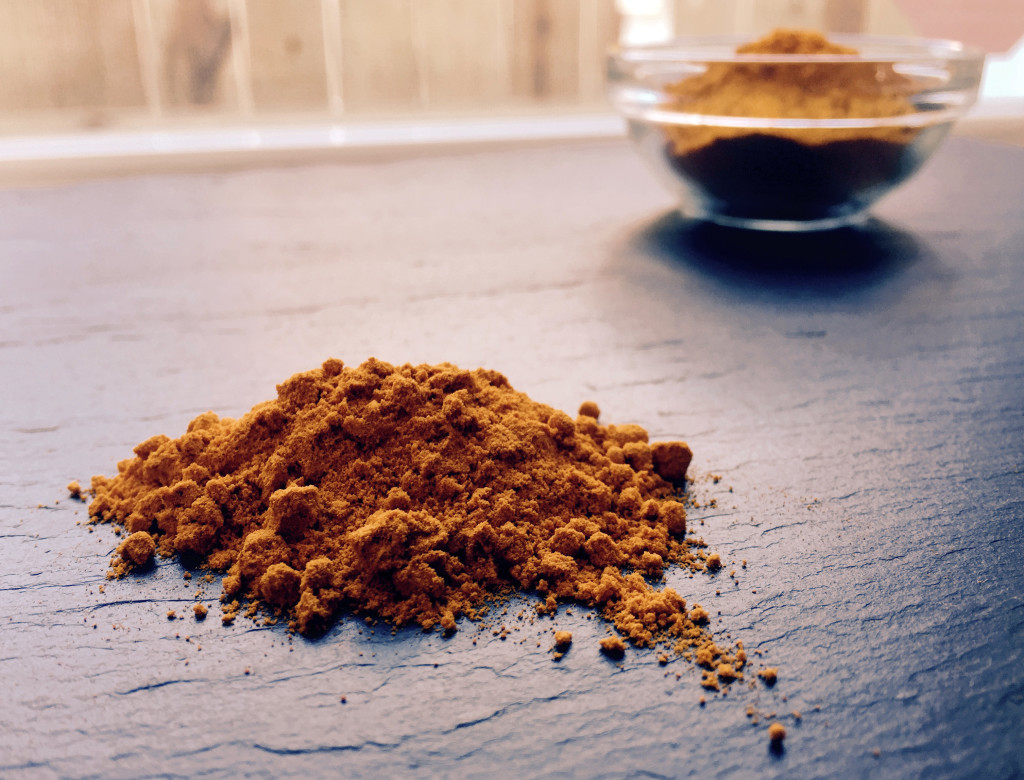
Capping off our month of immunity boosters, we bring you Fire Cider, an old folk remedy common in the New England area that is not for the faint of heart. It combines almost everything we’ve talked about this month—including ginger and turmeric—as well as the healing powers of horseradishgarlic, citrus, peppers, apple cider vinegar and honey. Think of it kicking that cold creeping up on you right in the gut—a sweet, sour and spicy kick! I mean, just a whiff of this stuff clears the sinuses.

Fire cider is widely known for it’s anti-viral, antibacterial, anti-inflammatory and anti-parasitic properties. Some recommend taking 1/2 ounce a day as a preventative. Others suggest doubling that dose and taking it twice a day when you feel that tickle or ache of something coming on.
FireCider4That said, if taking a straight shot of this stuff is a little too much to bear, don’t fret! You can add a little to your daily routine by adding it to hot water or tea, incorporating it into a salad dressing or marinade … or pouring it directly over greens, like kale or spinach. There are a ton of possibilities.

If you don’t tolerate spicy foods well, remember that the recipe below is a general guideline. You can play with the amount of hot peppers, or change the type of pepper altogether. Adding more honey will balance it out as well. I even read tips suggesting the addition of different herbs or spices, such as cilantro, cinnamon or mint. Other than the basic veggie and citrus ingredients, feel free to play depending on your tastes.

Truth be told, I had never heard of fire cider before starting our research. It has now earned a place in my winter arsenal of cold fighters. It takes very little prep, but be prepared … this little concoction takes some patience: The brew has ferment for about a month while the apple cider vinegar soaks up all those good-for-you properties. Never fear—once you finish prep, all you have to do is remember to shake it each day to keep things moving. I recommend starting two batches in the Fall: double your arsenal AND try two different flavor profiles!

As a last resort—or if you’re feeling lazy (or you want to know what you’re getting yourself into!)—you can order some pre-made fire cider. The site also includes has a good FAQ and blog with suggested uses and recipes.

But, trust me … making this is much easier than keeping that Tamagatchi alive.

This month, we’re giving away a copy of Sally Fallon Morell’s latest cookbook, Nourishing Broth? All you have to so is join The Peppercorn Press, our monthly newsletter, for a chance to win. Entries will be open through Monday, March 2nd. The winner will be announced in our March edition.


Fire Cider
I followed a recipe on the kitchn. It’s easy to adjust if you don’t like a lot of heat – try cutting back on the amount of pepper or try a less spicy variety. And if you like sweeter, add more honey at the end.

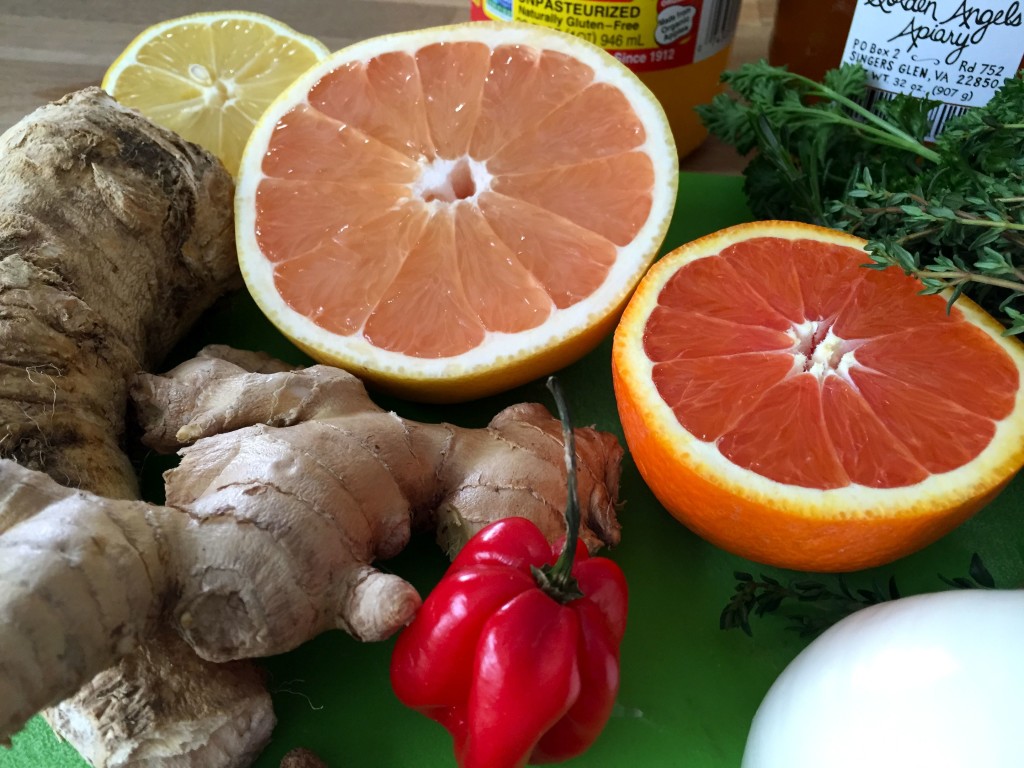
1/2 cup horseradish, peeled and diced
1/2 cup garlic, peeled and diced
1/2 cup white onion, peeled and dicedFireCider2
1/4 cup ginger, peeled and diced
1/4 cup turmeric, peeled and diced
1 habanero chile, split in half
1 grapefruit, quartered and sliced
1 orange, quartered and sliced
1/2 lemon, quartered and sliced
1/2 cup fresh parsley, chopped
2 tablespoons fresh rosemary, chopped
2 tablespoons fresh thyme, chopped
1 teaspoon black peppercorns
2 to 3 cups raw unfiltered apple cider vinegar (at least 5% acidity)
1/4 cup raw local honey, or more to taste

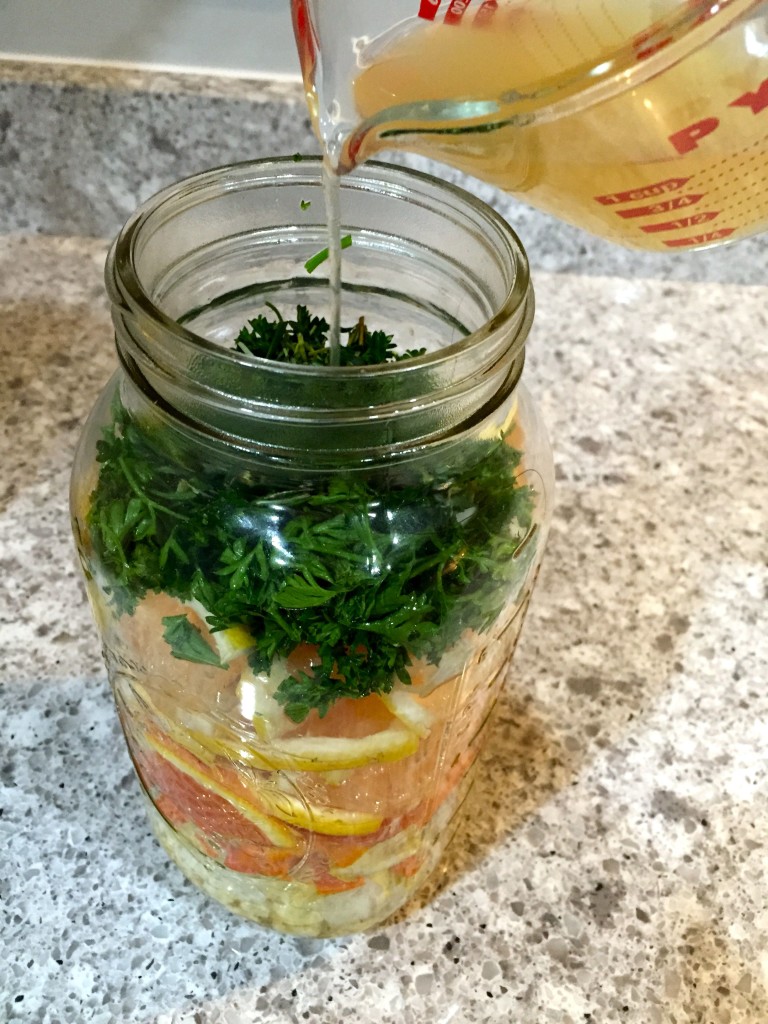
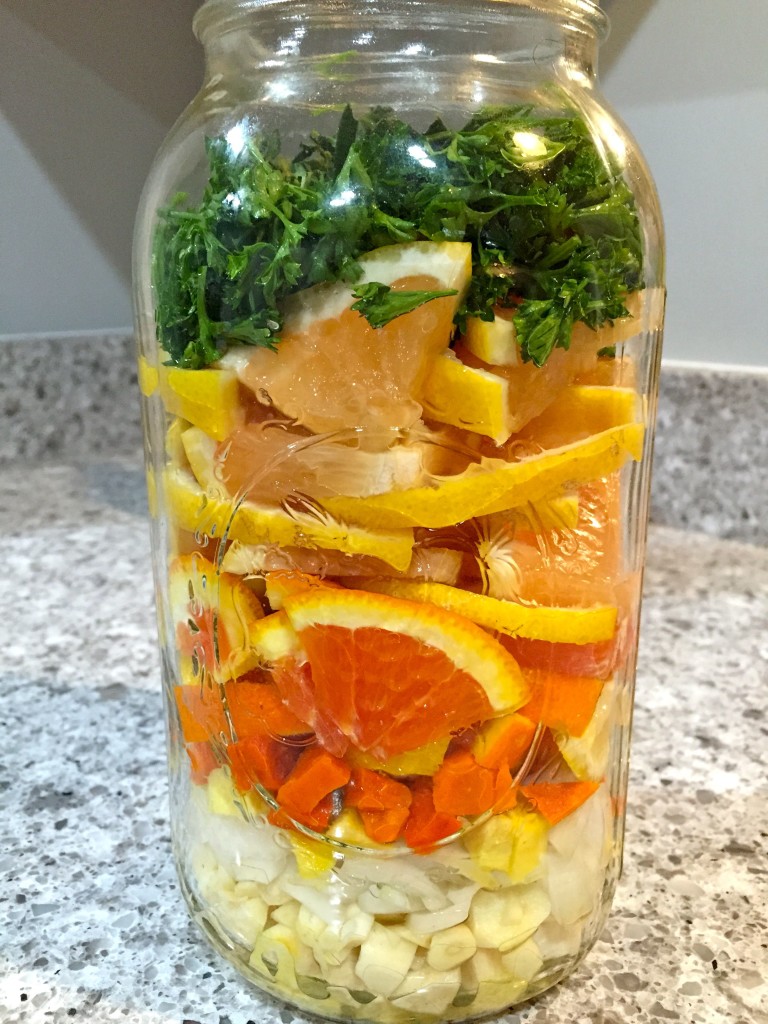
Place all the veggies, fruit, herbs and spices in a clean 1 quart jar. Fill with the apple cider vinegar, covering allingredients. Make sure there are no air bubbles and cap the jar.

Tip from the kitchn: If using a metal lid, avoid corrosion from the vinegar by placing parchment or wax paper between the lid and the jar.

Shake the jar well to mix everything together.

Let it sit for 3 to 6 weeks in a cool, dark cabinet—not direct sunlight. Shake daily. When done, strain the vinegar into a new, clean jar or other well sealed container. Add honey to taste. Refrigerate for up to a year!
Tagged with: , , , , , , , , , , , ,
Posted in Dear Diary

Turmeric: Not Just For Cobra Bites Anymore

turmeric1Okay … curcuma longa (turmeric) was never solely used for cobra bites, though it is used to treat just that in Thailand. This bitter-tasting ginger root—the main spice in curry dishes—has plenty of other well-documented medicinal properties. That’s how it landed here in our discussion about immunity boosting foods.
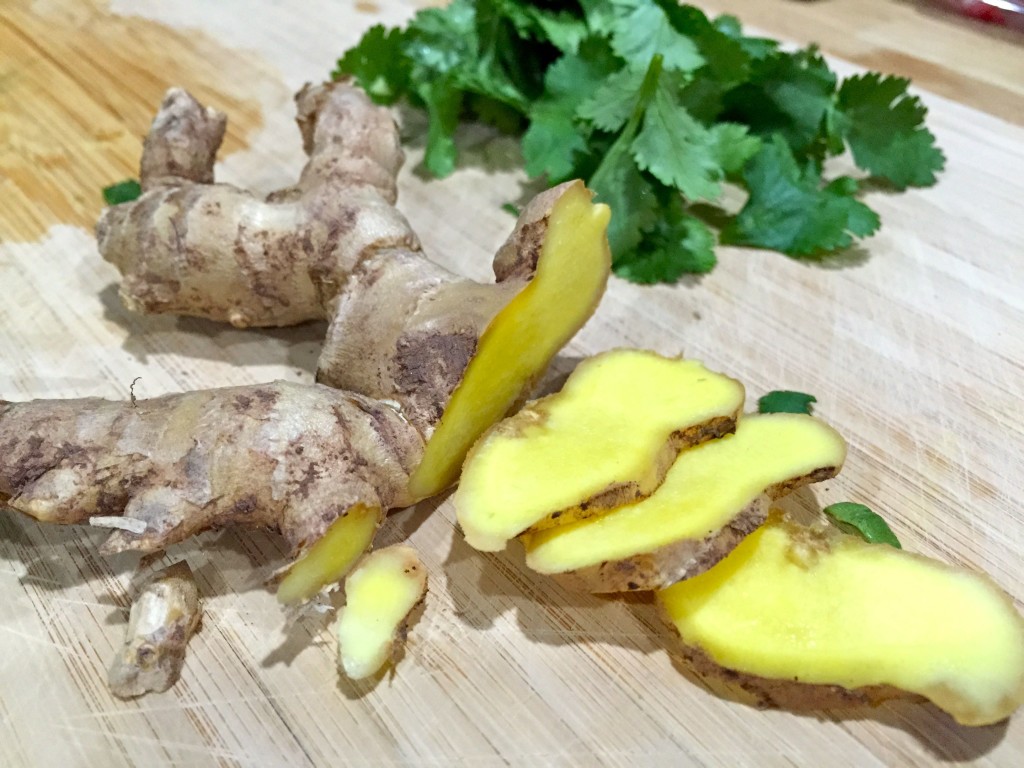
According to the National Center for Biotechnology Information, the use of the turmeric plant dates back nearly 4000 years to the Vedic period. The delightfully bright yellow-orange powder it produces is used as a principal culinary spice in Southeast Asia, but also plays a significant role in wedding and religious ceremonies. By 700 A.D., its use had spread to China, which is where Marco Polo encountered it. In 1280, he noted, “There is also a vegetable that has all the properties of true saffron, as well as the smell and the color, and yet it is not really saffron.” In medieval Europe, the spice became known as  “Indian saffron.”

One of my favorite kitchen reference guides—The Spice Bible—helped me dig a little deeper. Turmeric is often used as a dye and natural colorant: Think American cheese and that vibrantly yellow ball park mustard. The root of this rhizome from the ginger family is harvested from the ground, boiled in slightly alkaline water to preserve the color and then dried … to the consistency of concrete, making it difficult to grind at home. Not even in your Vitamix, which they say can blend actual concrete into powder—it’s just not something we recommend doing with this expensive (and categorically awesome) appliance.

In classic Ayurvedic medicine, turmeric was used as a cold remedy and to relieve congestion; to heal wounds, bruises sprains and inflamed joints; to treat ringworm, eczema and other skin maladies, including chickenpox, and shingles; as well as for treating hemorrhoids and jaundice. It has “hundreds of molecular constituents, each with a variety of biological activities. There are at least 20 molecules that are anti-biotic, 14 that are known cancer preventatives, 12 that are anti-tumor, 12 are anti-inflammatory and there are at least 10 different anti-oxidants.”

Curcumin is the principle curcuminoid—a natural phenol—in turmeric, which scientific studies show has both antioxidant and anti-inflammatory effects, as well as antiseptic, anti-fungal and anti-bacterial properties. Curcumin is the basis for most scientific study in looking at the effectiveness of using turmeric to treat a range of modern afflictions, including:

It has also been shown effective in the treatment of cancer, urinary tract infections, asthma and bronchitis, as well as viral infections, like HIV/AIDS, the human papiloma virus (HPV) and herpes simplex. That’s the short list.

There’s an equally long collection of ways to include turmeric in your diet—aside from curry dishes, which might just be my personal favorite method of consumption. Check out this great guide from The Kitchn, and since I adore turmeric on my vegetables, this Vegetarian Times article is also a great resource. Or there’s the warm hug of the drink below, which I highly suggest drinking before bedtime. Yum.

Turmeric is food, but as with any kind of treatment for a medical condition, you should do your research … and consult your doctor if necessary. As with bone broth—this isn’t a cure-all. It is intended to support and aid in healing, not replace a healthy, balanced diet rich in whole foods.

Want to learn more about nourishing immune-boosting foods like turmeric, ginger and bone broth? Sign up for our newsletter, The Peppercorn Press, and you could win a copy of Sally Fallon Morell’s latest cookbook, Nourishing Broth. Entries will be open through the month of February. The winner will be announced in the March edition.

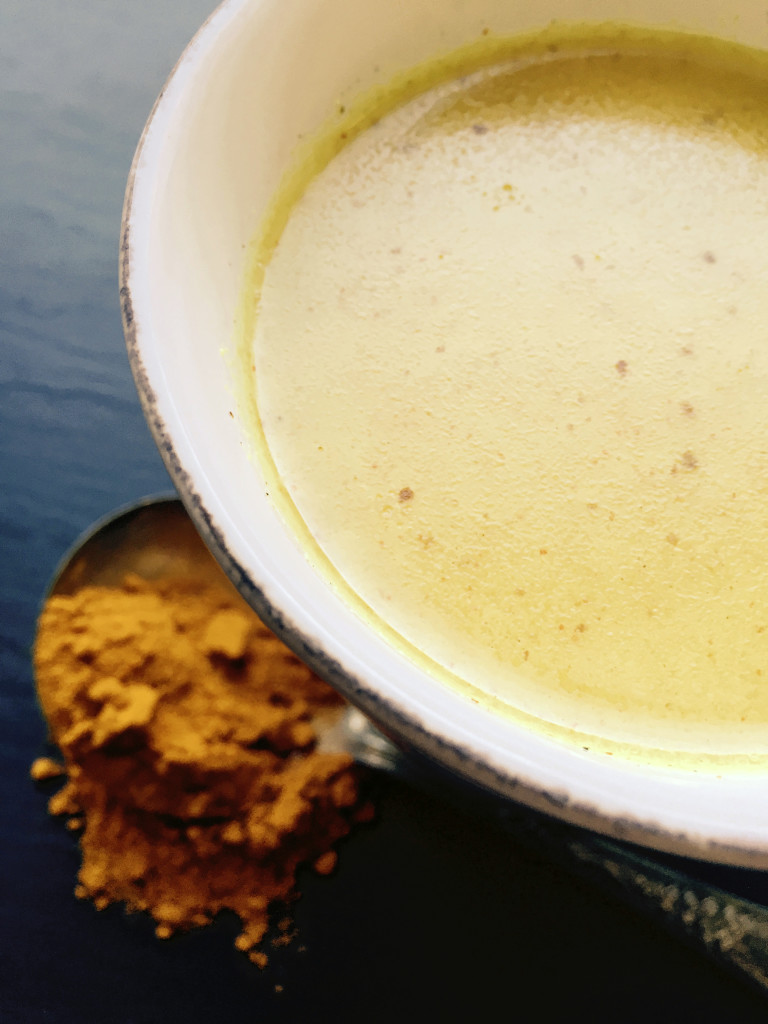
Spicy Turmeric Milkturmeric3

This version of turmeric milk packs a double punch with a hefty dose of ginger, which, as we learned last week, has immunity boosting properties of its own. It also tends toward the spicy side, with a slightly rich (for some, oily) mouth feel because of the use of coconut milk. You can tweak the spiciness for your palate by reducing or eliminating the amount of ginger and cayenne, but keep the black pepper—it enhances the bioavailability of turmeric (basically, it helps your body absorb it.) The coconut oil and water can be swapped for almond milk if you prefer. The addition of a tablespoon of coconut oil to either version makes it more rich … and has some benefits of its own.

14-ounce can coconut milk, plus can of can filtered water (or substitute both for about 4 cups almond milk)
1 tablespoon raw honey (you can use maple syrup or agave if you prefer)
1 tablespoon coconut oil (optional)
1 to 1 1/2 teaspoons turmeric (I like mine turmeric-heavy)
1/2 teaspoon cinnamon
1/4 to 1/2 teaspoon fresh grated ginger, depending on your taste (can substitute 1/4 teaspoon or less powdered ginger)
1/4 teaspoon black pepper
1/4 teaspoon cayenne pepper (optional)

Place all ingredients in a small saucepan and cook over medium high heat, whisking to incorporate the dry spices. [PLEASE NOTE: Remember when we said turmeric is used as a dye? It will stain clothing and your skin, so be careful … and use a dark mug!] Cook about five minutes until the turmeric milk begins to steam, but remove it from the heat before it boils.

Drink immediately. (As if you could stop yourself.)


Tagged with: , , , , , , , , , , , , , , , , , , , , , , , , , , ,
Posted in Dear Diary

Just A Little Ginger Goes A Long, Long Way

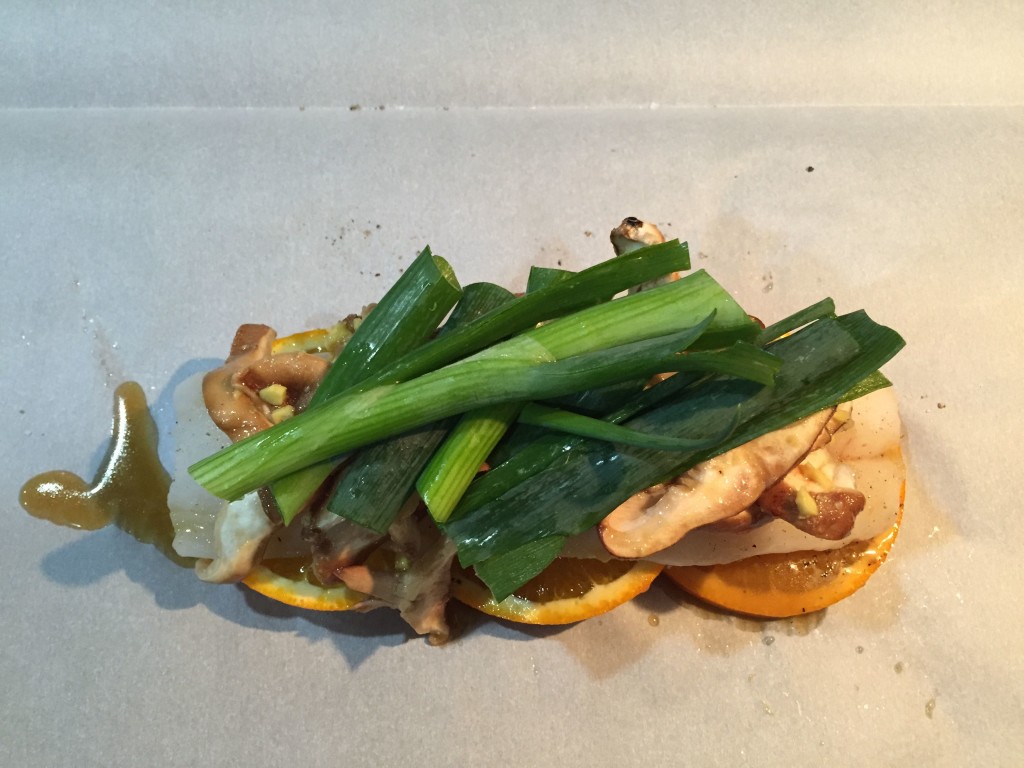
Ginger10Of all the roots, ginger might be the most versatile. It adds a kick to savory dishes and a bite to sweet desserts. It’s great in a cocktail, pickled with sushi or baked into bread.
Perhaps you remember the three course raw meal we made a while back? Not only did April’s Thai-coconut curry feature ginger, but my dark chocolate non-brownies also had the shredded root on top. Then there was my sweet tomato chutney with an added kick of ginger. I still have a container of it in my freezer waiting to be thawed. It’s calling my name right now …

But we’re not here to chat about the contents of my freezer!

We’re talking about natural immunity boosters. So, good news! Ginger not only has culinary super powers, it also has a slew of health benefits in addition to helping to fend off colds.

The most well known benefit may be its tummy taming abilities. Whether you’re motion or sea sick, have a migraine induced ache or have morning sickness from that bun in the oven, ginger helps. Growing up, I was often given ginger ale to sooth an upset stomach. But the crazy thing is most ginger ale bought at the grocery store contains little to no actual ginger. I found this easy recipe for making a ginger syrup, which when added to sparkling water, will actually help tame your tummy.

Ginger04Ginger is also a proven pain reliever, thanks to its anti-inflammatory properties. If you feel a migraine coming on or menstrual cramps hit, sip a ginger tea.  Because of this property, it also helps alleviate the symptoms of rheumatoid arthritis and osteoarthritis. In fact, it’s more effective than ibuprofen as an arthritis treatment without the stomach inducing side effects.

And let’s not forget the immunity boosting powers packed into this root! Ginger helps break down toxins found in the lymphatic system, keeping you free and clear from build up that could lead to infections. So the next time you feel a tickle in your throat or a stuff in your nose, take a little ginger. My husband found this great tea recipe, which I’ve made this winter and had great results. The combination of lemons, raw honey and fresh ginger will put the kibosh on whatever crud is starting to take over your body.

Of course, the best way to boost your immunity with ginger is to make it a permanent part of your pantry. I love to grate a little into veggies at dinner, like green beans or Brussels sprouts. You can candy it, pickle it and even make essential oil out of it. Sip on one of the ginger teas linked above before bed, or throw a piece of ginger into your morning green juice.

Ginger12Remember, fresh is always best. You can buy ginger root at almost any super market or you can add it to your garden or houseplant collection. I’ve found that the best way to store it is to seal it in a container (either a plastic Ziploc bag or tight-lidded glass container) in the fridge. Simply slice off pieces, as you need them.
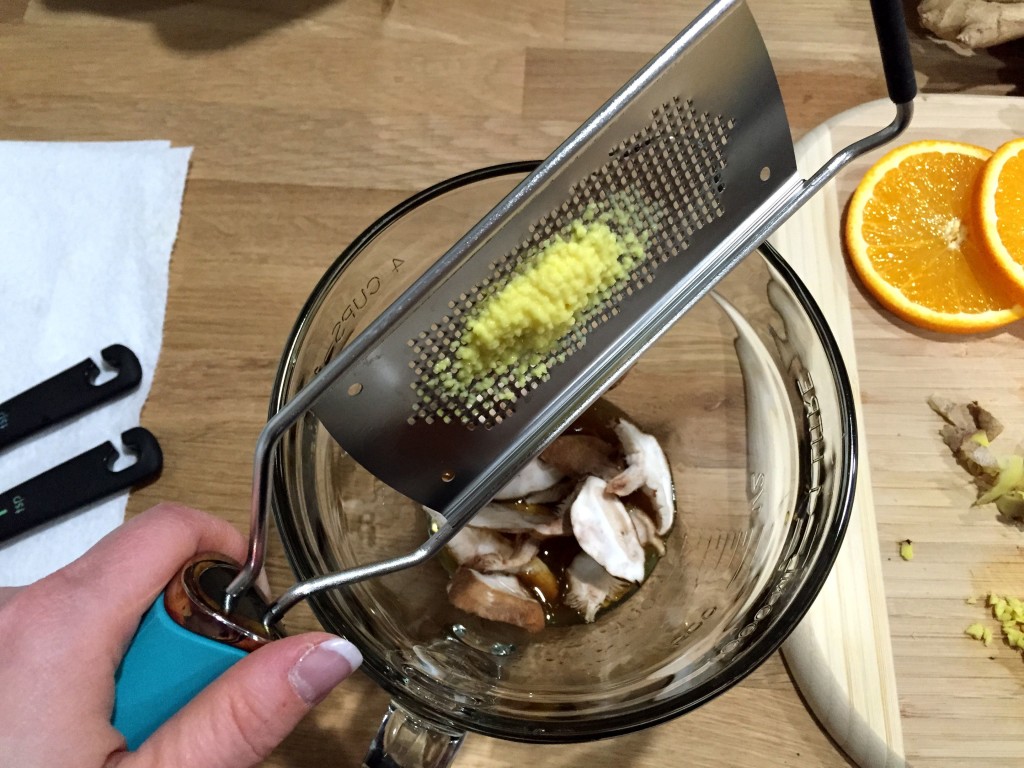
The month leading up to this post has been one of challenges. My husband and I went on Whole30, a 30-day elimination diet rich in vegetables, proteins and good fats. Sugar and any substitutes were out. Processed foods were out. We had to get creative! I looked up a lot of recipes with ginger that were compliant with our diet. I tried mushrooms with cashews and chicken drumsticks. I settled on a version of a paleo fish in parchment paper. Very yummy and easy to prepare and clean up!

Oh … did I mention that we’re also renovating our kitchen this month? Yikes! With all the stress, I may need more ginger tea to sip.

Citrus Ginger Fish In Pouch

This recipe is heavily inspired by one I found on nom nom paleo. You can use any white fish, as they tend to steam the best in parchment pouches. Salmon may also be a great substitute! This would also be good with cauliflower rice (or rice, if you’re not avoiding) to soak up all the yummy sauce.

To make two servings:
Ginger02
2 tablespoons coconut aminos, or soy sauce
4 teaspoons freshly squeezed orange juice
2 teaspoons rice vinegar
2 teaspoons fish sauce
1 teaspoon sesame oil
2 teaspoons fresh minced ginger (grated works best)
4 fresh shitake mushrooms, thinly sliced
2 fish fillets (tilapia, cod, snapper, salmon … the list goes on)
kosher salt
ground pepperGinger05
6 thin orange slices
2 green onions, trimmed
bunch of fresh cilantro, minced for garnish
2 green onions, sliced for garnish

Preheat your oven to 450 degrees. Combine the coconut aminos (or soy sauce), orange juice, vinegar, fish sauce and oil in a small bowl. I find a little whisk works best. Add the mushrooms and ginger.

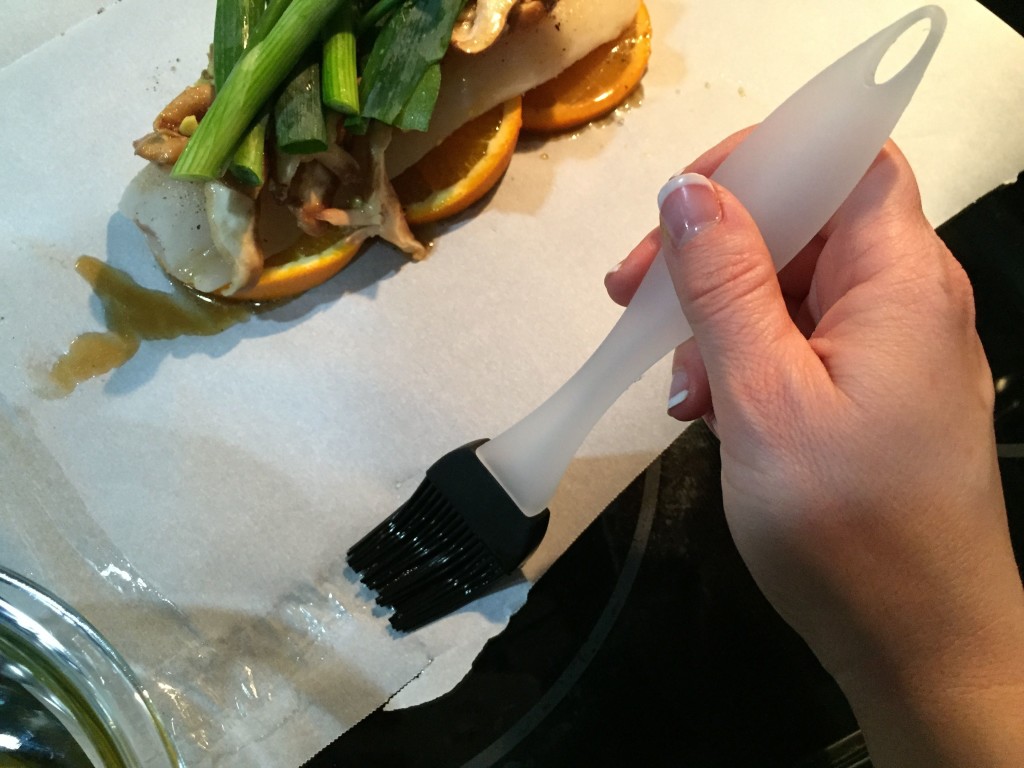
Place a large sheet of parchment paper on your work surface. Place three orange slices inGinger07 the middle of one side of parchment paper. Tip: you can fold the paper in half, unfold and use that fold line to guide the placement of the ingredients.

Pat the fish dry and place on top of the orange slices. Lightly season both sides with salt and pepper. Spoon the mushrooms and sauce over the fish. Place the longer green onions on top.

I found this great video demonstrating a method to fold the pouch. You can use an egg wash along the three edges on the side with the ingredients. This wash will seal in the sauce as you fold the other side of the paper over. Then, begin to fold the corners in, creating a semi-circle edge of folds.

Place on a baking sheet and cook for 10-15 minutes, or until the fish is cooked through. When done, cut or tear the pouch open. Add fresh cilantro and chopped green onions before serving.

Want to try your hand at making broth? Sign up for our newsletter, The Peppercorn Press, and you could win a copy of Sally Fallon Morell’s latest cookbook, Nourishing Broth. Entries will be open through the month of February.  The winner will be announced in the March edition.


Tagged with: , , , , , , , , , , , ,
Posted in Dear Diary
photo credit to Aaron Otis Photography 2014


July
Watermelon is the perfect summer food. It hydrates, it cools, it's sweet and juicy. We have some great ideas for your table, including a salad, ceviche cups, popsicles and cocktails. Get ready to beat the heat with us!