 I’ll admit that when Sally Fallon Morell answered the phone for our interview, I nearly melted into a puddle of useless goo on the floor.
While others go ga ga over celebs like Taylor Swift and Brangelina and pour over the latest gossip in People, Us or Star Magazine—I couldn’t give a cookie about the Kardashians. I’m busy thumbing through my cookbooks, day dreaming about running into The French Laundry’s Thomas Keller or Chez Panisse’s Alice Waters at the farmer’s market. I’m not stalking Bao Bao at the National Zoo for a glimpse of Washington D.C.’s panda celeb playing in the snow. I’m attending lectures by Jose Andres or Mario Batali at the Newseum or Sixth & I. Really—I nearly had a heart attack when I met Jacques Pépin.
You see, these folks are my heroes. And Fallon Morell is near top of that list.
She’s a traditional foods pioneer, as evidenced by the bible of that genre—her cookbook with Dr. Mary G. Enig, Nourishing Traditions. Fallon Morell was inspired by Weston A. Price’s research on primitive cultures who ate “only whole, natural foods,” which included “good quality animal fats”. Price is often referred to as the Charles Darwin of Nutrition. Fallon experimented with his findings at home, feeding her family with the foods our ancestors would have consumed before the onslaught of processed foods began to wreak havoc on our waistlines and overall health.
She is now the founding president of the Weston A. Price Foundation, and a champion of nutrient-dense diets that include raw milk, animal fats, lacto-fermented foods … and bone broths. Fallon’s most recent cookbook on the subject, Nourishing Broth, with Dr. Kaayla T. Daniel, was published in September. We’re giving a copy away this week, courtesy of Ms. Fallon Morell and Grand Central Publishing … so make sure to enter to win below!
Which brings us to today. I’ve been making bone broth for about a year now, inspired by my interview with Elizabeth Fellows in May of 2013. Despite questions surrounding the claimed benefits of broth, my experience overall has led me to pitch this warm hug of a drink to anyone that will sit still long enough to hear my spiel. Most do, given that bone broth has hit the mainstream in a serious way as of late. Just check out THIS, THIS and THIS—all published in the last month, and among hundreds of other results.
My point is—broth is big. But before we get to Fallon Morell, let’s take a look at what this steaming liquid is … and what it isn’t.
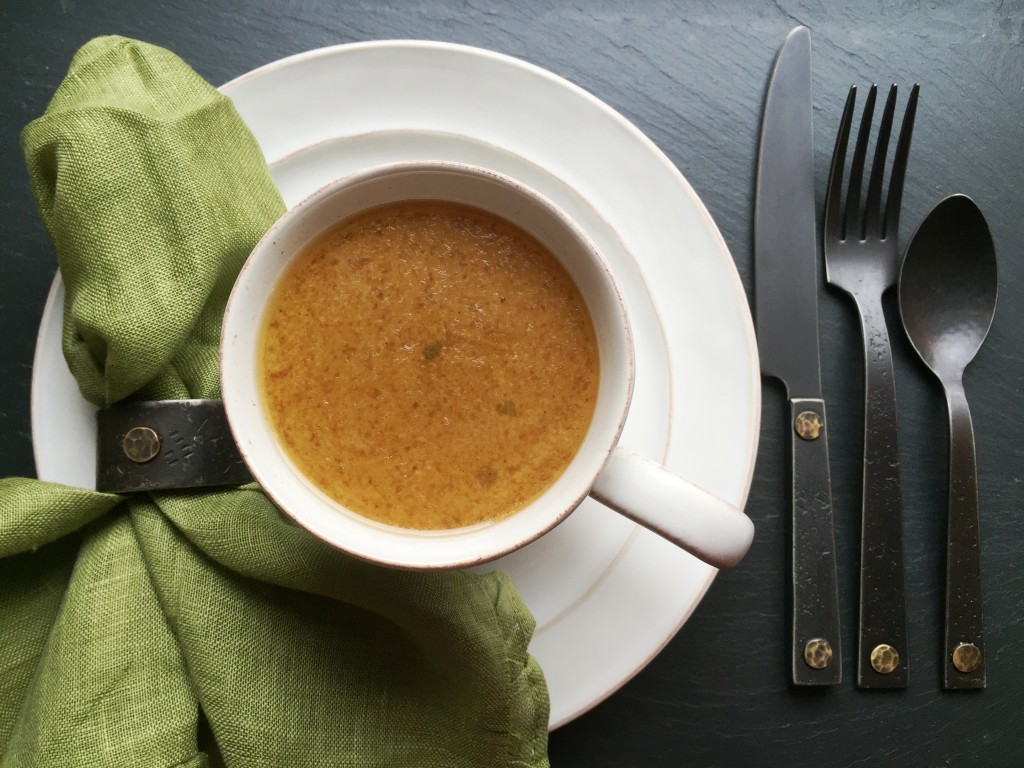
What is Bone Broth?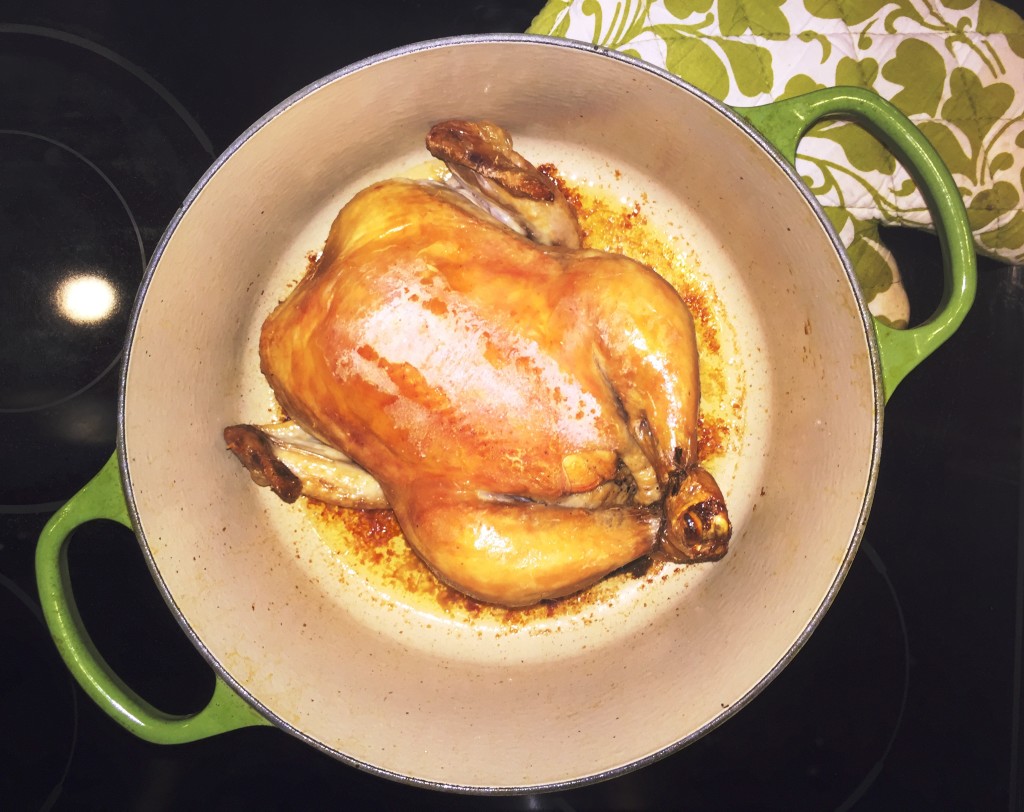
In researching this article, I read another post about bone broth on Greatist.com stating that, “The bone broth that’s in vogue today is basically the same as the chicken or beef broth that lines grocery store shelves—and the simple soup starter that home cooks have whipped up—for years.”
That sentence made me cringe.
First off, it reveals a basic misunderstanding about the difference between broth, stock and bone broth. Jennifer McGruther’s traditional foods blog, Nourished Kitchen, does a beautiful job explaining the difference:
- Broth is typically made with meat and can contain a small amount of bones (think of the bones in a fresh whole chicken). Broth is typically simmered for a short period of time (45 minutes to 2 hours). It is very light in flavor, thin in texture and rich in protein.
- Stock is typically made with bones and can contain a small amount of meat (think of the meat that adheres to a beef neck bone). Often the bones are roasted before simmering them as this simple technique greatly improves the flavor. Beef stocks, for example, can present a faint acrid flavor if the bones aren’t first roasted. Stock is typically simmered for a moderate amount of time (3 to 4 hours). Stock is rich in minerals and gelatin.
- Bone Broth is typically made with bones and can contain a small amount of meat adhering to the bones. As with stock, bones
 are typically roasted first to improve the flavor of the bone broth. Bone broths are typically simmered for a very long period of time (often in excess of 24 hours). This long cooking time helps to remove as many minerals and nutrients as possible from the bones. At the end of cooking, so many minerals have leached from the bones and into the broth that the bones crumble when pressed lightly between your thumb and forefinger.
Cartilage-rich bones and connective tissues—think necks and knuckles—are what make bone broth gelatinous. When was the last time you opened up a store broth that was gelled? In making bone broth, an acid like lemon juice or vinegar is necessary to extract the nutrients from bones. If you look at the ingredients of even a quality broth, like Pacific Foods Organic Free Range Chicken Broth, you won’t find either. You will, however, see cane sugar—something I guarantee you my homemade version doesn’t have.
That said, Pacific also makes a bone broth product, which does have vinegar listed as an ingredient. If you compare the two products, you’ll also find that the regular broth has two grams of protein, whereas the bone broth has nine. That’s because most commercial broths are not made with bone, hence the end product is lower in protein. And usually packed with sodium, and sometimes MSG.
Your best bet is making bone broth at home, where you have more control over what goes into it.
What Does Bone Broth Do?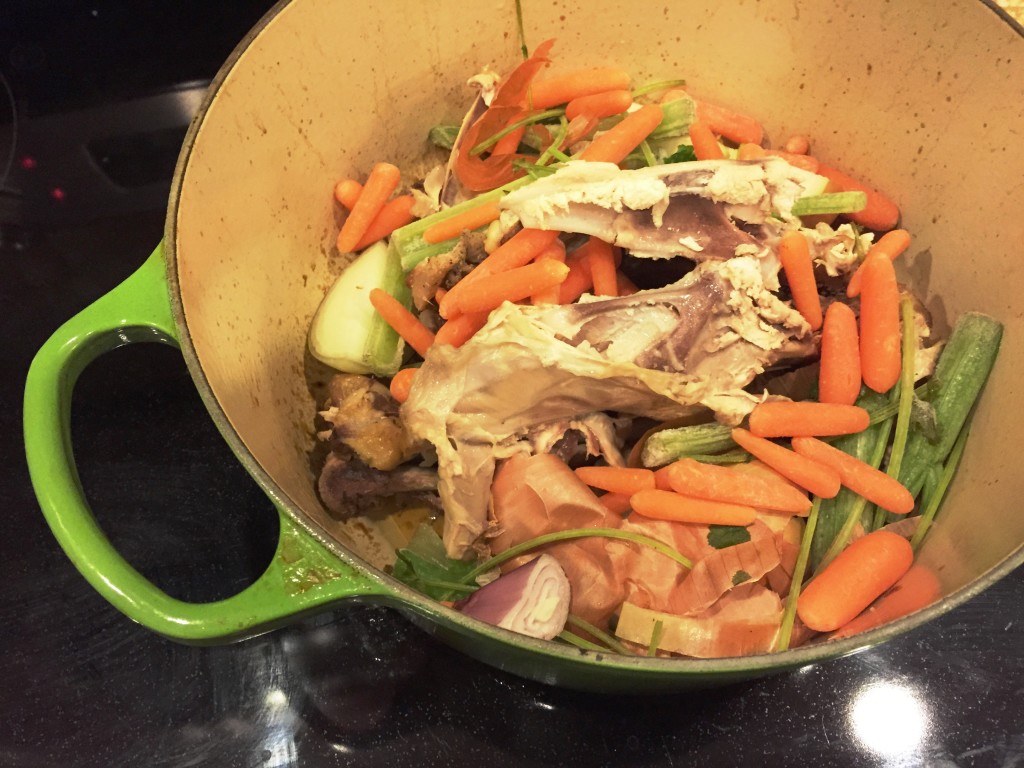
According to Sally Fallon Morell, “Bone broth contains a lot of components that we’re not getting elsewhere in the diet,” she said, pointing primarily to collagen, which is a protein. It’s found in bones, ligaments and tendons, eyes and other organs, the lining to the digestive track, hair and skin.
Ron Raines, a biochemisty and chemistry professor at the University of Wisconsin-Madison, explains what collagen is and how it’s used in the human body.
“Collagen is the most abundant protein in humans, and indeed in all animals,” Raines said. “It has been on the planet since at least the age of the dinosaurs. Collagen is, in essence, a scaffold for animal bodies. It is rather like both the I-beams that hold up buildings, as well as the ropes that tie and keep pieces together – depending on the type of the collagen.”
According to Fallon Morell, collagen from soup supports collagen in body. She told me that, “There is collagen in bone broth, we consume bone broth, ergo, we get collagen from bone broth.” But as it turns out, that’s not exactly how it works.
“Since we don’t absorb collagen whole, the idea that eating collagen somehow promotes bone growth is just wishful thinking.” That’s William H. Percy, an associate professor at The University of South Dakota’s Sanford School of Medicine. “The amino acids we absorb from digesting collagen in the gut will be used by the body for any biochemical process that needs them. They are not specifically incorporated into collagen production because they came from collagen to start with,” Percy said.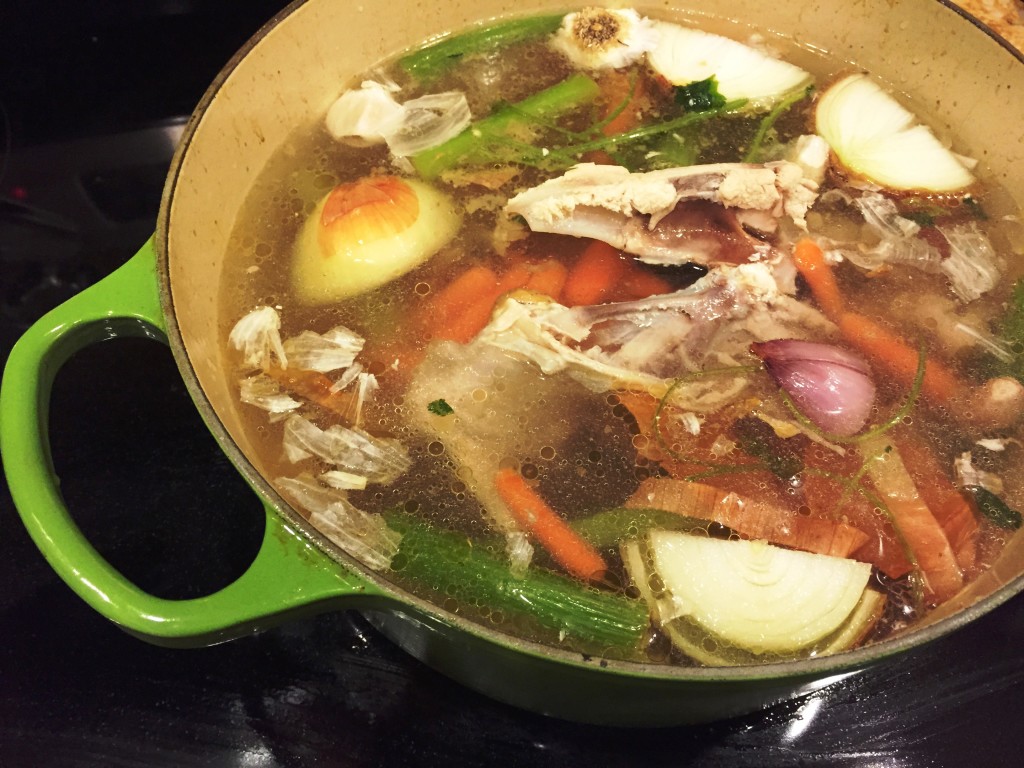
Let me translate. There is collagen in bone broth, but when we consume it, it is digested into amino acids and peptides. These nutrients are absorbed into the body, which begins to put the building blocks to work where they are immediately needed—not necessarily to create more collagen.
That said, protein plays a leading role in the human body. Sans water, we’re made up of about 75% protein, and adults need to consume about 60 grams a day to supply the essential amino acids our bodies can’t make themselves. So to me, bone broth as an additional source of protein makes a lot of sense. You can read more about the science behind the bone broth in my article on NPR’s The Salt blog.
But claims about the benefits of this so-called magic elixir extend far beyond collagen: “For reasons that are almost a little mysterious, broth supports the immune system,” Fallon said—which is why it has this place of honor in launching our Immunity Boosters series this month!
This well-regarded traditional remedy dates back to the 12th century and Jewish physician, Maimonides. He recommended “the broth of hens and other fowl to ‘neutralize body constitution’, in his book, On the Cause of Symptoms.
 The healing properties of this comfort food have earned chicken soup the moniker, “Jewish Penicillin.” And although inconclusive, there’s research-based evidence to back that esteem up. A study published in 2000 in the medical journal Chest suggested that, “chicken soup may contain a number of substances with beneficial medicinal activity. A mild anti-inflammatory effect could be one mechanism by which the soup could result in the mitigation of symptomatic upper respiratory tract infections.”
Fallon also claims that bone broth helps detoxify the body and improve mood, can help with digestive disorders like leaky gut syndrome, speed the healing of wounds and sports-related injuries … and more. She adds that it’s great for all stages of development: “I think it’s very important for pregnant women, for babies and growing children. I can tell you that kids who get a lot of broth, they behave better. They’re calmer.”
Some of these claims are supported by tangential evidence, and some are solely anecdotal. Clearly more research is needed, which isn’t something Fallon Morell or her Nourishing Broth co-author, Kaayla T. Daniel expect to see soon.
“There’s no financial incentive for anyone to study bone broth,” Daniel said. “If you can’t turn it into a pill … or a power … or something you can patent—there’s no financial reason to do the study. Studies are very expensive.” And truly—a home remedy with healing powers that you can make yourself? That would be the world’s most dangerous medicine. For pharmaceutical companies, that is.
The bottom line, Fallon says, is that, “Broth really does make you feel better.”
So here’s the premise I’m moving forward with: There are some established benefits to bone broth, and some benefits that must be considered anecdotal in the absence of further, specific and systematic research. But this nutrient-dense food isn’t intended to replace a well balanced diet rich in fresh fruits, vegetables and protein—and not one advocate I spoke with or read about suggests it should. It’s a supplement to healthy eating at the very least, and in the best case scenario: a damn good base for your soups, gravies and sauces.
The Importance Of Ingredients
When it comes to ingredients, Fallon Morell had this advice: The better the quality, the better the broth. There’s less foam when you use good quality, organic components. And water matters, too, she says, suggesting using filtered, well or spring water without flouride.
“I have my own farm,” she says, but for anything she needs that isn’t produced onsite—”I try to get it directly from farmers.” She suggested contacting the Weston A. Price Foundation for a list of places to purchase yours.
Given this, what Fallon Morell said next really surprised me.
“I wouldn’t let the unavailability of the very best stop you from making stock.” She said that even using a Costco chicken would be better than not making bone broth at all. “I just don’t want people to obsess about it. I’ve always said that. Do the best you can.”
Fallon Morell uses chicken, beef or lamb—all of which she says are pretty interchangeable—to make the bone broth that becomes soup, gravy and sauces in her kitchen. Fish broth, she adds, may have some special qualities with iodine that nourishes the thyroid gland.
“One of the beauties of broth is that it balances the amino acids in meat and it really does make meat more digestible,” Fallon Morell said.
This Doesn’t Have To Be Difficult
Think of bone broth as your kitchen’s ultimate recycling effort.
In my house, all kitchen scraps—from onion peels, to garlic skins and carrot tops—go into Ziploc bags in my freezer until I’m ready to use them. When my veggies start to look a little sad, and I know I’m not going to be able to use it right away, it goes in the bag. Fallon Morell does the same thing with bones.
“I save up my bones—my freezer looks pretty scary,” she says, laughing.
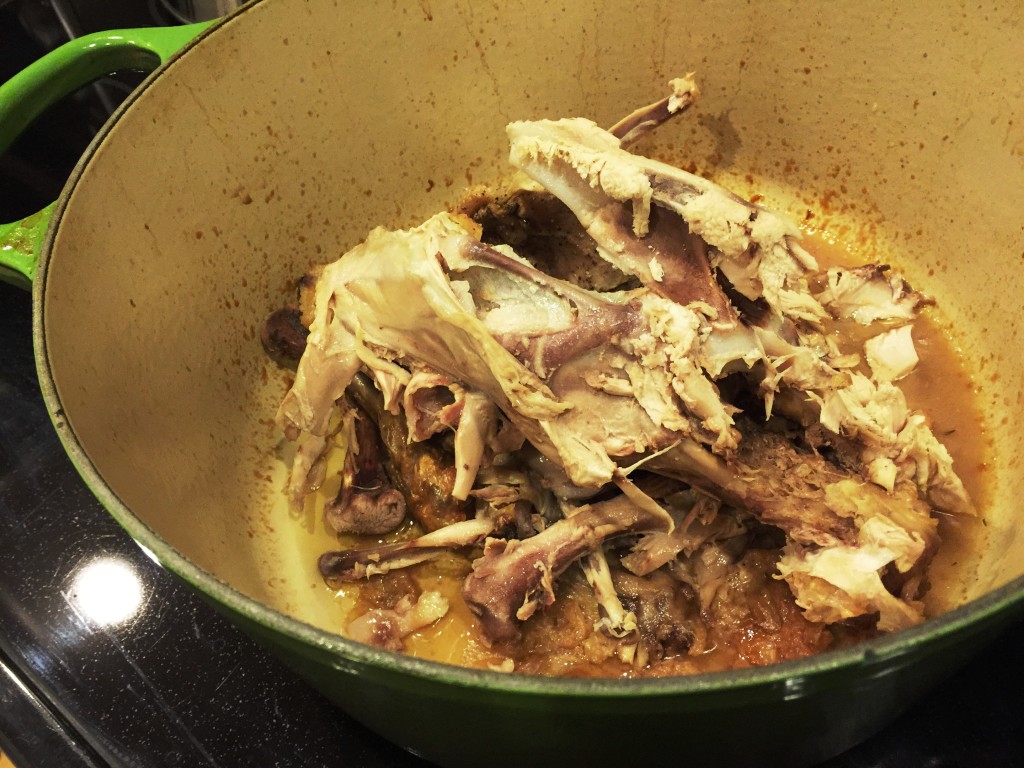
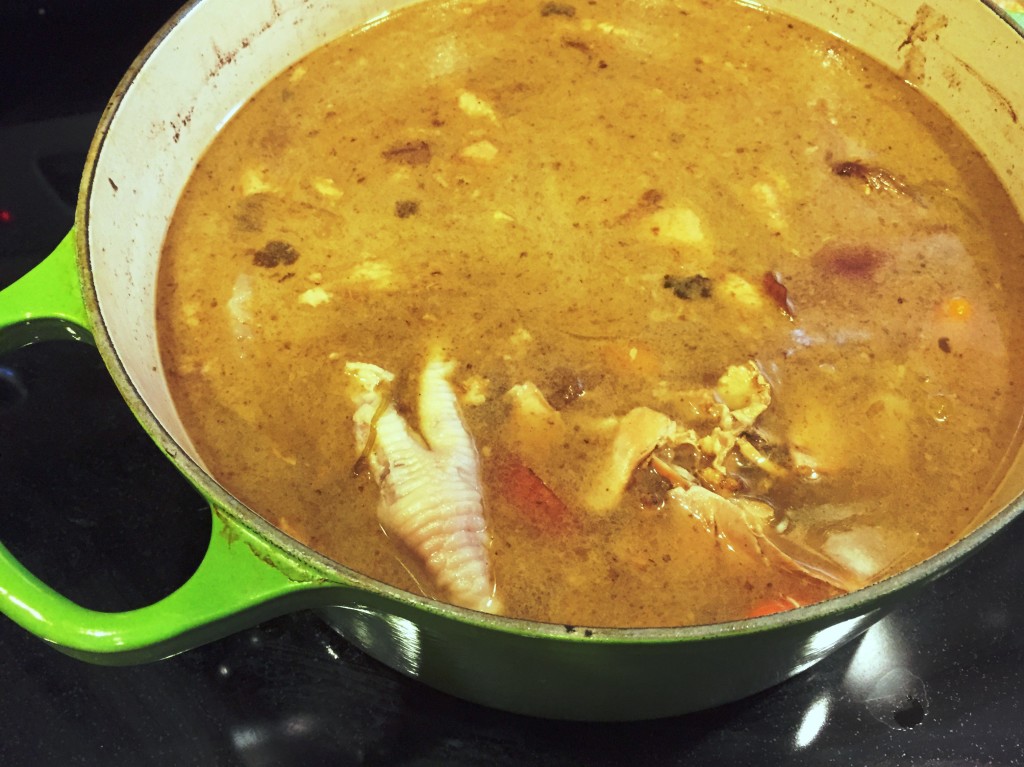
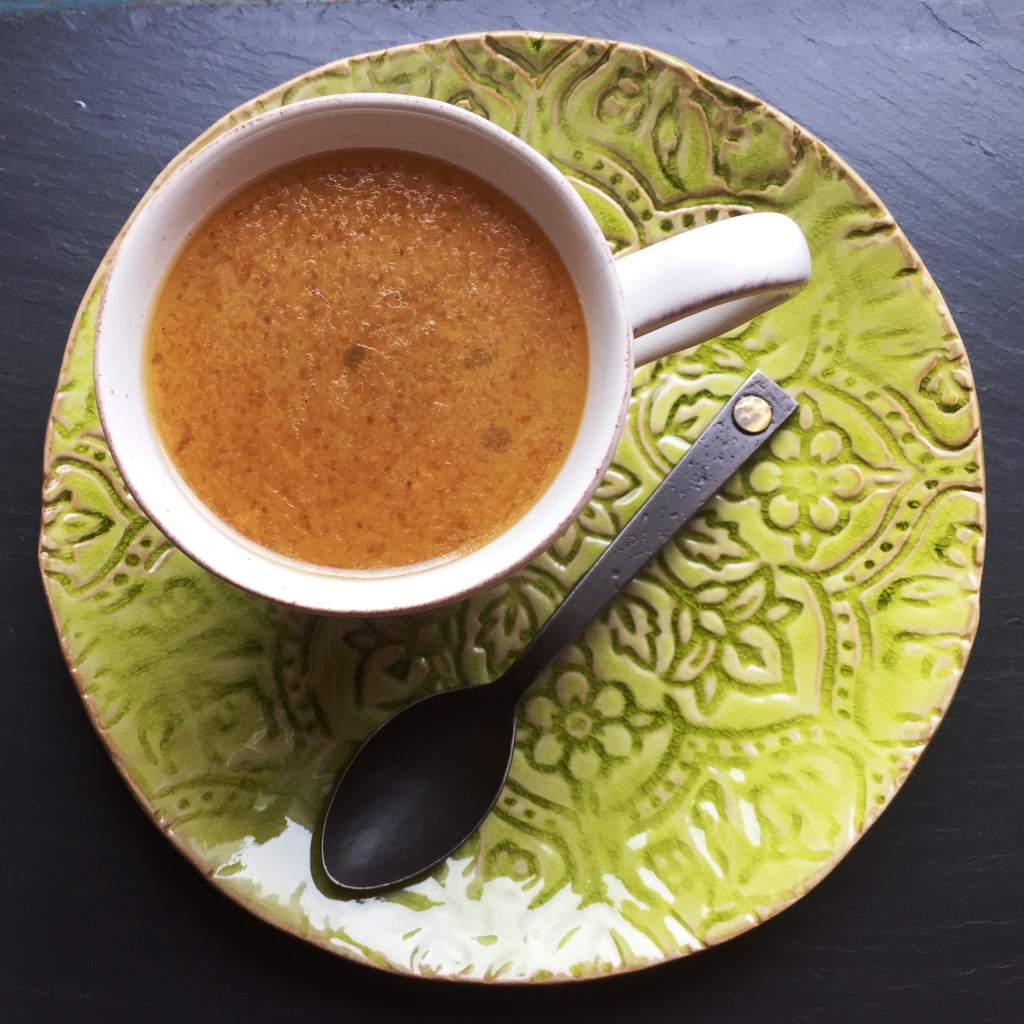
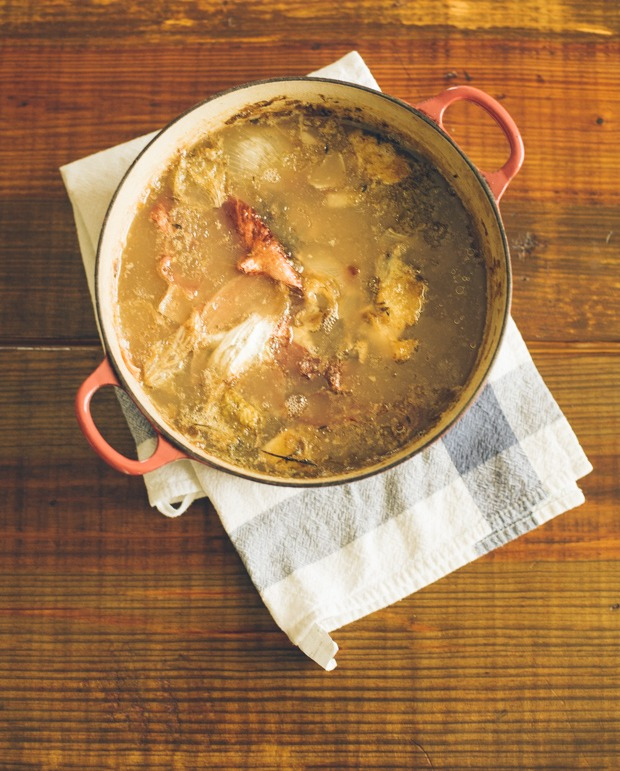
Last night, I roasted an organic chicken for dinner (using the Thomas Keller method, of course!) After dinner, my husband picked the carcass clean (I’ll make chicken salad out of it today) and threw the bones in the same pot I cooked the chicken in. There was still plenty of meat on the bones, skin and the wing tips. I also added two feet from a naturally pastured chicken that I purchased at Harvey’s Market, a shop in Washington, D.C.’s Union Market, along with onion skins, carrots and celery from my freezer scrap bag and a dash of apple cider vinegar. Then I turned the stove on low and went to bed. (I usually make this in my slow cooker, but for you, dear Eater, I thought the pictures would be prettier with it in my big green Le Creuset!)
Fallon Morell suggests an even easier recipe that includes one cut up onion with skins and a splash of vinegar. I’ve been cooking mine for about 36 hours, which she set me straight on.
“I basically do my chicken broth overnight, and my beef broth, too. Fish broth is basically ready in 40 minutes,” Fallon Morell said. “That’s one of the things we learned in this book,” meaning that you don’t have to cook it as long as tradition—and her first book, Nourishing Tradition—might indicate.
Another thing I learned from our conversation: While I’ve been cooking the same batch until it turns into this dark, somewhat sludgy mess, she refreshes hers daily. After cooking her bone broth overnight, she ladles all of the liquid out that she can and 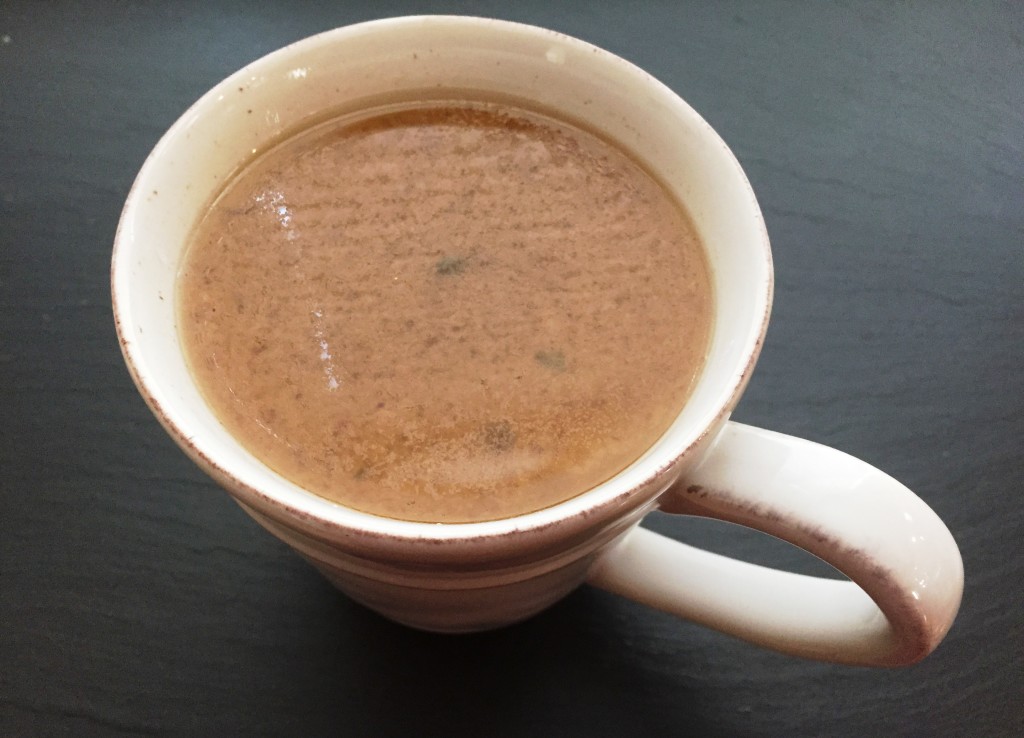 refills the pot with water, cooking it again overnight. She repeats this process for three days before discarding the bones that should now fall apart easily when pressed between the thumb and forefinger.
To make a quick reduction sauce, Fallon Morell suggests cooking your steak or lamb chop in a pan and then transferring to the oven to keep it warm. Deglaze the pan with half a cup of brandy (yum) and add a cup of your prepared bone broth. Boil until it gets thick. You may only have a few tablespoons when done, but plenty of nutrient-dense sauce to spoon over your meat.
Want to try your hand at making broth? Sign up for our newsletter, The Peppercorn Press, and you could win a copy of Sally Fallon Morell’s latest cookbook, Nourishing Broth. Entries will be open through the month of February. The winner will be announced in the March edition.
Sally Fallon Morell’s Tips For Eaters
At the end of our interview, I asked my culinary guru to share her opinion on what we could do today that would have the most impact on our health. This is what she said:
- Stop using industrial fats and oils. Use butter, she said, or cook in lard. “That’s absolutely number one.”
- The second is broth. “You want to be a good cook?,” asks Fallon Morell. “Make broth. Broth is just the basis of good cooking—sauces, gravies soups and stews—all the things that people think are hard to make are really easy if you have your homemade broth on hand.”
- A quality cod liver oil with vitamins A and D. She also suggests making your own salad dressing with olive oil, versus using a less healthy store-bought variety.
- And finally: Eat a good breakfast. Her suggestion? Eggs and bacon.
We approve, Ms. Fallon Morell. We approve.
But now I’m craving bacon.
 COTIB soup. It goes by many names:
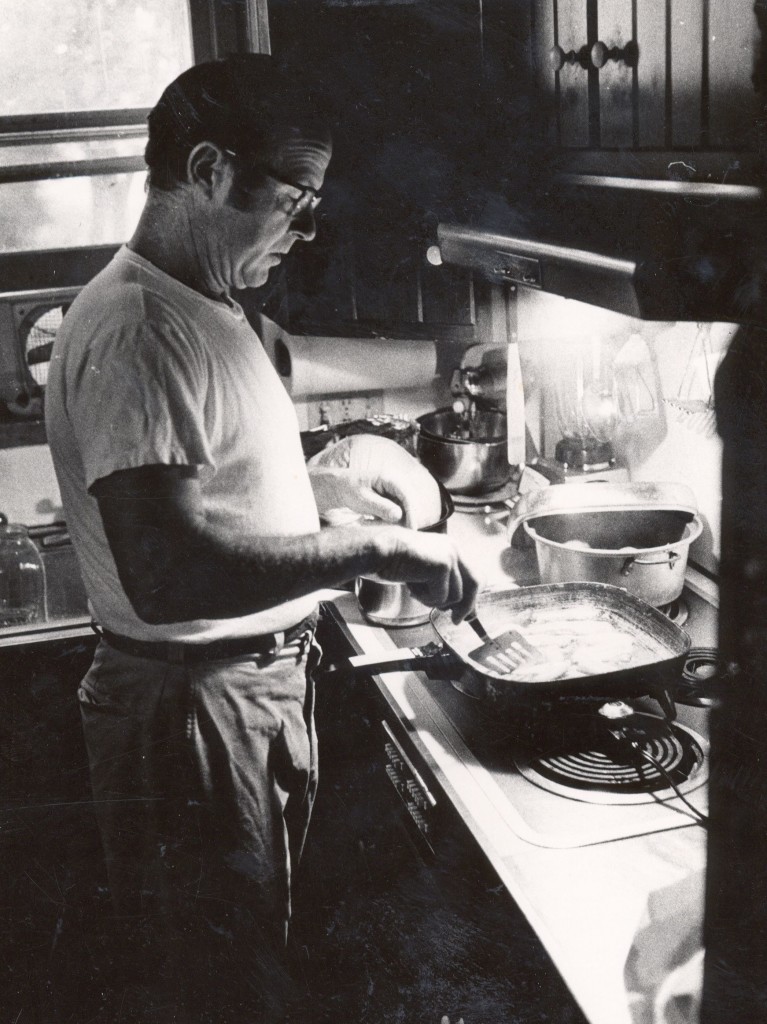
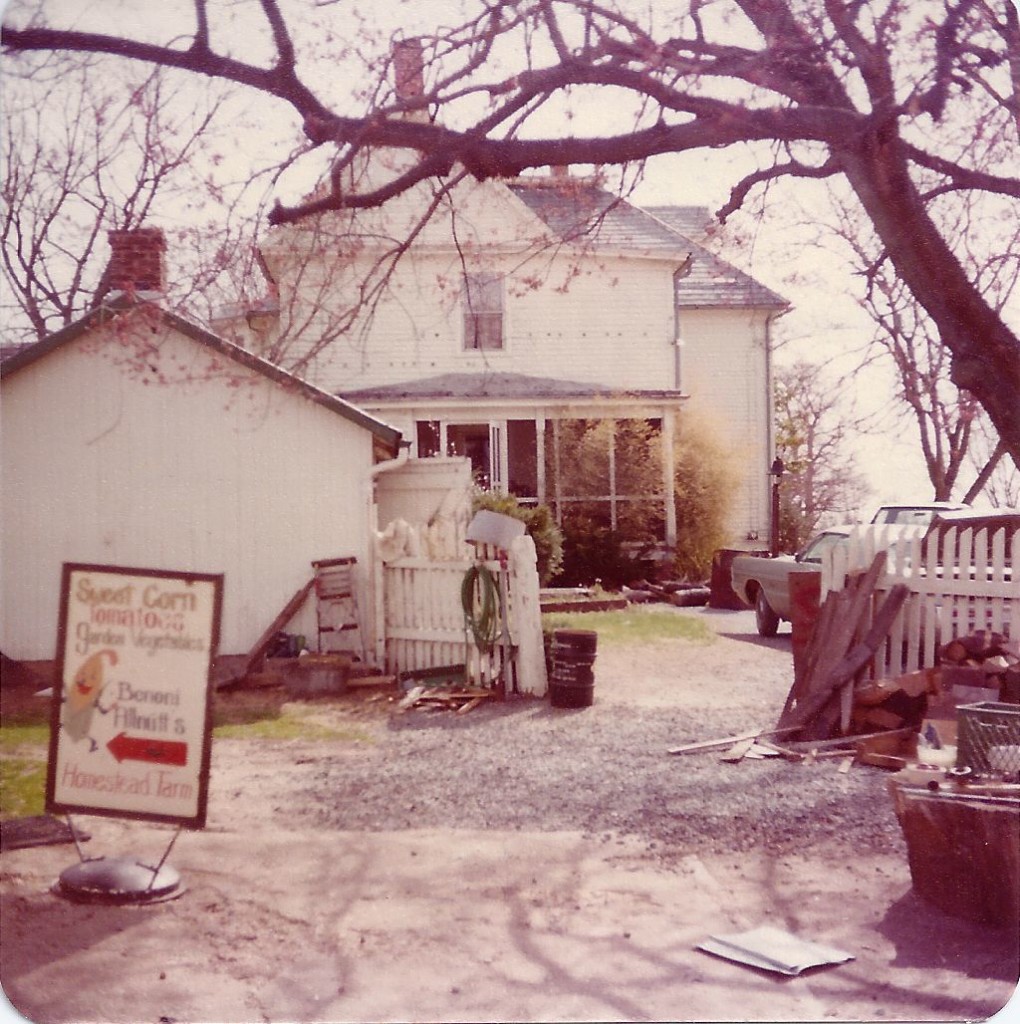 vegetables — those that were a little droopy, were beginning to go bad, had spots or were oddly shaped. I could always find him out in the retail area of the farm, digging around in the baskets of “bad” tomatoes, grumbling, “There’s nothing wrong with these.” He’d then take them to his shop and create something wonderful.
 This soup was one of those creations, rich with ham bone stock and packed with vegetables. It wasn’t anything fancy, but somehow, it was always the best soup ever. And it was never the same. Sometimes the soup would have summer squash and onions, sometimes turnips (not my favorite, by the way — sorry, Dad!) But most of the time it was filled with tomatoes, peppers, beans and potatoes. Dad liked to add a bit of kick with that dash of cayenne to the soup, too.
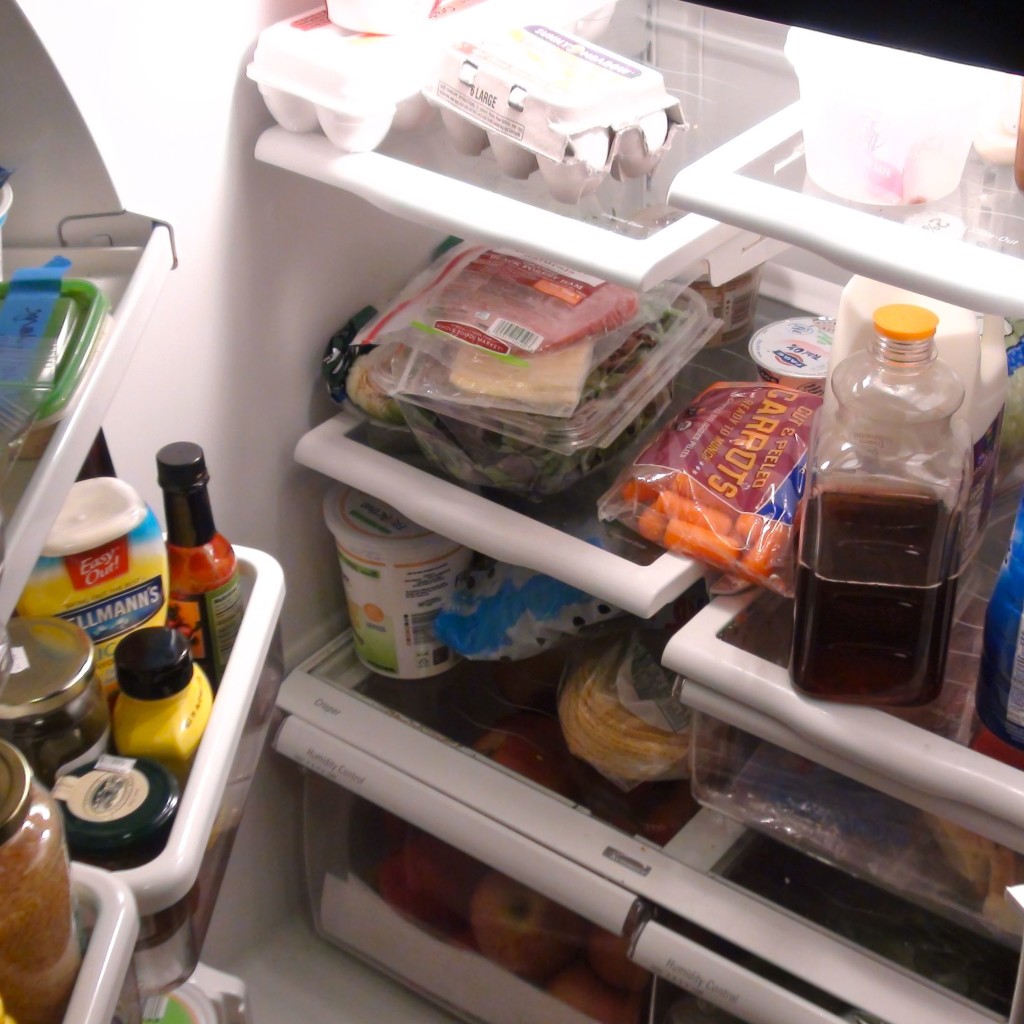 Approximately 4 cups chicken broth (or beef, or ham … or vegetable)
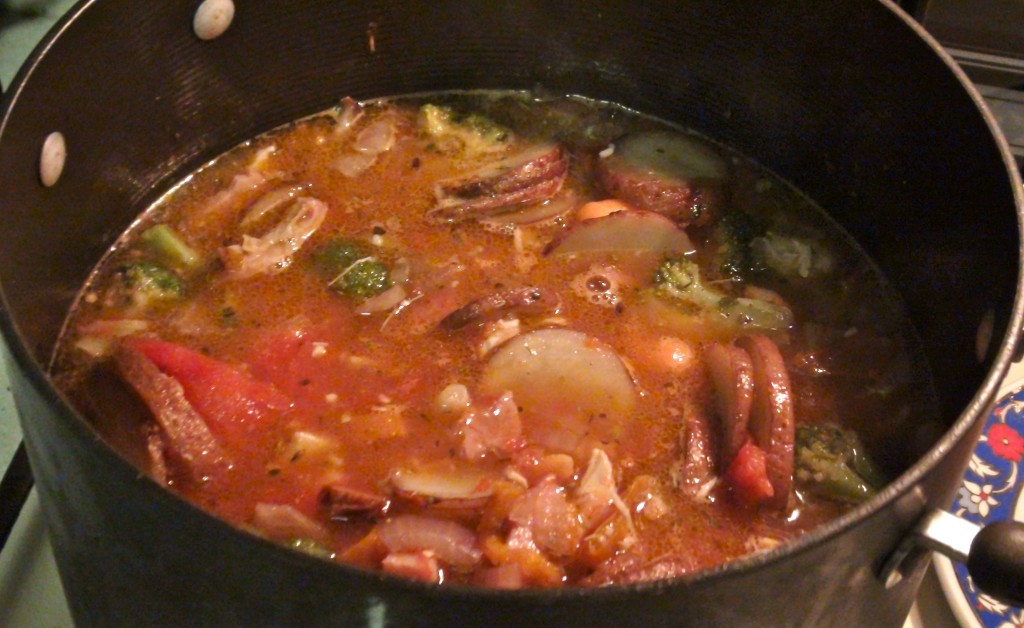 Bring to a boil and lower heat to medium, simmer for about 10 minutes. Add the rest of the vegetables and the meats. Add a bit of water if the soup is getting too thick (stew-like). Simmer for bit – about 15 minutes – and taste. Add salt, pepper and spices to taste. I try to be light handed with the salt, nothing is worse that a too-salty soup!