Queen of Scones: Getting A Little Help From My Mum

DD-05092014-scones21It is true that many of my favorite foods are pastry based, but the scone is right there, all fluffy and sweet at the top of the list. Not just any scone though. It has to be the light, airy, sometimes gargantuan scone. Most often scones found in the bakery aisle or larger chain coffee shops are harder, triangular and heavy.

The qualities of scone I look for do exist! Here in DC, the Scandinavian/Slavik inspired Domku Bar & Café bakes one of our favorites, available only on Sundays. The traditional UK-scone also tops my list, which I’ve had in both Edinburgh and Dublin tea shops.

I am still dreaming about the scones we had at The Queen of Tarts in Dublin last month. I swear they were the size of my head, bursting with the juiciest raspberries. Served alongside clotted cream and homemade preserves, this was one of my favorite meals from that trip. (Well, and all the Cadbury chocolate bars and pints of Guinness, which contributed to my clothes feeling a bit snugger on the return home.)
DD-05092014-scones09I have never made  scones in my life: The perfect scone seems intimidating to tackle. It boggled my mind that it could be achieved in so few ingredients. It must be all in the hand work. But because I’m still looking for a place to properly satisfy my scone cravings state-side, I decided to give it a go myself.

I found a great article on the Guardian, a British online publication, describing the various methods and techniques to make the perfect British scone. While some recipes the author mentions pledged allegiance to certain types of flour, it seemed to come down to dough. Specifically, how little one worked it, and how thin the dough was rolled out. The less work, the higher the scone rises and the lighter the texture. Overwork the dough and you end up with a hockey puck.

I enlisted the help of the best baker I know—my very own queen of tarts, a.k.a. mom. We set about on our mission, giggling over how silly that even sounded. How could my little librarian mother be queen of the tarts?

What further boggled my mind was that my dream scone might be achieved in so few ingredients.

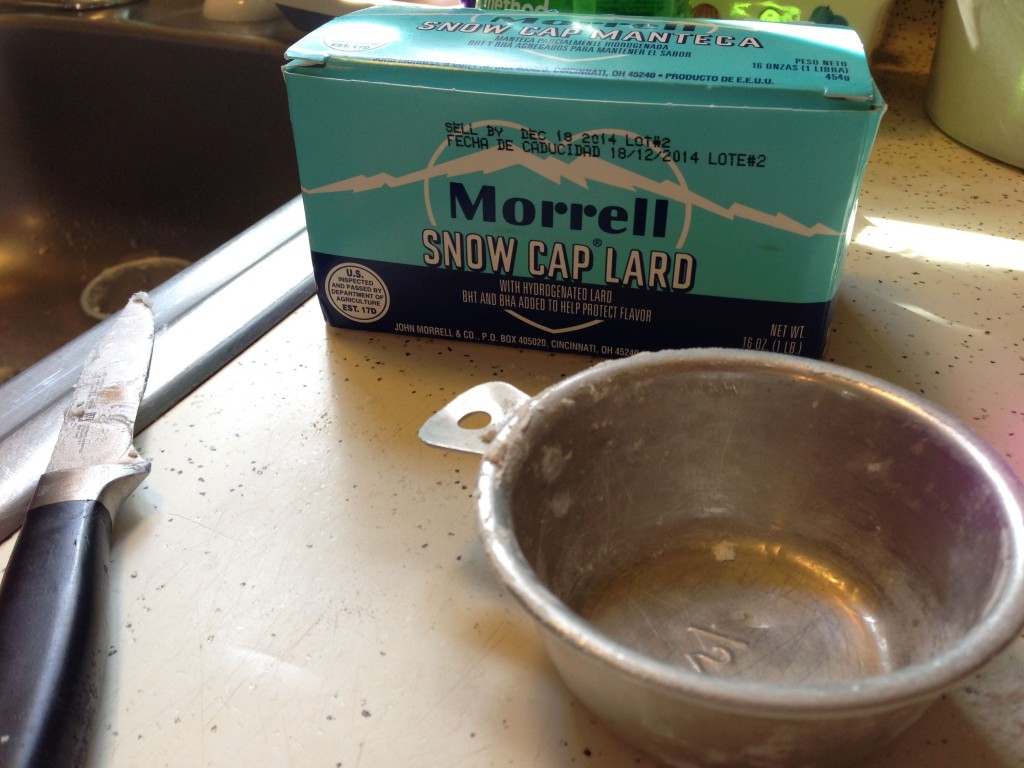
Surprisingly, we used two new to both of us: self-rising flour and lard. If you don’t have self-rising flour, it’s simple to recreate. It’s just flour mixed with baking powder and salt. You can even make a gluten-free version. Now, that would have put us over our five ingredient limit this month, so we stuck to the rules. And the second is… lard. We found it next to the butter at the grocery store. It was easy to measure out and work with, albeit a little strange to use the first time.
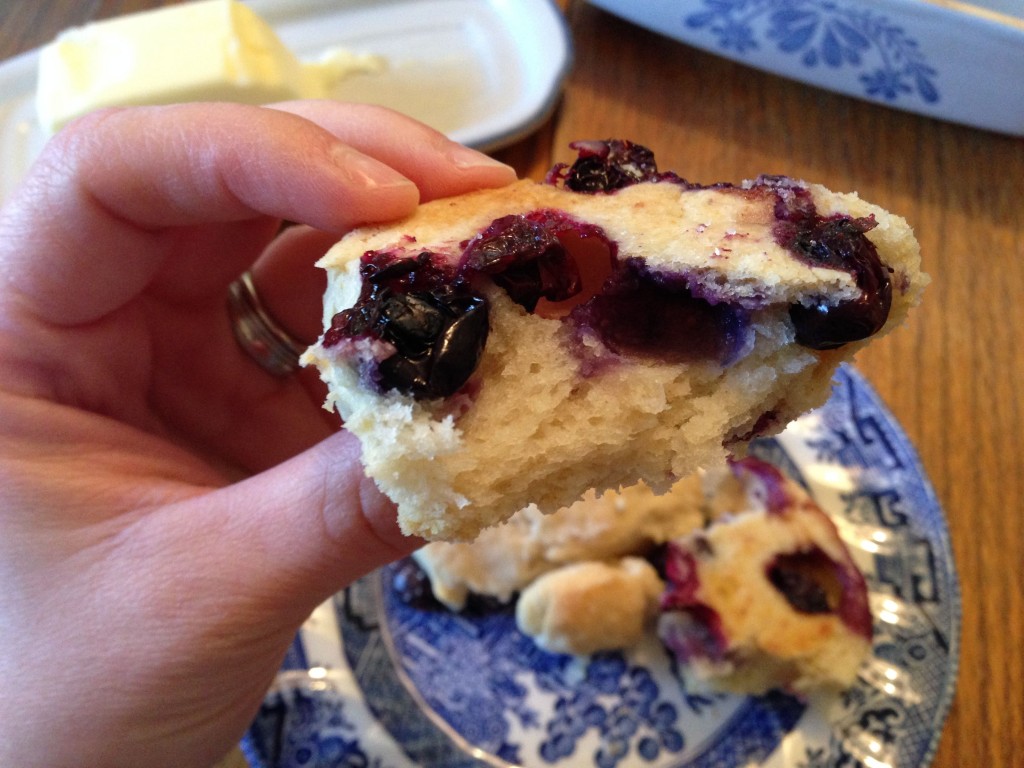
DD-05092014-scones22The scones turned out to be a good experiment, one I intend to try again soon. My mom (and her infamous sweet tooth) said she would have added sugar or some sweetener to the batter to perk it up a little. Using a sweeter berry might help with this. Or you could simply add a bit of jam or honey on top as you eat. Personally, I liked them as-is.

As for the texture, it was light but not to the level I’d envisioned. This tied to how we worked the fats into the flour and how much the dough was worked overall. Next time, I’d use a lighter touch, perhaps even my hands instead of a fork or pastry tool  to ensure the ingredients combined with as little effort as possible.

They weren’t perfect. Certainly not Queen of Tarts level. But they were yummy enough that we both ate several. And there was enough potential in the recipe that I intend to practice my scone baking again

And again.

Blueberry Scones

I followed a recipe I found on The Guardian where the author was in search of the perfect British scones. I converted the grams and milliliter measurements as best I could using online conversion tools.

1 1/2 cups self-rising flour, siftedDD-05092014-scones06
1/4 cup butter, softened
1/4 cup lard, softened
3.4 ounces milk
blueberries, half a pint or so depending on taste

Preheat oven to 375 degrees.

Cut the butter and lard into the flour as quickly as possible. There are many methods you can use, such as a pastry cutter or knives. We used a fork, but the article suggested using your hands to rub or work the fats into the flour, ensuring your hands were cold.

Add enough milk to get a soft, bread like texture to the dough. Note: You may not use all the recipe calls for, or you may need a little more.

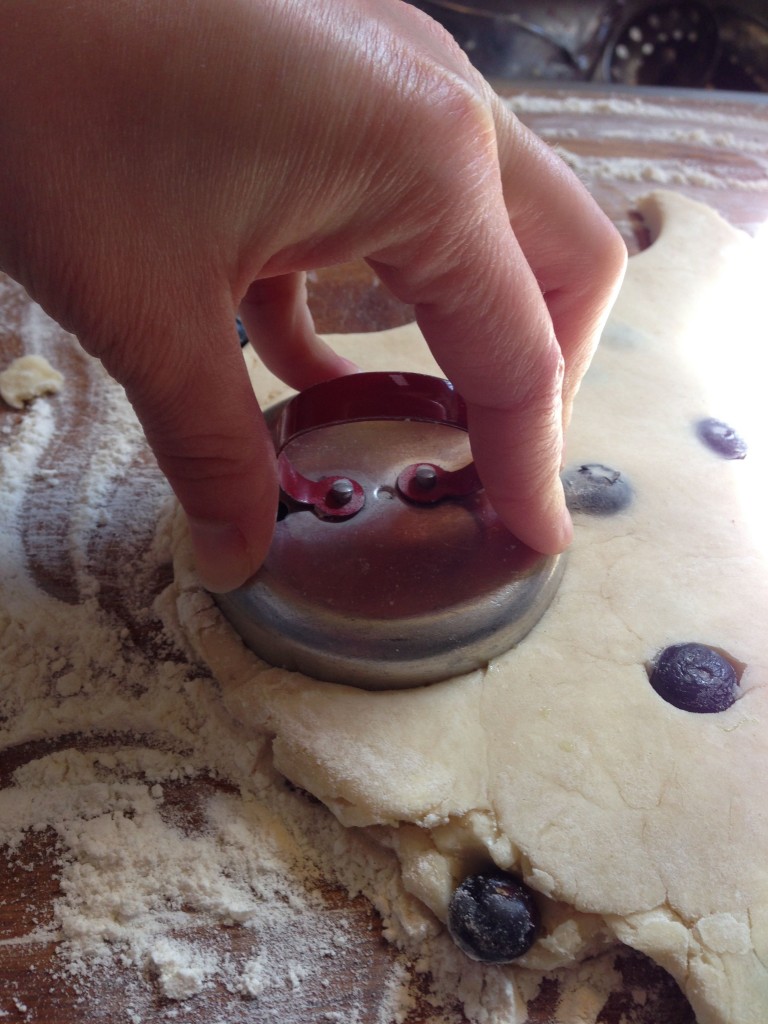
Roll the dough out onto a floured cutting board to about 1/2 inch thickness and cut out using a round cutter. Place onto a greased or parchment paper lined baking sheet. Bake for about 15-20 minutes, until golden brown and slightly raised. Allow to cool on wire rack.
Tagged with: , , , , , ,
Posted in Dear Diary

Super-Easy Subcontinental Kale. Or Collards. Or Whatever You Fancy

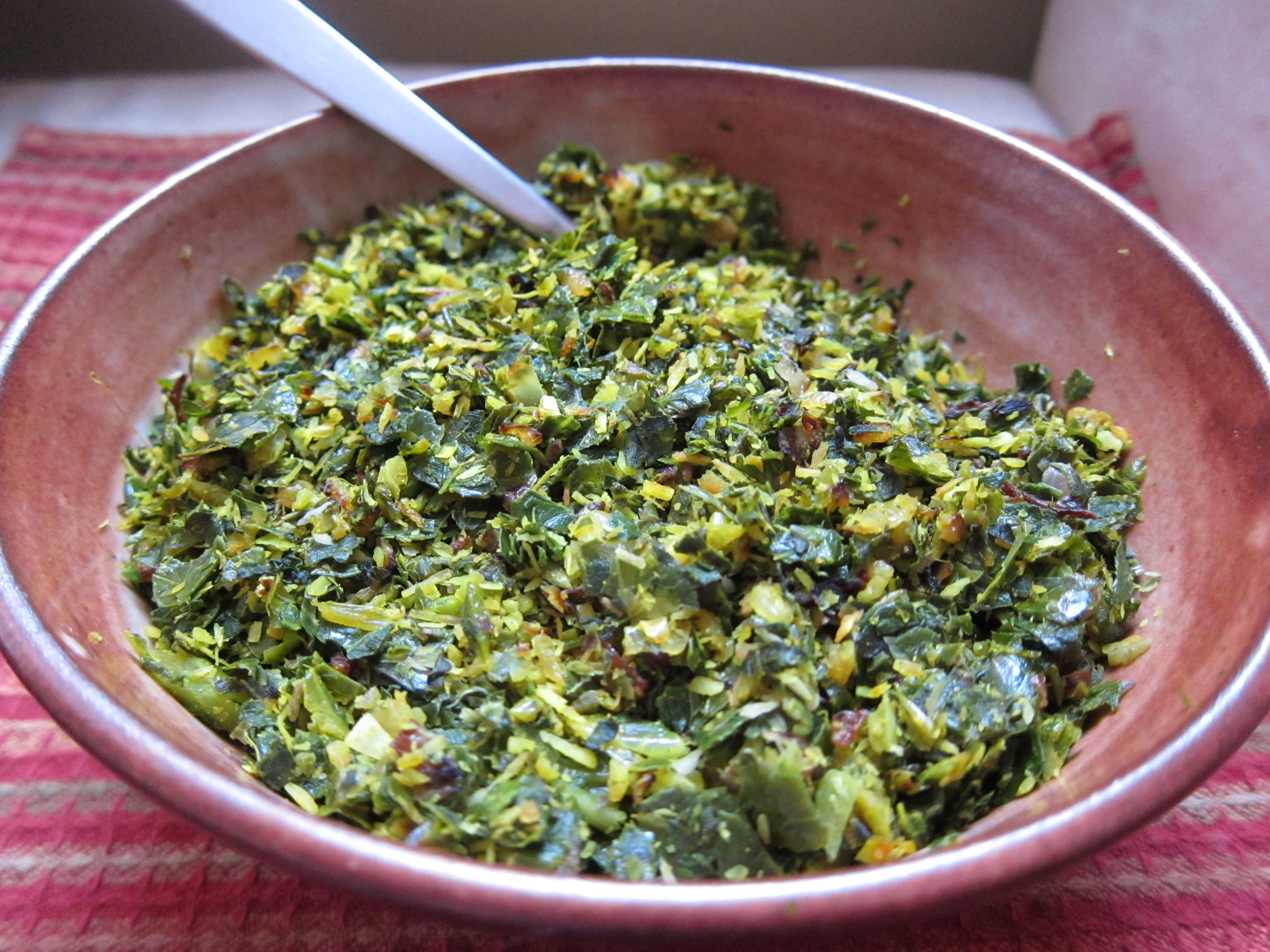
IMG_8958OK, folks, I’m taking you back to Sri Lanka this week. That’s because it’s five-ingredients month at We The Eaters, and while poking around looking for that delicious beef roast I brought you in March, I remembered a simple, delicious greens recipe that I first tried some time ago.

There are several wonderful things about this dish, known as mallum or mallung:

First, you can make it with kale, collards, spinach, mustard greens (if you’d like some bite) — pretty much any greens you fancy. And lucky for all of us, spring has finally sprung, meaning the farmer’s market is once again full of all kinds of tasty options.

Second, the recipe has coconut in it. If you’re a regular WTE reader, you know we’re big fans of coconut around here.

And third, this one’s a hit for its simplicity. If you cook South Asian food frequently, you’ll know recipes with just a handful of ingredients are somewhat rare. Not that the dishes are complicated (although some are), but many tend to have fairly lengthy lists of spices — which can make a recipe appear more daunting than it really is.

This recipe, on the other hand, is minimalist on the spice front. That gives you a nice, bright greens dish with just a slight subcontinental kick. Props again to Skiz Fernando (and his aunties) for familiarizing me with this recipe, in his great book, Rice And Curry: Sri Lankan Home Cooking.

Sautéed Sri Lankan Greens

Adapted from Rice & Curry: Sri Lankan Home Cooking

Any additions will take us over our five-ingredient limit, but if you like, you can finely chop a chile and add it when you toss the onions into the pan. Also, this is traditionally finished with a squeeze of fresh lime juice. I didn’t have one on hand when I made it last weekend and it was still delicious.

About 1/2 pound collards, kale, spinach or other greens
Splash of oil (I use coconut)
1 sliced onion
1/4 cup of shredded, unsweetened coconut (you can use fresh-grated or desiccated)
1/2 teaspoon ground turmeric

Wash and finely chop the greens, or hurry that step along by chopping the washed leaves in a food processor. Either way, leave some water clinging to the leaves if you can.

Heat oil over medium in a nonstick sauté pan. Add the onion and sauté until they’re translucent.

Add the shredded greens and coconut, stir, and put the lid on for a few minutes. Uncover and stir in the turmeric. If it’s getting too dry, add a tablespoon or so of water and cook another few minutes, until the greens are to your liking.

You can add some additional flavor by salting to taste and serving with a squeeze of lime.


Tagged with: , , , , , , , , ,
Posted in Dear Diary

Turning Ice Cream Maker Dreams To Slush

Here are four reasons why buying an ice cream maker is a bad idea:

  1. Ice cream is a pain to make.
  2. You’ll never make ice cream.
  3. You can’t make much else in an ice cream machine.
  4. It takes up a lot of space when you’re not using it.

When I was contemplating buying an ice cream maker, my roommate insisted I would never use it. My neighbor Deanne even told me I could have hers on permanent loan because she never used it.

I bought it anyway.

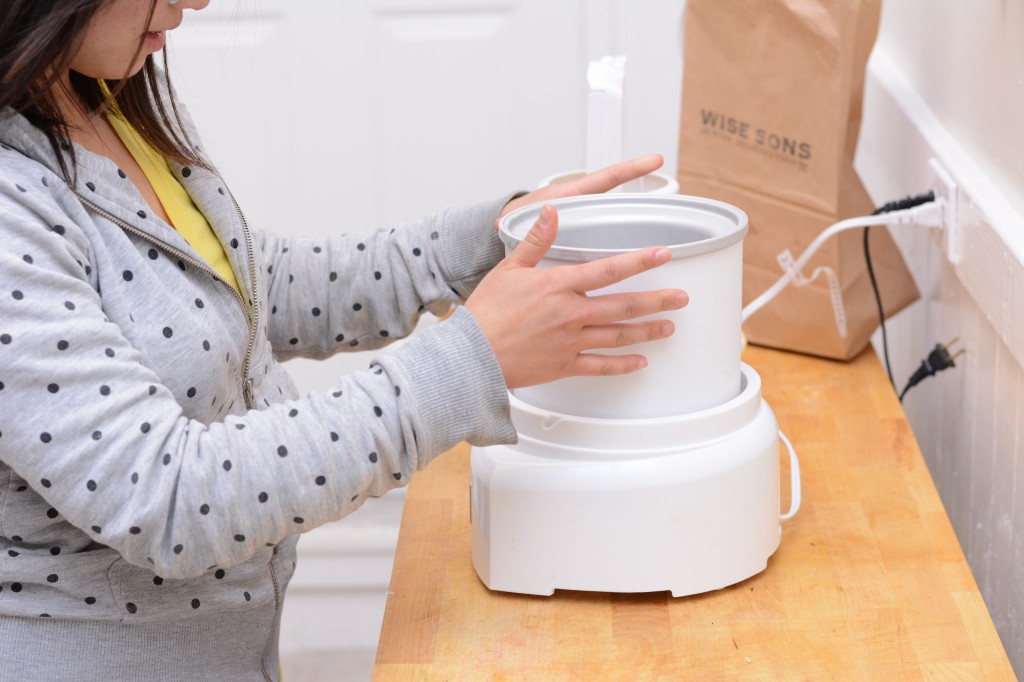
icecreammaker1Partly it was to be defiant, but mostly it was because I missed Jeni’s Ice Cream, the pride of my hometown, Columbus, Ohio. Ice cream people are powerfully loyal to whatever tastes like home. All of those people who try to tell me that Bi-Rite/Toscanini’s/whatever is the best ice cream in the country are obviously wrong and clearly biased — objectively speaking, of course — because nothing can compare to Jeni’s. That includes the Jeni’s pints you find in grocery stores across the country. Somehow the ice cream gets really mealy in the shipping process.
The point is, the choice to purchase was obvious, even if all the warning signs were there.

Needless to say, the Cuisinart ICE-21 has been gathering dust on my counter for nearly a year. Ice cream making is for planners, not for people who cook with whatever is about to go bad in the fridge. The problem is, the wrong mix of ingredients could leave you with ice cream that remains perpetually slushy, freezes into a solid block, or becomes a minefield of ice crystals. And even before you flip the machine’s “on” switch, you have to remember to freeze the canister for several hours and give your custard enough time to chill completely. After a few tries at making my own with mixed results, I concluded that the high cost of premium ice cream (anywhere between $5 to $10 in San Francisco) wasn’t so pricey after all.

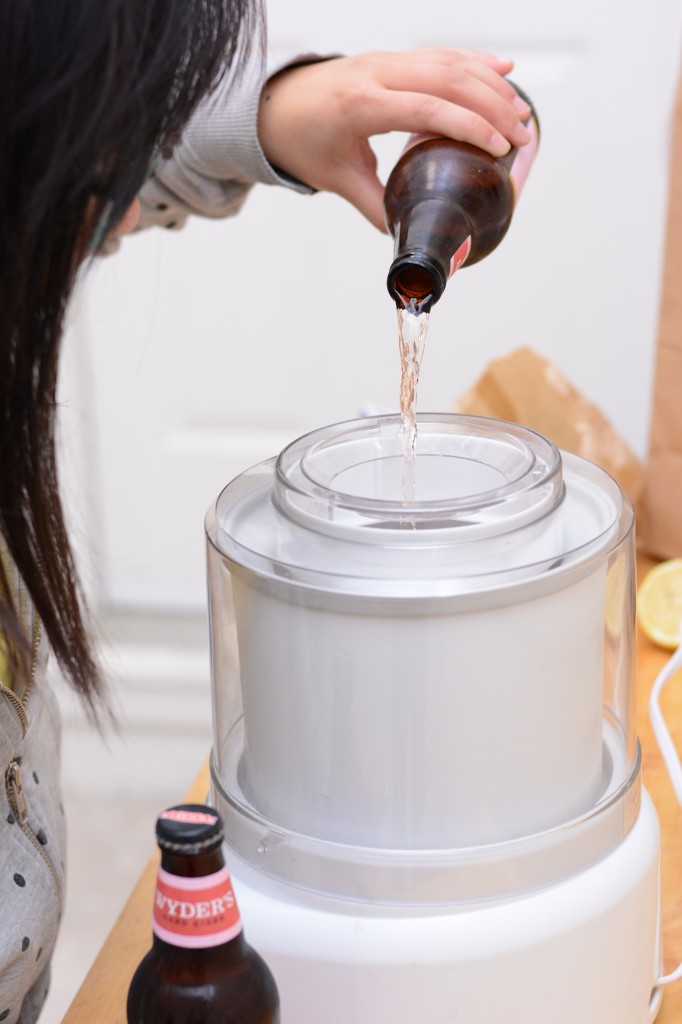
What is a lazy, frozen treat-loving cook to do? A friend suggested I try making icecreammaker_bottle pourslushy frozen cocktails. It seemed to work on the internet.* But cocktails are way too much work, I thought. Let’s do something easier. So I planned ahead: I put the canister in the freezer, picked up a 6-pack of cold, raspberry cider from the corner store with my groceries, made dinner, and watched a few episodes of House of Cards.

After a few hours, I set the frosty appliance on churn and poured two bottles of Wyder’s Raspberry Cider in while it spun. In my previous ice cream-making experience, I’d found myself wondering if I hadn’t fully chilled the machine, when suddenly, after about 20 minutes of churning, the custard spins itself into a tornado and freezes into something delicious. I tried to keep this in mind as I watched the pale pink liquid swirl around in the canister.

A thin layer of ice floated at the top but didn’t seem to expand. My boyfriend convinced me to drop in a few chunks of ice to help the liquid cool. We watched another episode of House of Cards and returned to find the ice chunks twirling around in a pink whirlpool, which hadn’t changed state at all. We turned off the machine and poured the cider into glasses. It was delicious and very, very cold.

In anticipation of the cider experiment failing, I’d also picked up ingredients for a lemony whiskey sour slushy recipe I found on seriouseats.com. Holding a half-drunk glass of cider in one hand, I started preparing for an earnest attempt at making another frozen cocktail.

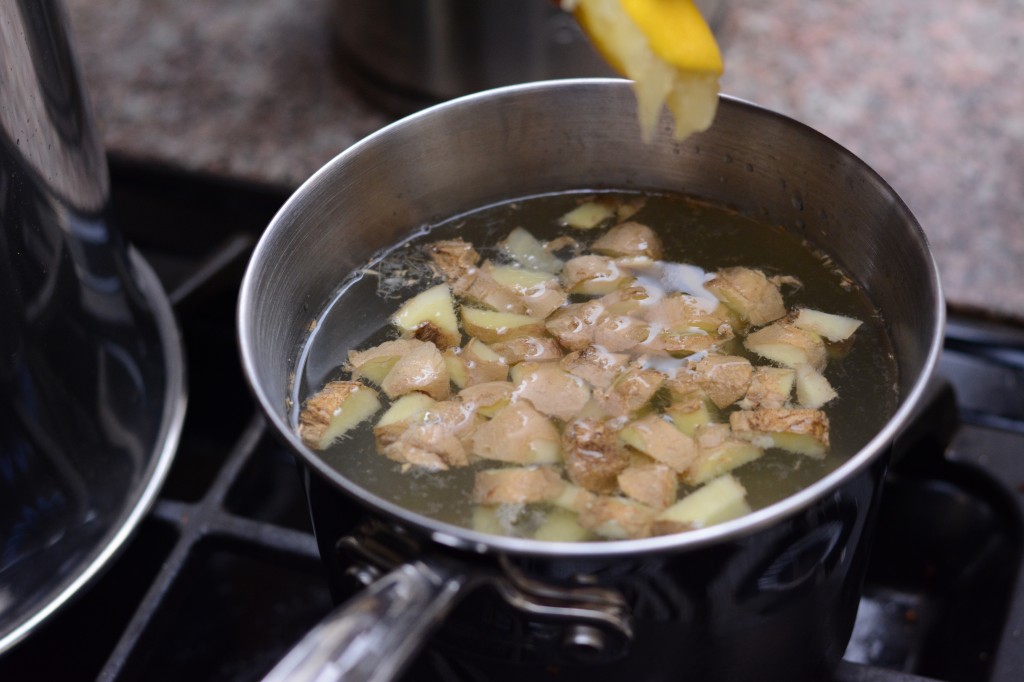
icecreammaker_ginger stoveI put the canister in the freezer to cool overnight. I boiled ginger in water and let it cool overnight, hoping to add a little zip to the concoction. The following day, I whisked together the ingredients and let it sit in the fridge while I went on a day hike. I moved the lemon mix to the freezer while I made dinner so it would be very cold. I later poured the yellow liquid into the machine and watched it swirl around … and keep swirling.
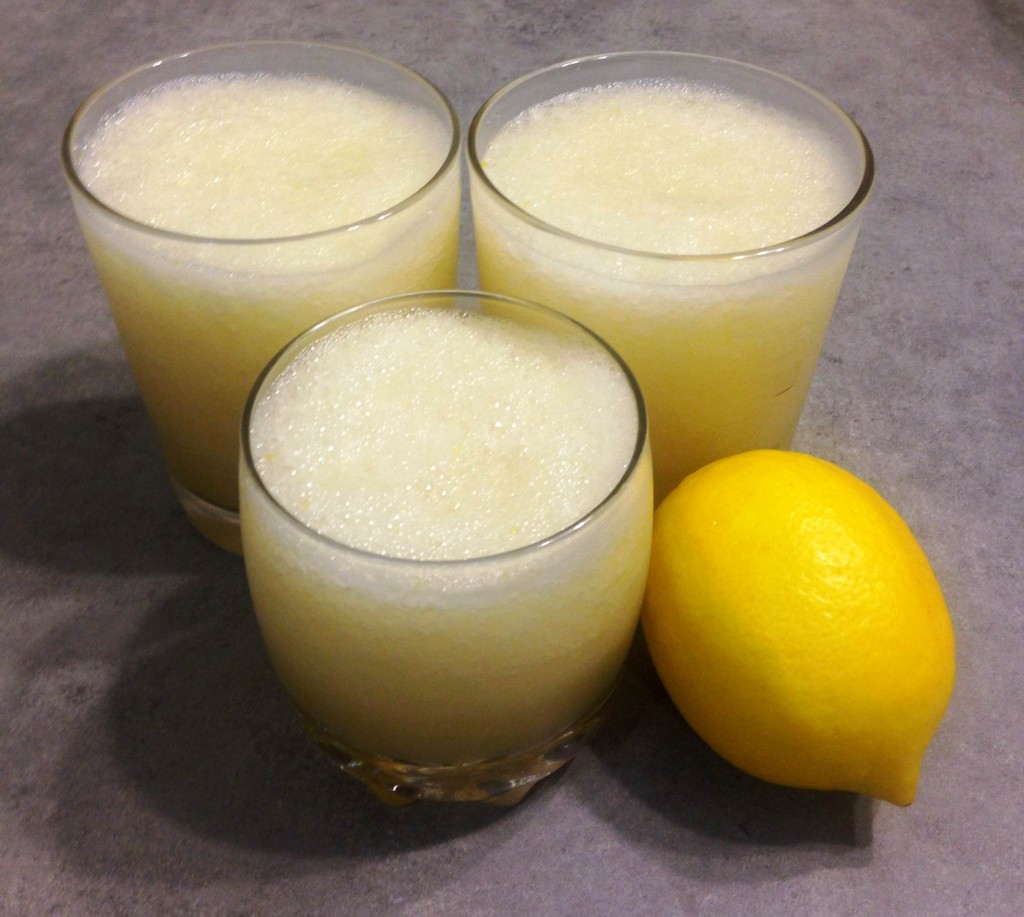

No tornado. No ice crystals.

Just the same lemon juice mixture I poured in 30 minutes previously, but chillier. The experiment again had failed. Perhaps cocktails contain too much alcohol for the drink to freeze? Or maybe I just made it all wrong. Or maybe the ice cream maker only works with the Frozen Coco Loco recipe from the CHOW video.*

Whatever the reason, I still had a quart of cold, whiskey-lemon juice sitting in my ice cream machine that I needed to use. I pulled out my blender and dumped the lemon juice over three trays of ice and hit blend. Within seconds, the blender chewed up the ice, leaving a perfectly frozen, frosty drink.

If I were to be perfectly honest, reasonable and rational with myself, I’d put the ice cream maker in the Goodwill pile; however, a vacating roommate moved away, opening up some extra cabinet space for my Cuisinart ICE-21. Ice cream making is like gambling — there’s always a chance that it will work out, and I can’t bring myself to quit making ice cream cold-turkey. Now that the ice cream maker has been tucked away out of sight, we’ve toyed with the idea of keeping our blender on the counter.

Whiskey Sour Slushy Lemon_Whisky_Slushy

Adapted from Serious Eats.

1 1/2 cup lemon juice (about 8 to 10 lemons), plus juice from 1/2 a lemon
1/2 cup plain water, plus 3 cups for boiling
3 to 4 inch piece of ginger
1 cup corn syrup
7 tablespoons bourbon or rye
Grated lemon zest from 2 medium-sized lemons
3/4 teaspoon kosher salt
3 trays of ice cubes

Chop the ginger into 1/4 inch pieces and add it to a saucepot containing 3 cups of water plus the zest and juice from half a lemon. Bring water to rolling boil for 5 to 10 minutes. Allow ginger water to cool, preferably overnight.

Whisk together lemon juice, 1 cup of ginger water, 1/2 cup of water, remaining lemon zest and all other ingredients in a bowl. Once liquid is mixed, put in fridge to cool — at least 2 1/2 hours. Can’t wait? You can also put the liquid in the freezer for 1 1/2 hours.

Once the liquid is chilled,** pour liquid into a blender with ice cubes and blend until smooth. Pour into five glasses and enjoy!

*I’m not a fan of coconut drinks so this recipe was automatically ruled out.

**Optional step: churn chilled liquid in a cold ice cream maker to make yourself feel better about owning a large, single-function machine.

Tagged with: , , , , , , , , , ,
Posted in Dear Diary
photo credit to Aaron Otis Photography 2014


July
Watermelon is the perfect summer food. It hydrates, it cools, it's sweet and juicy. We have some great ideas for your table, including a salad, ceviche cups, popsicles and cocktails. Get ready to beat the heat with us!