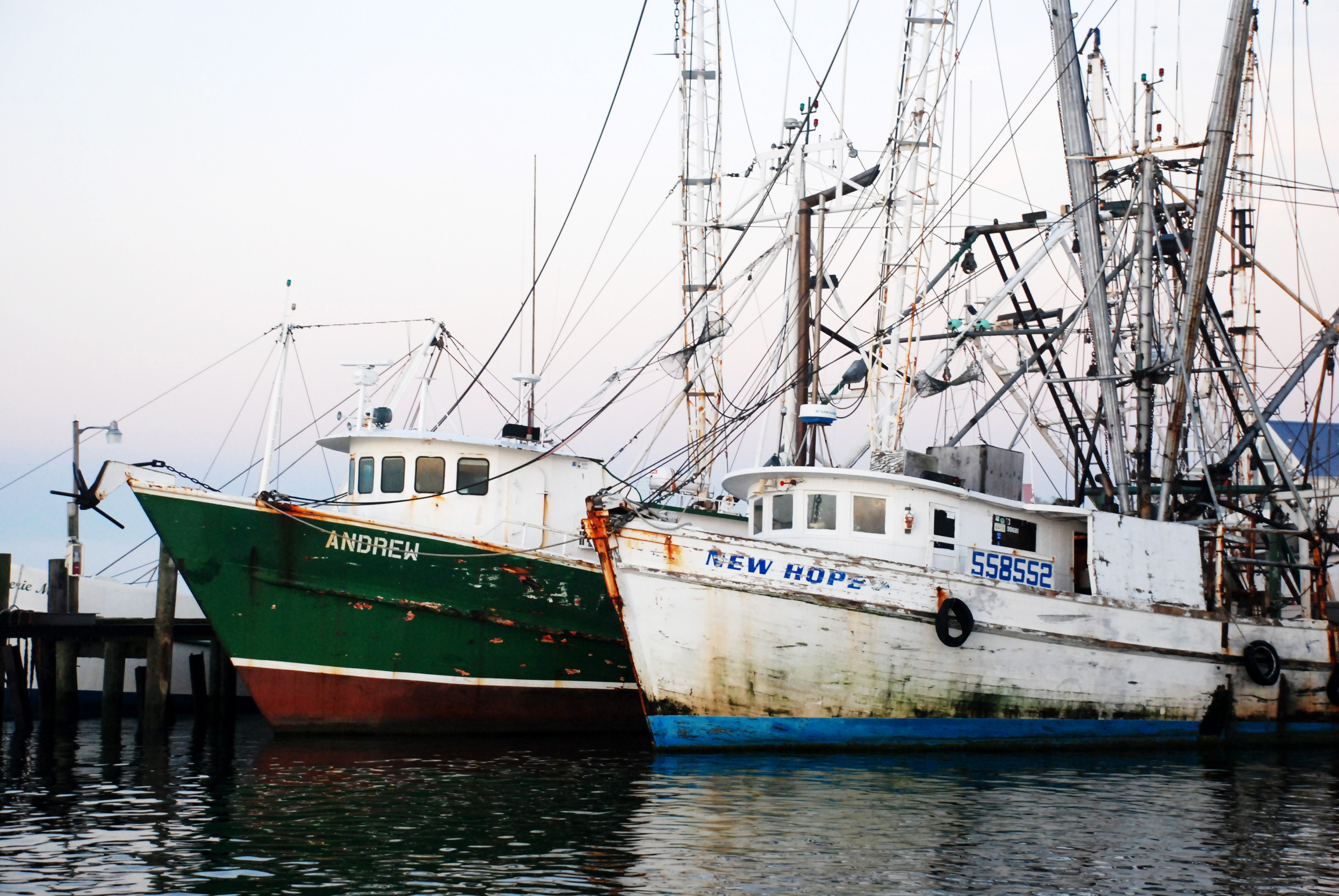
Salt Crusted Fish: Overcoming A Fear Of Whole Fish

I became interested in—no, scratch that … saltfish8“obsessed by”—fish baked in salt crust sometime last fall. I’d been reading a short article on different ways to cook whole fish in one of my favorite food magazines.
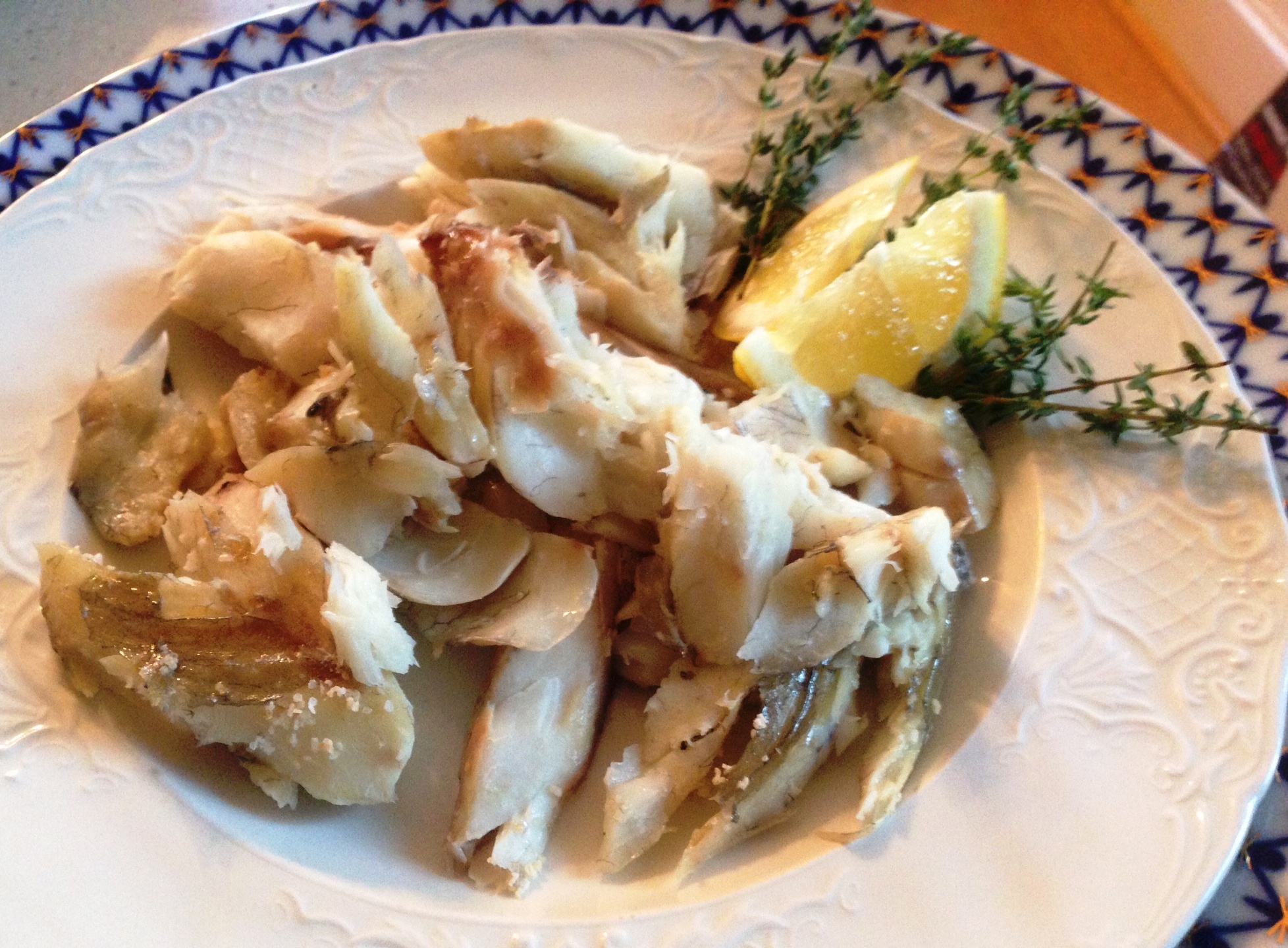
Having such fond memories of the dish from my time in West Africa, I’d wanted to try my hand at whole fish for a while. To me, a platter of whole fish brought back memories of friends gathered around a small table, digging into a delicious meal with their fingers while exchanging stories of the day, and at the same time negotiating who would chase the chickens away from the courtyard.

The communal meal that serving a whole fish offers reminds me of rooms filled with laughter, bright colors and delicious smells. I have wanted to recreate that scene so many times (minus the chickens), but was completely intimidated by the idea of cooking an entire fish.

Somehow, the salt crust baked approach in the article made it seem accessible.  Was this my chance? Perhaps — but only if preceded by full fledge recipe comparison, strategic data gathering, and ingredient gap analysis.
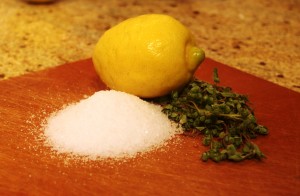
I stopped myself short of a spreadsheet.

In the process of reading dozens of recipe variations, I became well versed in the many benefits of this cooking method. For one, you could feed an army with this simple dish. Getting your hands into a sticky mixture of salt and egg whites is incredibly fun. You can dress up the final baked fish to make a stunning presentation for guests. But let’s not overlook the all-important taste! The salt mixture seals the entire fish, allowing it to steam with the aromatics of your choice, creating a perfectly moist, delicately seasoned meat that is cooked without oils or fats.

I will let you in on the ultimate secret I learned from this near-spreadsheet experience: This dish is an anxiety-free endeavor. The process is exceptionally versatile and can be adapted to almost any ingredient you have on hand. I have personally discovered this particular benefit while standing in the market, shopping list firmly in hand, eyes open wide at the absence of the desired bass.

“Trout is our only whole fish today,” said the nice fish counter lady, “May I interest you in one?”

Should I start overthinking the offer? Should I completely change the menu? Should I have a mini panic attack at the thought of potentially serving an unplanned fish to guests? Worse — should I just walk back home and cancel dinner?

No. It’s fish, not brain surgery.  saltfish6
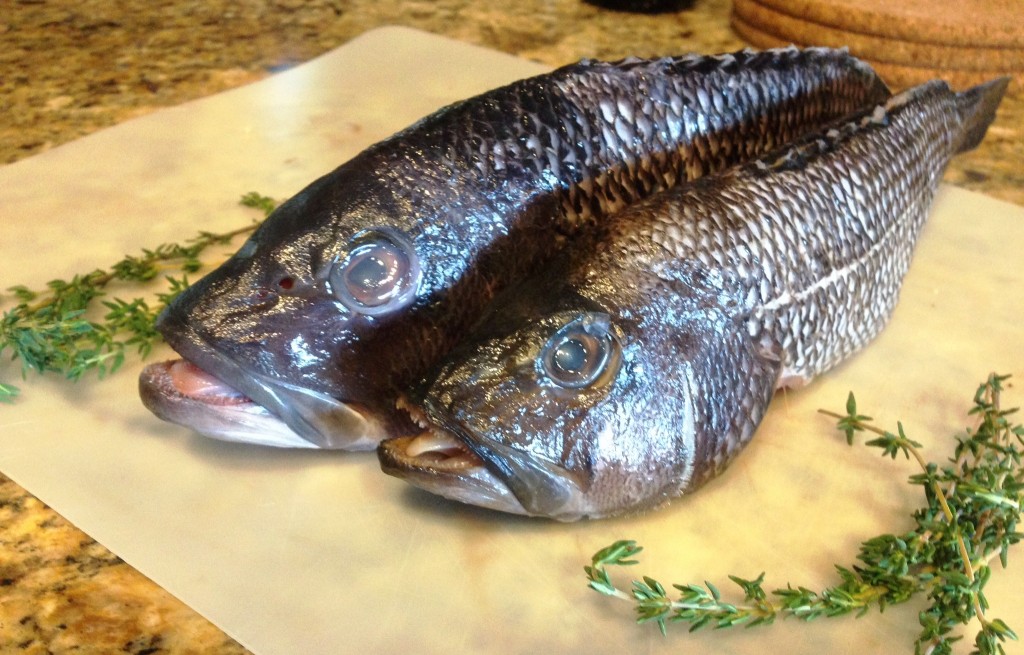
Beyond the expected good matches of branzino and bass for salt crusted fish, I have had great success with salmon, tilapia, porgy, trout and snapper. Any fresh fish will do.

This cooking method also works with a variety of sizes. A 1 ½ pound specimen has been known to feed two foodies, including leftover trout eaten cold with a glass of excellent whiskey after a night out. A three-pound salmon was more than enough on a recent parental visit served with kale and rice. On the fancier side, “his and hers” smaller, quicker-baked fish served individually are also worth considering if little guys under a pound are available. Just fill the cavity with citrus fruits and fresh herbs, experimenting with what you have in the refrigerator or the garden.

Needless to say, the salt baked fish find its way onto many of my menus these days (sometimes with lobbying from guests), bringing me much happiness every time I get to prepare it.

Salt-Crusted Fish

Tips before starting:

  • Before acquiring the perfect fish, think about what sheet pan you have available. Your fish needs to fit on it. For bigger ones, I sometimes have to use a roasting pan. If your choices are limited, two smaller ones can cook nicely side by side on the same, smaller pan.
  • If you experience a misunderstanding with your fish monger who inadvertently removed the head of the fish in a moment of inadequate fish terminology, fear not. You can cover the resulting skinless area with lemon slices and foil before you scoop over the crust to prevent the salt from seeping in.
  • The rule of thumb for the salt mixture is a ratio of 2 egg whites per cup of salt. For each pound of fish, I recommend 2 cups of salt. My preference goes to preparing more than needed so I can generously cover the fish without worry. The mixture should have the consistency of wet sand. If you run out of egg whites and the mixture is still on the dry side, you can add water to reach the desired consistency.
  • The salt crust becomes surprisingly hard during the baking process. It becomes almost impossible to reach the fish with a thermometer if you are (like me) in need of a temperature reading before declaring victory. Try placing one or two whole peppercorns over the thickest part of the fish. To check if the temperature has reached 125-130 degrees, the peppercorns can be lifted with a fork or small knife to insert the probe. If the fish is not done, place the peppercorns back and you will maintain the integrity of the crust for an additional 5 min of baking.

Ingredients

1 ½  to 1 ¾ pounds fresh, whole fish with firm flesh, cleaned and scaled, fins removed
3 cups sea salt or Kosher salt
6 eggs, whites separated (WTE tip: don’t toss the yolks! Lemon curd, anyone?)
1 lemon, sliced (plus 1 for serving, optional)
3 fresh sprigs each thyme and either oregano or marjoram
Salt & pepper
1 or 2 whole peppercorns (optional)

Preheat to 450. To properly bake your fish in the salt crust, you need a hot oven.

Prepare your fish: rinse inside and out in cold, running water. Run your fingers on the outside to remove any leftover scales. Pat dry.

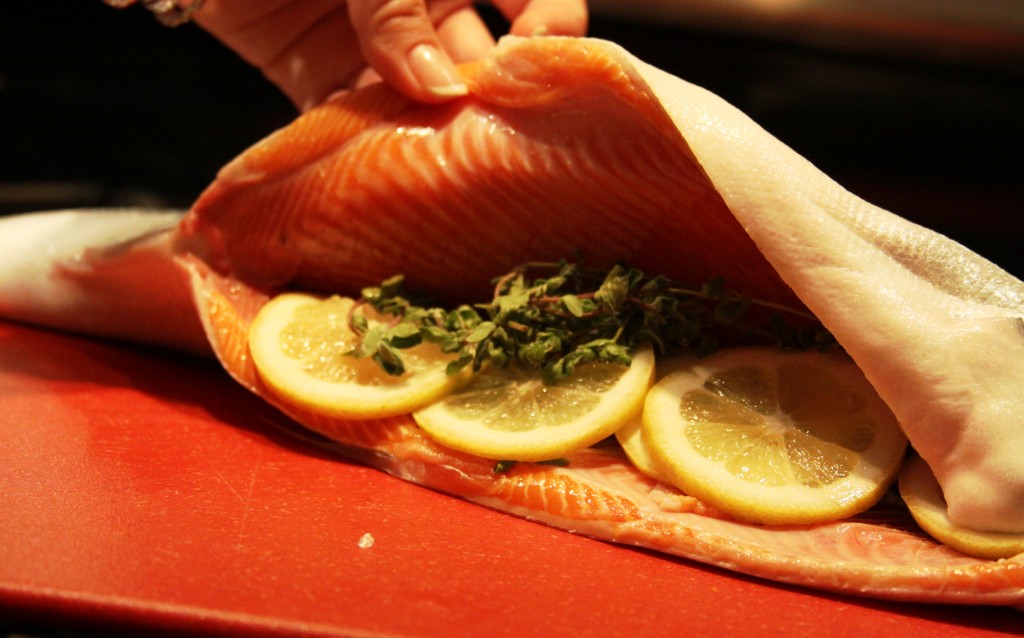
Stuff the fish cavity with lemon slices. Arrange the fresh herbs on top of lemon. If working with salmon, you can substitute dill for the thyme and add slices of fennel to the stuffing. Fold the fish back closed.

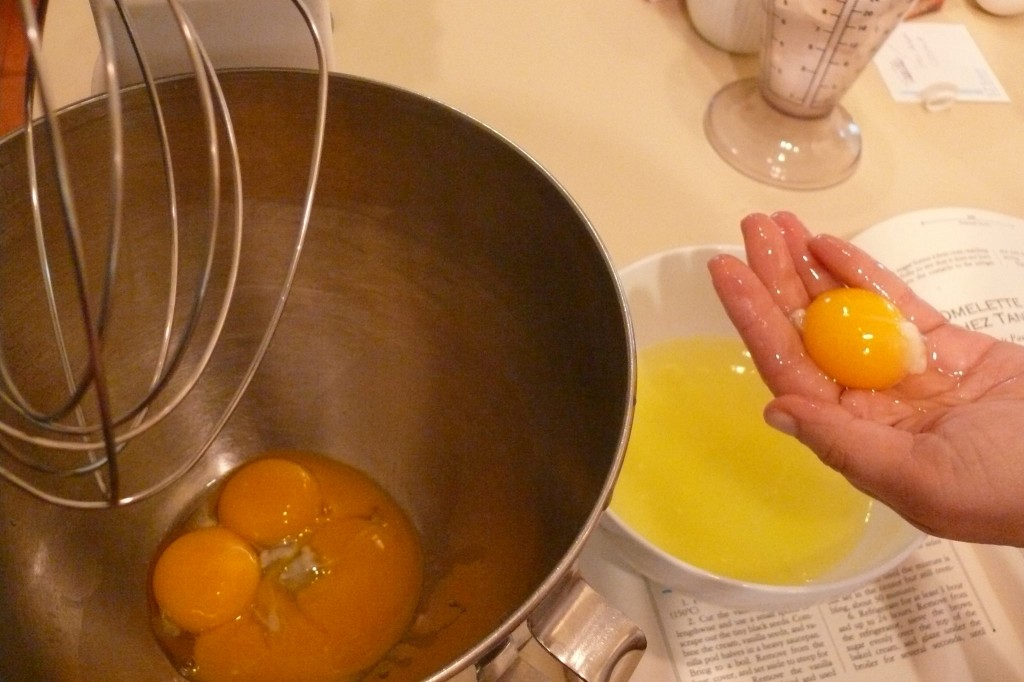
In a bowl, beat the egg whites into soft peaks. Fold the salt in. Alternatively, get deliciously dirty by simply mix the salt and the egg whites together with your hands.

saltfish3Place a half-inch layer of the salt mixture onto the sheet pan. The layer should be a wee larger than the size of your fish. Lay the fish on top of the salt base. Scoop the remaining salt mixture over the entire fish, to form a half-inch crust over it. The tail can be left uncovered. If needed, delicately insert one or two peppercorns in the salt mixture over the thickest part of the fish. Place in the oven for 17 to 20 minutes.

Remove from oven and let rest 10 minutes. Unveil your masterpiece by cracking the crust with a wooden spoon or fork and gently removing the salt crust pieces from the fish. Brush off any excess salt before you skin and fillet the fish, starting by lifting the top fillet after separating it from the backbone with a gentle incision, then lifting the spine, discarding any remaining small bones and accessing the bottom fillet (WTE tip: Check out this video tutorial … at about 3:10, they show how to do this).

Serves two generously
Tagged with: , , , , , , , , , , , , , , , , , ,
Posted in Dear Diary

Celebrating Seafood: Sustainability And Sourcing

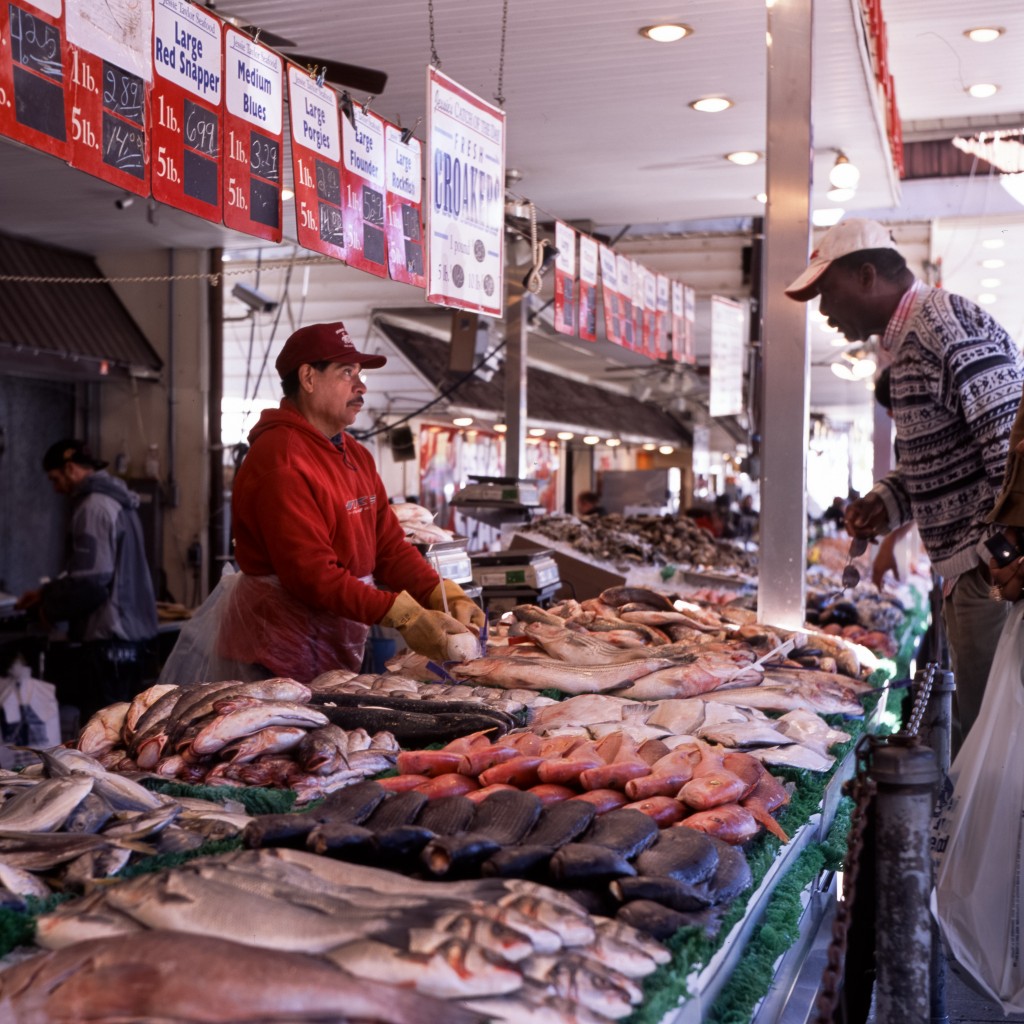
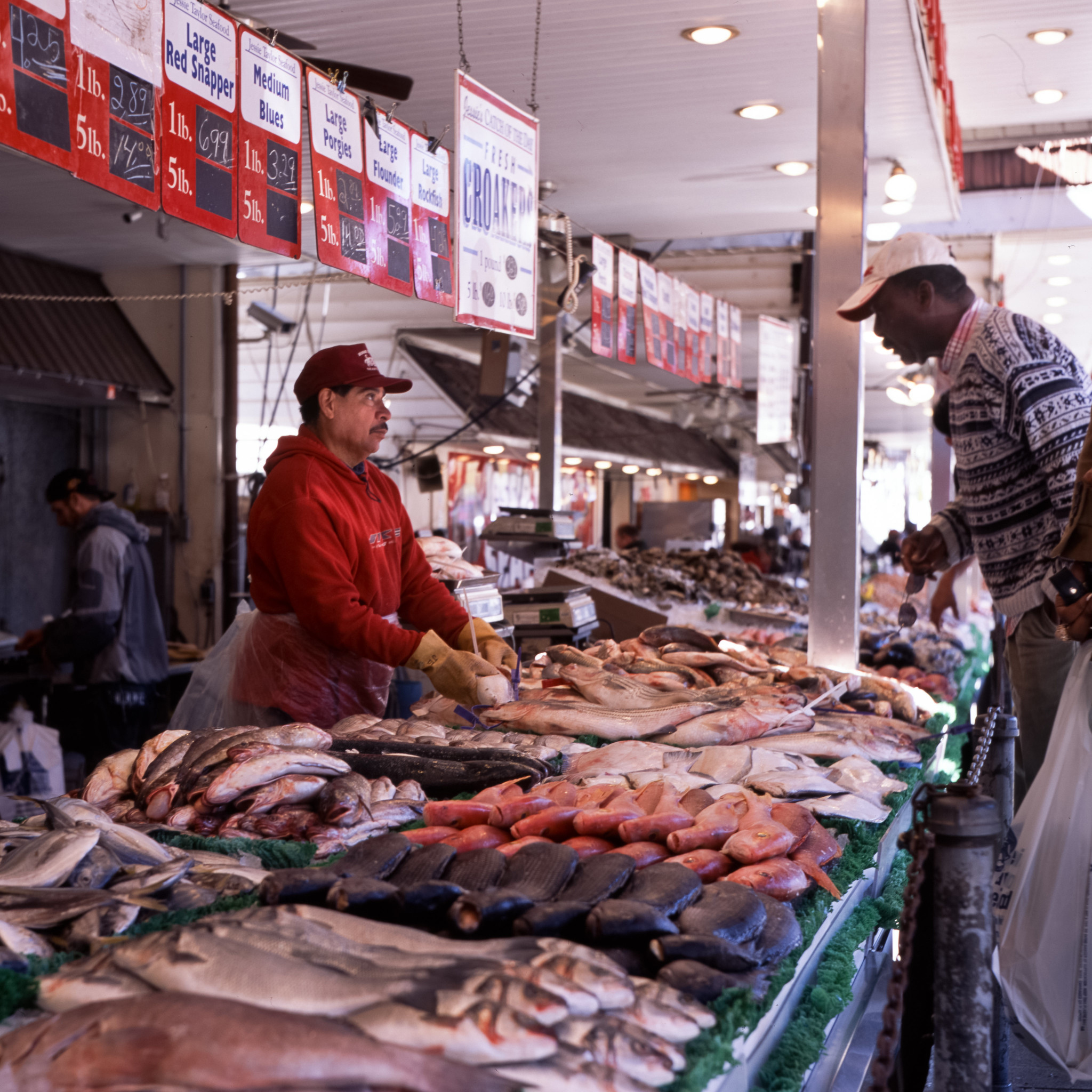
DC_Fish_Market
Photo Credit: Reed A. George via Flickr

What we hear about fish can be confusing:

Eat more — it’s good for you! But not too much of certain kinds, and some you shouldn’t eat at all. Be careful about mercury. And PCBs. You need to know how it was raised. And where it was caught. 

It’s enough to make your head spin. Add that to a lack of knowledge about preparing or cooking fish, and you get enough fear and trepidation that some don’t even bother — that’s where I find myself these days.

I love fish, adore going to seafood restaurants and have even ventured to cook it here and there. But, to be honest, I don’t really know a lot about it. That’s why we thought educating ourselves — and our  Eaters — on the importance of these issues would be a great way to launch our month focusing on fish.

First, let’s take a look at why it’s a good choice.

Why Should We Eat More Seafood?

Along with the usual suspects like chicken, turkey, beans and lentils, fish almost always tops the list of lean proteins that should be in our diet. The vitamins, minerals and nutrients packed into each serving are what make it such a good option. According to the Washington State Department of Health, its “filled with omega-3 fatty acids and vitamins such as D and B2 (riboflavin) … rich in calcium and phosphorus and a great source of minerals, such as iron, zinc, iodine, magnesium, and potassium.” All of which help to keep our heart and brain healthy.

Lower my risk of heart disease and stroke? Increase my brain power? SOLD!

But as recently as June, the Food and Drug Administration changed its recommendations for how much fish young children and pregnant and nursing women should eat. The recommendations encourage a minimum number of weekly servings of low-mercury fish for these groups, as opposed to the upper limit that had been suggested in the past.

A New York Times blog post on the FDA’s new advice says the agency’s acting chief scientist, Dr. Stephen Ostroff, “cited studies showing that children born to women who consume fish have higher I.Q.s and better cognitive development than children born to women who do not.” And the benefits extend to everyone — not just this pregnant women and children.

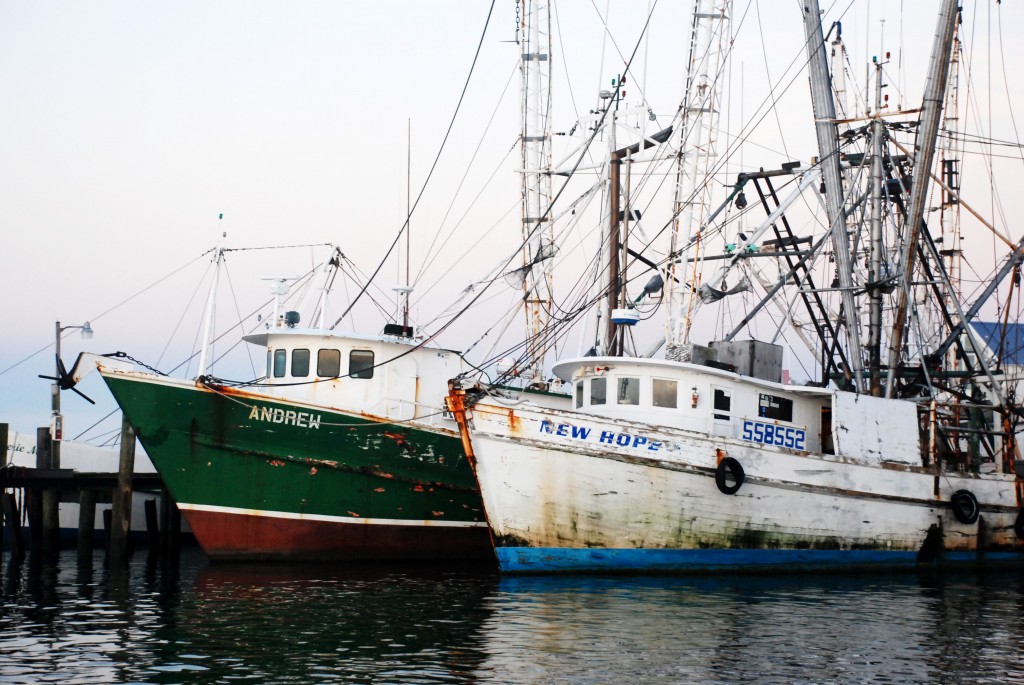
Fishing_Boats
Photo Credit: David Clow via Flickr

The problem is, these guidelines and advisories sometimes have a catch or caveat. Just as we’ve become more aware of the benefits of organic and local vegetables, ethically raised chicken and beef, we should also be cognizant of how and where our fish is sourced.

What’s The Danger?

As with all food, there’s a risk that fish could contain contaminants and pollutants from our environment. According the World Wildlife Foundation (WWF), the chemicals, metals and waste runoff that originate on land inevitably end up in our water. Add to that pollution from humans dumping trash and chemicals directly into the ocean, under the misguided belief that “the solution to pollution is dilution.”

Here’s a list of just some of the most prevalent contaminants found in our ocean’s ecosystem:

  • According to the National Resources Defense Council, metals that affect brain function and development, like mercury, enter our waterways and eventually the oceans via large industrial plants, particularly those powered by coal.
  • Industrial chemicals like PCBs and dioxins enter the environment as a byproduct of some manufacturing processes. PCBs have been banned in the United States since 1979, but they can still be found globally and in many landfills, leading to continued leaks and inadvertent spills into our environment. Dioxins are an extremely toxic chemical only dangerous when consumed, whose “compounds are associated with cancer, reproductive and developmental abnormalities, and hormone disruption,” according to this study.
  • Pesticides, like DDT and other persistent organic pollutants, enter the oceans primarily through improper use and disposal of agricultural and industrial chemicals (see the previous link). These chemicals are particularly problematic as they are repeatedly spread over wide areas of the globe through a continuing process of evaporation and precipitation.

Small plants and animals absorb these pollutants, larger fish eat these small plants and animals and we eat the larger fish. The higher you go up the food chain, the more polluted the seafood becomes. That explains why larger predatory fish like shark, swordfish, king mackerel and tilefish are typically labelled as off-limits, but smaller fish and shellfish can be OK.

study released just this week finds that vast amounts of plastic littering the ocean’s surface have gone missing. Researchers theorize that the plastics have broken down into tiny pieces, which have most likely been gobbled up by small fish. If true, scientists are now pressed to discover how the toxins from the plastics could further affect our ocean ecosystem … and our seafood.

Toxins from plastic? Mercury from metals? Chemicals from industrial manufacturing? It all sounds very chilling. What can we do about it as consumers?

Sustainability And Sourcing

As I discovered, all of the confusing tips out there lead us to two of the more important issues affecting seafood today: sustainability and sourcing.

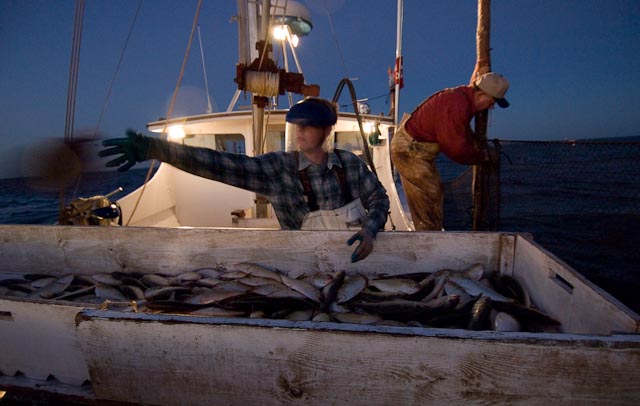
Fishermen
Photo Credit: Walt Hubis via Flickr

The oceans are one of the largest resources we have on Earth, spanning 71 percent of the planet’s surface. For thousands of years, we have depended on this resource to provide us with a seemingly unlimited bounty of seafood. But, like all of our planet’s resources, we’re finding there is a limit — despite the vastness. 

As humanity has spread across the globe, advancing technology and efficiencies in fishing have allowed humans to fish deeper and over larger areas. This has lead to overfishing and depletion of many species: The fish cannot naturally keep up. Add to all of this the environmental impacts of ocean pollution and subsequent concerns about sea life contamination, and the future of seafood is a major concern.

This makes it critically important to know the fishing or farming methods used when you are making a purchase. You need to be concerned about where the fish was sourced. Fishermen — small-scale or industrial —  should be using ocean-friendly methods to allow a species to reproduce. For example, by simply rotating the areas and populations they fish, fishermen can allow a species to replenish. It’s the same method that sustainable farmers, ranchers and loggers often use to avoid depleting their resources on land.

What Can I Do?

The most important step is to educate ourselves. The Monterey Bay Seafood Watch is an organization dedicated to ocean and seafood conservancy by developing consumer and business recommendations for wild caught and farmed seafood. Read through their recommendations and the sources linked below.

If you’re unsure where a seafood comes from, or how it’s caught or farmed — simply ask! Whether you’re at the seafood or farmer’s market, butcher stand or frozen food aisle at your grocer, or even while contemplating your dinner choice at a restaurant — ASK. If they cannot answer your questions, you can make the call to not make the purchase … and tell them why.

End consumers have the ultimate power to enact change by demanding sustainable fishing practices with our buying choices. Support seafood markets and distributors that obtain, fish or farm their seafood using sustainable and environmentally friendly practices. Frequent restaurants that do the same. Oftentimes, menus convey where their fish comes from and highlights seasonal and local choices. Your server, and ultimately the chef, should be able to educate you on your options.

Where Can I Learn More?

Luckily, Seafood Watch has one of the best resources for helping you select the most ocean-friendly seafood for your area. Every region in the United States has a downloadable guide. You can also use its iPhone and Android mobile apps for the latest information.

Seafood Watch also maintains a “Super Green List” of fish that are not only good for you (contain high levels of omega-3), but also have lower levels of mercury and are classified as green (sustainably sourced).

The WWF provides global seafood guides in various languages in partnership with other organizations, such as Seafood Choices Alliance, North Sea Foundation and Marine Conservation Society.

And for you folks in and around Washington, D.C., Greenease is an resource connecting consumers with restaurants, cafes and grocers in the area that buy from local farms. They take the hassle out figuring out where your food is coming from, and have an app coming soon to make things even easier. Plus — they’re ae concerned about seafood sustainability as we are!

These are such important issues — our environment, our oceans, our seafood … YOUR health. As scientists and experts continue to monitor our seafood and change recommendations, it’s important to keep yourself educated. Before writing this post, it all seemed so daunting, but then I remembered all the amazing dishes I’ve had over the years. The delicate flavor of white fish … or the melt-in-your-mouth texture of sashimi … the briny taste of the sea in a newly shucked oyster. How can that not be worth the time it takes to be informed?

For thousands of years the ocean has sustained humanity, now it’s time to give … back by shopping responsibly.

If you’re in the Washington D.C., area on August 6, join We The Eaters for our first LIVE event! Chef Aaron McCloud from Washington’s Cedar Restaurant, along with representatives from local sustainable seafood provider Profish Ltd., will talk about local issues and give tips for preparing mouth-watering fish at home. Details are coming soon. Join us to learn first-hand from experts!

Tagged with: , , , ,
Posted in Dear Diary

Amelie: Crème Brûlée Three Ways

cremebrulee02The source of my inspiration and happiness for this post comes from one of my favorite movies, “Amelie,” and the decadent dessert featured in the film, crème brûlée. They both have way more happening below the surface then expected and are equally layered in sweetness. Also each has an opportunity to fill your heart with joy!
Recently I was lucky recently to have a week to hangout with a friend’s teenage son, J.R, while his parents were away. While that alone was a great opportunity for me, the real estate his parents’ kitchen afforded us was a bonus! My kitchen is very tiny, I mean French, so to have the space and additional cooking tools, for us to enjoy this opportunity was awesome… the copper cookware, the stand mixer, the gas range, and all the bowls this crazy tri-fecta plan needed, also did not hurt our situation!!! (SO thank you, P&D!)  Just a point of fact, all of these items are not necessary to make crème brûlée, I purposely enhanced the level of difficultly because the kitchen was available, so I could have an adventure with the spices from Bali, pay homage to my favorite film and challenge myself.

Ultimately my goal was two fold:

One every aspect of this process was to be adventurous and & curious, as an homage to the lovely lead character, Amelie. Two it was to have a few lovely memories of an afternoon with J.R. Bonus if I learned something new!

I begin with what I believe is THE recipe for crème brûlée, from “Bistro Cooking” by Patricia Wells. Additionally I am using a stand mixer, my decade old kitchen torch, the equally old ramekins, a spice grinder, a few beautiful large copper saucepans to later divide the creme mixture and one large saucepan, to make the crème vanilla base. (see Wells’ recipe with my modifications below).

The Wells’s recipe uses 6 lg egg yolks, a quart of heavy cream and vanilla sugar. My later additions to this recipe include; Turbinado,and Coconut Palm Sugar, for sprinkling on top. As well as the spices for the custard, which were Cayenne Pepper, Chocolate, Lavender, Chinese Five Spice, Coconut Extract ingredients, as well as Vanilla, Cardamom, Chili Pepper, Star Anise and Cinnamon! At this point, with the base complete, I realized I was kind of giddy as the ideas and flavor combinations were dancing like sugarplums, in my head!

cremebrulee04J.R. and I smelled & tasted the ingredients, labeling post-its with our three flavor finalists; Lavender & Cardamom – in keeping with the French theme. Chocolate Chili & Pink Peppercorn to represent, which is the determination Amelie possesses, the physical attractions shared by various characters, as well as the swift kick -in -the -pants, we sometimes need to get past our fears!  Our last flavor choice was Star Anise & Coconut, which evolved into Chinese Five Spice & Coconut, because I either did not use enough Star Anise or it just couldn’t hold it own with the coconut.
That conundrum is for another round of testing! I believe this combination, including its evolution, mirrors the relationship that eventually flowers, between Amelie and Nino Quincampoix.

Please note:, I am purposely not focusing the discussion  time on making the base, as recipes tend to be so similar and it is three ingredients. For the purpose of my post and the interest of sharing this creative opportunity with you, I’m am simply detailing the process, after the base was cooked.

For this uncharted adventure and my poor memory, I placed post-its on the counter next to each pot; Lavender & Cardamom, Chocolate Chili & Pink Peppercorn & Chinese Five Spice & Coconut. For my sanity, as I placed spices in the dry pots to toast, I only used a Tablespoon for the measurement. Here is where we get into new territory and my fear began to rise! I tried to guess what amount might be appropriate given the liquid. So as I started to smell the fragrance of the spice, I turned off the heat, tossed it in the spice grinder and added it to the base, which as I said was already cooked. I allowed only 35 minutes for the flavors to marry, which also enabled the cream to cool.

Chocolate + Pink Peppercorn

cremebrulee091 tablespoon pink peppercorns
2 tablespoon dark chocolate(1 square=Tbsp)
1 tablespoon rehydrated red chili, diced (was a just little less than a Tbsp)

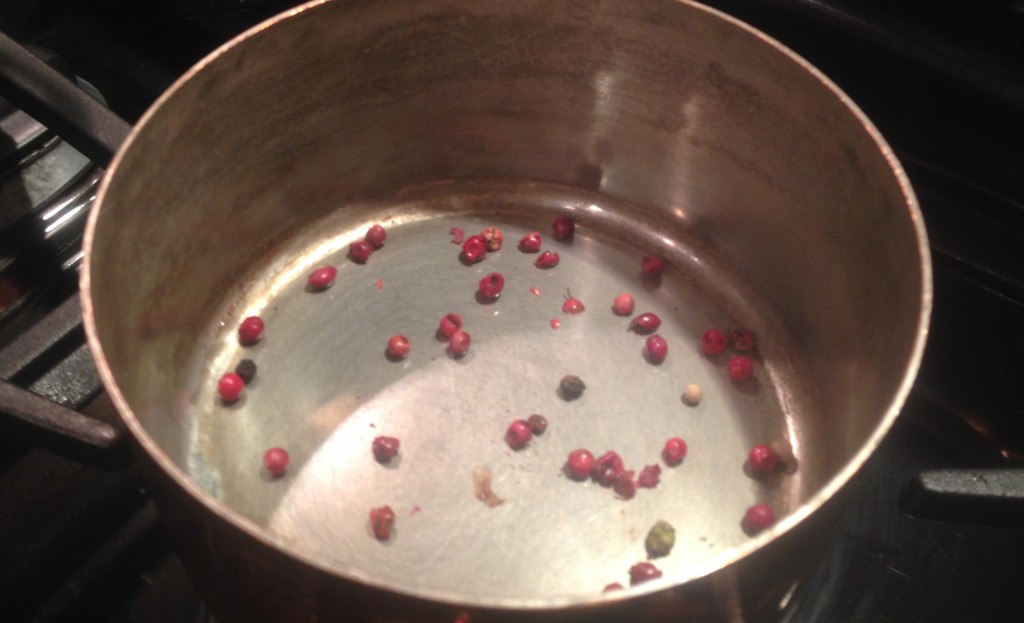
While we rehydrated the dried chili with warm water, I toasted about a tablespoon of Pink Peppercorns. Once the base was off the heat, I added a few squares from a block of Trader Joe’s dark chocolate to the hot cream, adding the finely diced, rehydrated chili, with the ground peppercorns… Surprisingly, after 35 minutes, the mixture produced was just a mild, sweet heat, but a perfect subtle compliment to the gorgeous chocolate cream. The chocolate glistened as if it had a stick of butter in it! Happy and with new found gumption, I left the lid on and moved on to the Star Anise & Coconut.

Star Anise + Coconut(renamed Chinese Five Spice + Coconut)

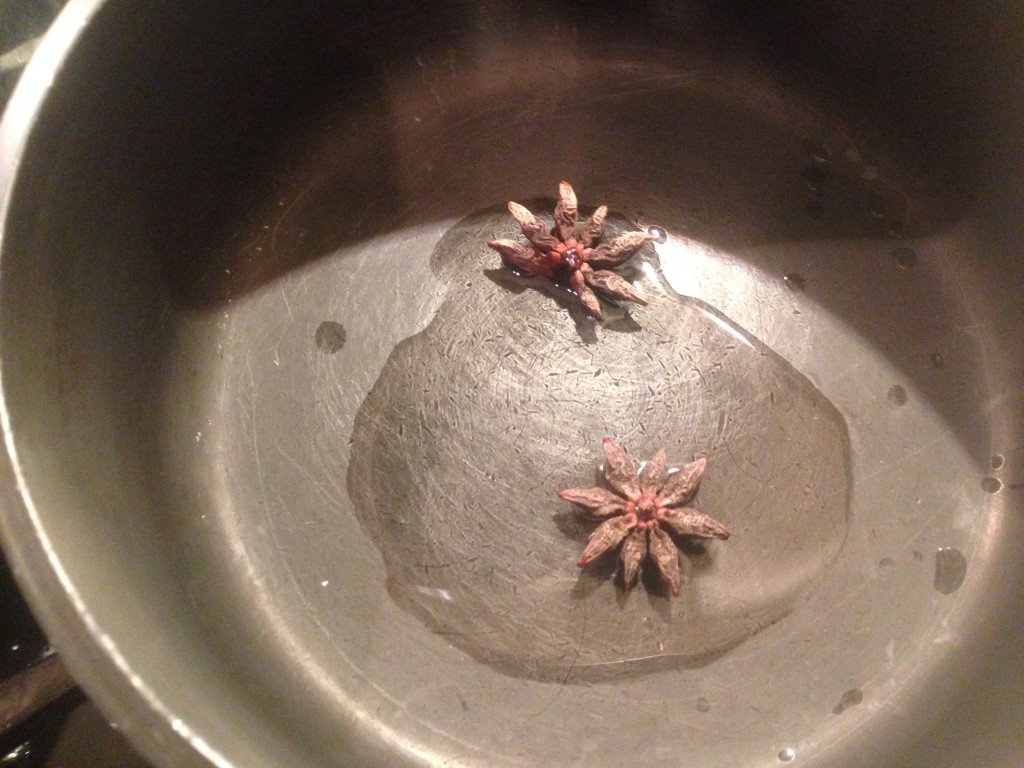
cremebrulee102 whole star anise ( I could only fit 2 in the Tbsp, so that’s what I went with!)
2 Tbsp coconut extract

I toasted two whole Star Anise and after warming to incite the aroma, proceeded to pour the Coconut extract over it. I let it sit for a few minutes then ground, in the spice grinder. I then added this to the hot base. I mixed the three together and let sit. After 35 minutes, I tasted the lovely flavor of coconut was present, but barely any Star Anise. I immediately went to my favorite Chinese Five Spice, and the combo of the two was a winner in my book!  You have a lot of latitude here to play, depending on what flavor you wish to take the lead. My approach was the Chinese Five Spice as the leader, yet I still wanted the Coconut to have a bit part. My approach worked because, after my taste test, the Coconut crept in, on the back of my tongue. The perfect supporting actor! I am curious though (like Amelie) I wonder, if adding Coconut Milk or even Coconut Liquor would turn this whole thing upside down? That will have to be fodder for the sequel, so I left the lid on and moved on to the Lavender & Cardamom.

Lavender + Cardamom

cremebrulee081 tablespoon lavender
1 tablespoon cardamom pods

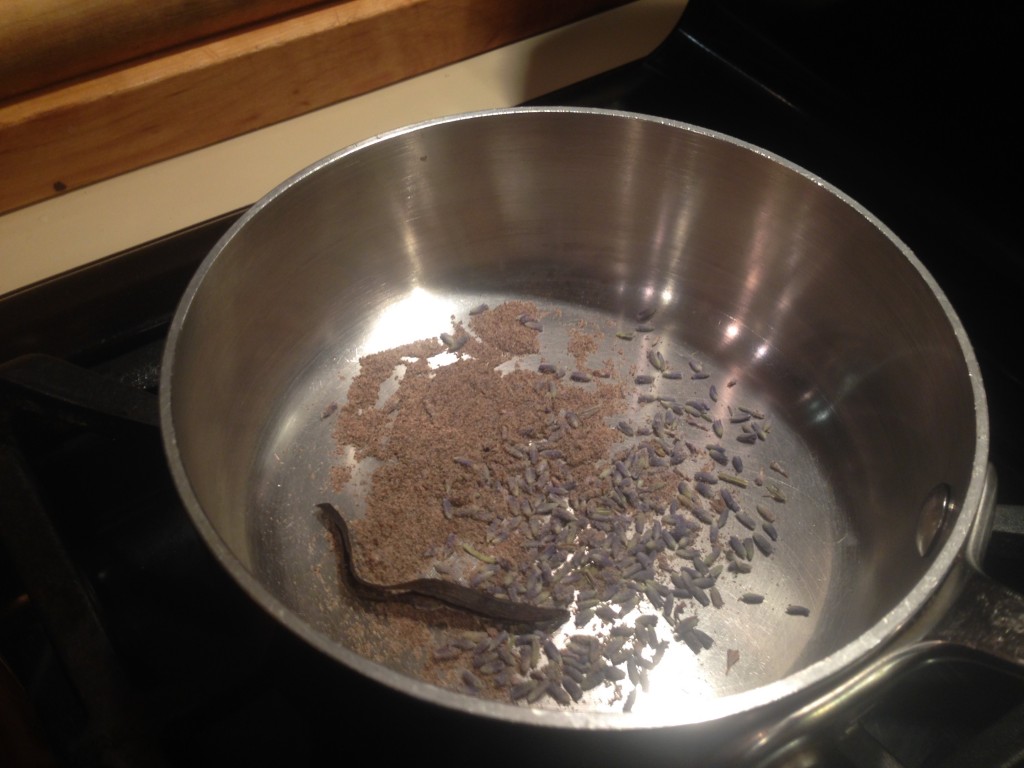
I toasted about a tablespoon of Lavender and Cardamom pods, then ground the Cardamom pods, in the spice grinder. I added the ingredients to the base and after 35 minutes, I believe that when I tasted the cream with all of its levels of flavor, I was transported. I smelled France in the combination of spices and I tasted France on the spoon, as the silky texture covered my tongue. I heard France in the Amelie soundtrack I had playing and my soul screamed, “Voila! Parfait!” Once I mentally returned to the Chevy Chase, Md. kitchen, I have to admit I was somewhat nervous about cooking these ramekins, filled with my crazy new concoctions. I kept asking, “How much will the flavors change, once the heat solidifies the custard?” There is only one way to find out!

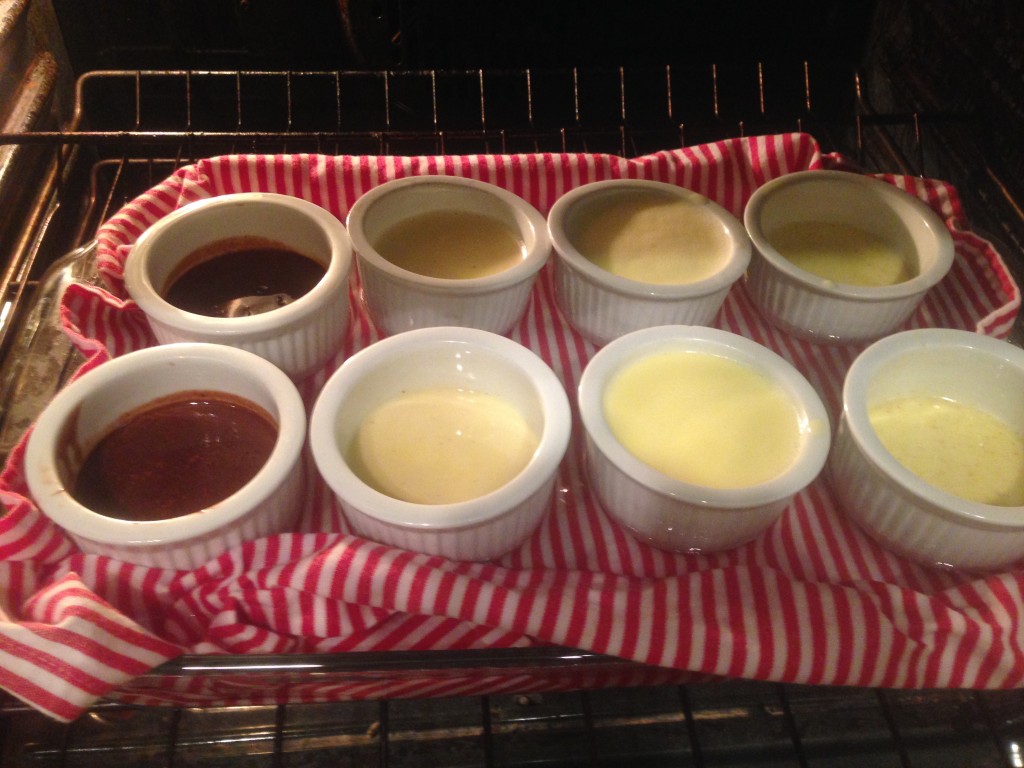
So after straining the cream, through cheese cloth, I placed the filled ramekins into a large roasting pan, with a dishtowel on the bottom to protect them from shifting and spilling. I poured enough hot water into the pan to come halfway up the sides of the ramekins. I baked until the crème brûlée was barely set, still shaking in the center, approximately 35-40 minutes. When they were done, I refrigerated them all afternoon. (Approx 5.5 hrs)

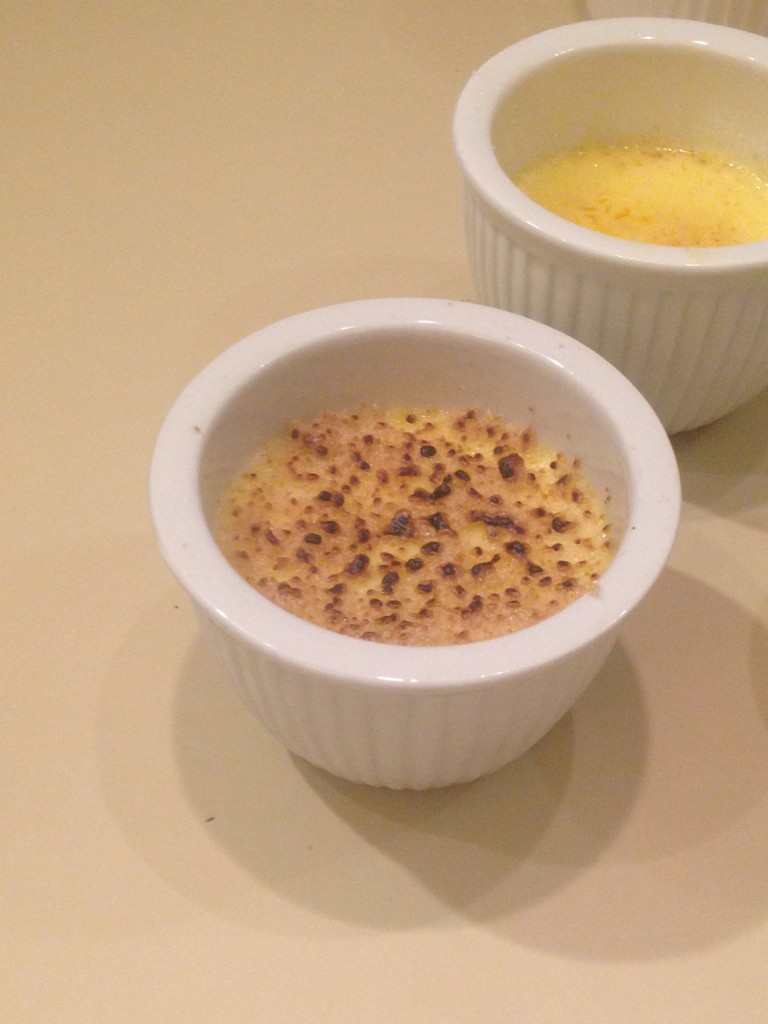
cremebrulee05For J.R. and I, the torching and tasting came after dinner. We lined up three ramekins and had 2 spoons in front of each. Torch in hand, I sprinkled vanilla sugar on the Lavender + Cardamom and torched it to a perfect traditional, brittle, glass- like top!
The Chinese Five Spice + Coconut was sprinkled with Coconut Palm Sugar, and it BURNED in a second. I was worried I had ruined it! So I tried brown or turbinado sugar on the second one and despite the ugly site of the burned sugar of the first, I liked the Coconut Palm sugar better… I realize “crème brûlée means “burnt cream,” but there is a difference between burnt and burned; flavor and color; a gorgeous brown or black!

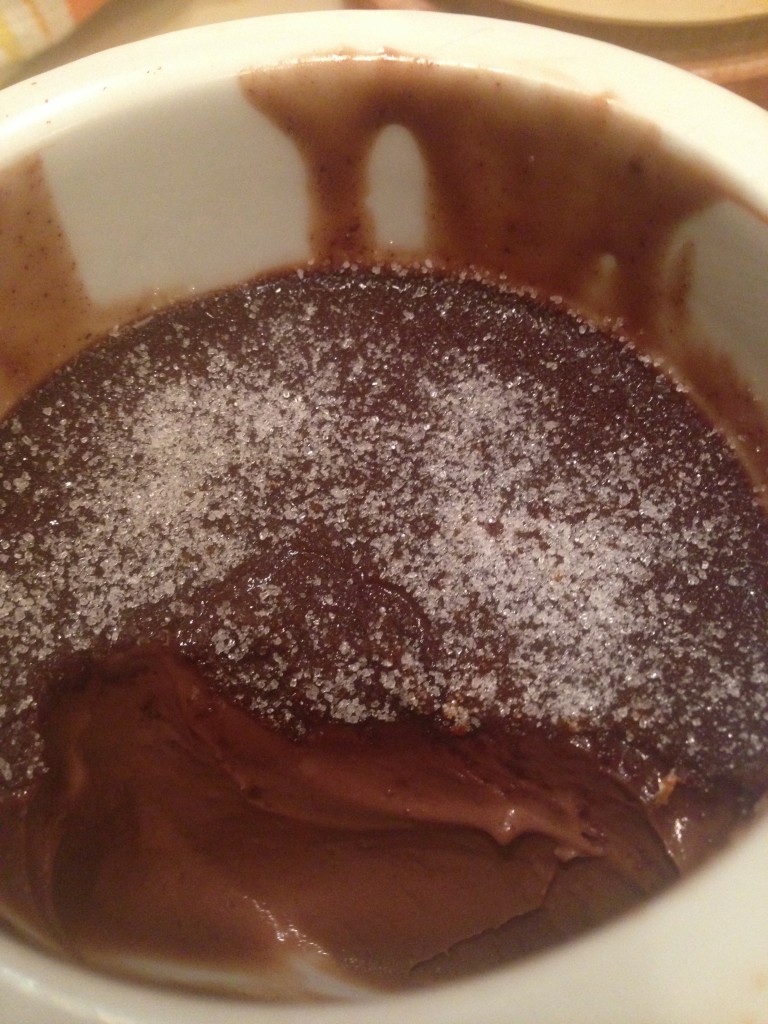
Last but not least, the Chocolate + Pink Peppercorn was hands down my favorite. I sprinkled a light dust of Cayenne Pepper on the top, then the sugar and torched. After perfection was established in the forms of crisp tops, we tapped through the sugar lids & tasted. BIG PLOT twist, I’m not a Chocolate lover, but the occasional fan of just a bite BUT hands down the winner was the Chocolate + Pink Peppercorn. The Chocolate Custard had the texture of a p-e-r-f-e-c-t mousse,and then, in the midst of all that goodness, were these little bursts of heat and crunch. Another unforeseen twist here: The torch ran out of butane, (cue evil laugh here) so I could not make any additional brûlée day – but like every great producer, I got what we needed the next day and finished for pictures!

Later that night, I pulled “Amelie” up on my computer, sat back with a cup of tea and one of the unfinished ramekins we’d sampled from earlier. Excitedly I sat back and watched as “Amelie” wove it’s its familiar tale and waited for the scene where she breaks the top of her crème brûlée. As the crackle of the sugar danced in my ears, the memory of my joyous afternoon will forever dance in my heart. Go make your own memories with this dessert! Share it! And by all means don’t be afraid of trying something new!

Crème Brûlée (Burnt Cream)

crembrulee016 large egg yolks
1 quart heavy cream
1/2 cup (100 g) Vanilla Sugar
1/2 cup (75 g) firmly packed dark brown sugar

Preheat the oven to 300 degrees F (150 degrees C).

Place cream in a heavy saucepan. Bring to a boil. Remove from the heat, cover. Set aside to steep for 35 minutes with various spice combinations as mentioned above.

In a medium-size bowl, combine the vanilla sugar and egg yolks and whisk until well blended. Add the cooled, infused cream and mix well.

Place 6 shallow 6-inch (15 cm) round baking dishes in a roasting pan. Pour the cream mixture into the dishes. Add enough boiling water to the pan to reach halfway up the sides of the baking dishes.

Bake just until the mixture is just set in the center but still trembling, about 30 minutes.

Refrigerate for at least 1 hour and up to 24 hours. Remove from the refrigerator, sieve the brown sugar evenly over the top of the baked cream and torch. I have tried 8 different variations of “torching under a broiler”… just buy a kitchen torch, you deserve it.

Yield: 6 servings

Tagged with: , , , , , , , , , , ,
Posted in Dear Diary
photo credit to Aaron Otis Photography 2014


July
Watermelon is the perfect summer food. It hydrates, it cools, it's sweet and juicy. We have some great ideas for your table, including a salad, ceviche cups, popsicles and cocktails. Get ready to beat the heat with us!