Five Easy Ways To Get Stuck On Honey

To kick this month off, Adam tested the waters with one of the ultimate aphrodisiacs: oysters. Not the most accessible of foods, right?

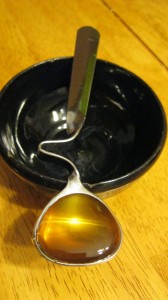
Honey is a different matter. It’s simple to procure, safe to consume in any preparation and won’t break the bank. Take into consideration its comely amber jewel tone, its local allure, that pleasurable sweetness, its sensuously lazy and trickling texture and … whew — is it getting hot in here???

Let’s take it slow and start at the beginning.

Honey is produced by bees using nectar from flowers, which is regurgitated (how sexy!), evaporated and stored in wax honeycombs inside hives. The more than 60,000 bees in just one hive can cumulatively travel up to 55,000 miles, visiting over 2 million flowers to make 1 pound of honey. Those bees are seriously getting busy.

A general rule for honey tasting: the darker the color, the stronger the flavor, as the nectar’s source — clover, orange blossoms or other flowers – determines both. Cliff drawings from early civilizations in Africa, India and Spain indicate honey was collected for food use over 8,000 years ago. Ancient Egyptians used honey to embalm their dead and make offerings of the sweet treat, believed to treat sterility and impotence, to their fertility god, Min.

Honey’s status as an aphrodisiac stuck in medieval times, when newlyweds would drink mead — a fermented beverage made with honey — to ensure fertility during the first nights they spent together. Thus, the “honeymoon.”

I’ve tried mead before but wasn’t impressed. I can think of others ways I’d rather enjoy honey. In fact, I’ve found five. Shall we get down to it?

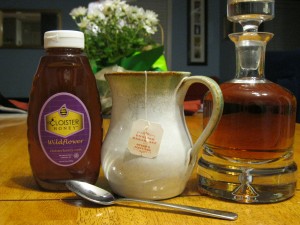
– Here’s a practical use during these icky winter months when couples share their germs and wind up in the sick house: the hot toddy. Brew hot tea, squeeze in a little lemon, pour in a generous shot (or three) of your preferred brown liquor – in our house that’s bourbon — and swirl in a nice stream of honey. Forget Nyquil — this is the medicine you really need. After one or two of these, you might forget your illness and find a better reason to hit the sack.

– Fuel up for your Valentine’s activities with this light snack: the honey cup. Top a serving of yogurt (Greek style is especially good for protein) with chopped apple, a sprinkle of cinnamon and a drizzle of honey. You’ll feel healthy, happy and ready to rendezvous.

– Ditch overpriced bottled dressings and make your own sweet vinaigrette. Mix oil, vinegar, your choice of herbs, a little lemon juice and a spoonful of honey. If your significant other is anything like mine, frugality is a turn on, so make that salad!

– Two words: honey butter. Do I really need to explain this one? Blend the two and smear it on whatever floats your boat – pancakes, waffles, cornbread, biscuits … your finger. Oh, YES.

– Overexcited in the kitchen and burn your hand? Try the honey burn remedy. The NYT verifies that a smear of honey can help heal a small burn faster. So if you do get hot (and bothered) this month while cooking and baking, whip it out. The honey bottle, that is.

Need to track down local honey in your area? Try the National Honey Board’s locator tool to find a producer near you. And share in the comments section below how you use honey in your kitchen – let us count the ways!

Tagged with: , , , , , , ,
Posted in Dear Diary

Garlic Binds Lovers. Raw Chicken, Not So Much

With Valentine’s Day fast approaching, I wanted to learn more about aphrodisiacs and what makes them work. So I Googled “garlic” and “aphrodisiacs” and was amazed at the results.

For starters, did you know that garlic is widely believed to be  the third most powerful aphrodisiac in the world? Who needs oysters and honey when you have an aromatic bulb that creates an invigorating warming effect on your body? Greek myth even holds that priestesses who created potent love potions believed garlic made women fall in love and gave men political power.

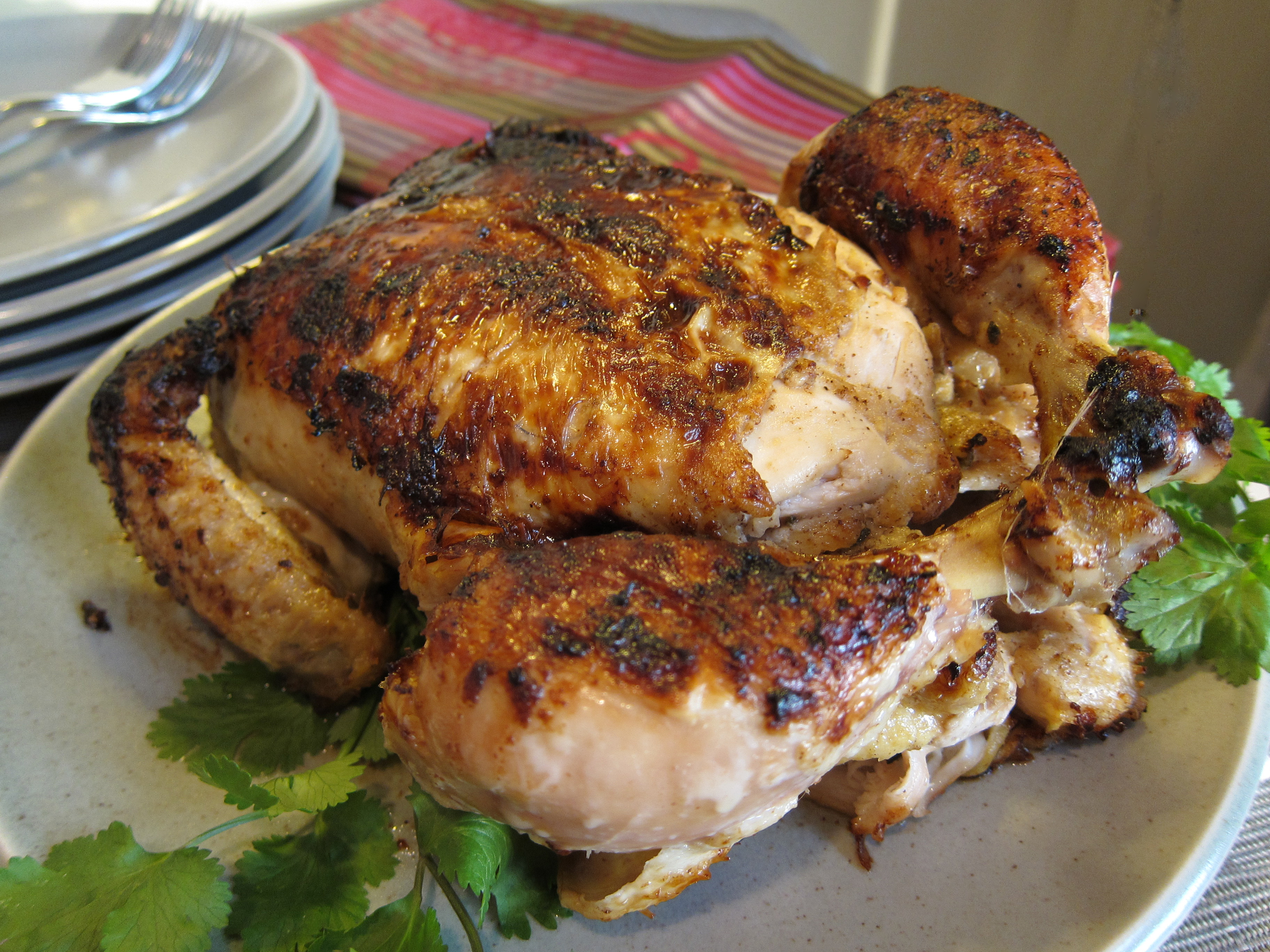
With all of this in mind, I figured roasting up a chicken draped in itty-bitty garlic bits would be the best way to prep for V-Day.

Please keep in mind that I’m not a poultry expert, nor do I have a great track record when it comes to cooking with meat. Last year, I tried to bake freshly caught trout with lemon juice but failed that operation. As soon as I jammed my fork into my savory dish, a river of blood oozed out, leaving an indelible trail.

Well, it’s a new year, and I hope to blossom into a real chef like Paula Deen (minus the diabetes).

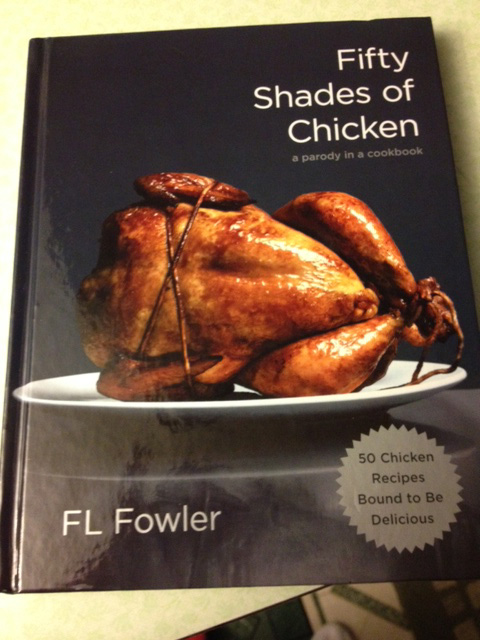
During my usual jaunts to T.J. Maxx (I’m a hardcore Maxxinista), I found 50 Shades of Chicken on a sale shelf. After perusing a couple of recipes, I figured the roasted chicken with mustard, fresh basil and garlic concoction would be spot on for me. At first glance, I saw just six major ingredients and figured I couldn’t screw up the four simple steps. It all sounded positively Sherryn-proof.

Anyone who’s a hardcore 50 Shades of Grey fan should really buy this cook book. The recipes are interspersed with chapters describing a fictional romance between the chef and the fowl. Here’s an excerpt from the book titled, “Holy Hell Wings”:

Let me feed you, only you. Just then I notice that he’s holding something — a radish, I think. The radish starts to pulse like a heart. The image starts to fade, and I start to panic.

‘Wake up baby,’ he says, opening the Sub-Zero with a triumphant flourish as I came back from reality. ‘Time for the broiler.’

Holy Hell”

(End scene).

Aside from the food porn, most recipes in the book have delicious pictures, like chickens roasted and held tautly with string, succulent chicken wings bound by bacon and gooey wings dripped with sticky sauce. Given my track record with meat dishes, I was apprehensive about conjuring up a dish worthy of being published in a recipe book, let alone a foodie site like We The Eaters.

Since I’m on a stringent budget, I crossed Whole Foods and Fresh Markets off my list. Shop Rite, just down the street from where I live, had an array of poultry to choose from. I picked the organic, farm raised chicken since I wanted to make a hormone-free dish that had a good life before I came along to debase it.

The Dijon mustard, black pepper and coarse Kosher salt were easy to get. However, I was miffed that I had to buy fresh basil leaves since it was priced exorbitantly versus dried basil; and that I had to buy two garlic cloves. Keep in mind, I didn’t know that a garlic clove was a small fragment from an entire garlic bulb.

When I came home, I marshaled all my ingredients together and tried to follow the directions. That was easier said than done. The language was risqué, at best, and I literally rubbed and slapped the chicken with dry and wet ingredients. I felt like a bad person committing an egregious sin, since people really shouldn’t grapple and slap a chicken in a foodie-porn-like way.

The directions said to fridge the fowl overnight or for at least an hour, so I did that momentarily.

My confidence in cooking poultry peaked at this point and … quickly plummeted as soon as I examined my two ovens.

Unluckily for me, the top oven was kaput. The bottom oven was used solely for baking while the top oven was primarily used for roasting. The top oven has been broken for well over four years, and knowing how I am, it will continue to collect dust forever.

My poor chicken was naked and cold, dressed only in a sheer Dijon sauce. Little did it know that it would be driving shotgun on a road trip that night.

I called my boyfriend frantically about my chicken debacle and he told me to bring the bird to Catonsville. Since I live in Silver Spring, just north of the Washington, D.C., line, I made the 30-minute hike up to his place. During the voyage, I realized I was screwed. I didn’t have a rack for roasting. I’d forgotten to pat my chicken down, so it still retained diluted blood from the packaging.

In between Facebooking my  old college friend Kirby and texting We The Eaters’ Amy for advice, I had an eureka moment, thanks to these lovely ladies.

Both women advised me to make a foil pouch and just bake the darn fowl. I skipped over the book’s directive of “thrusting a wooden spoon into the chicken cavity to flip the bird.” My boyfriend and I just flipped the foil disaster with our bare hands.

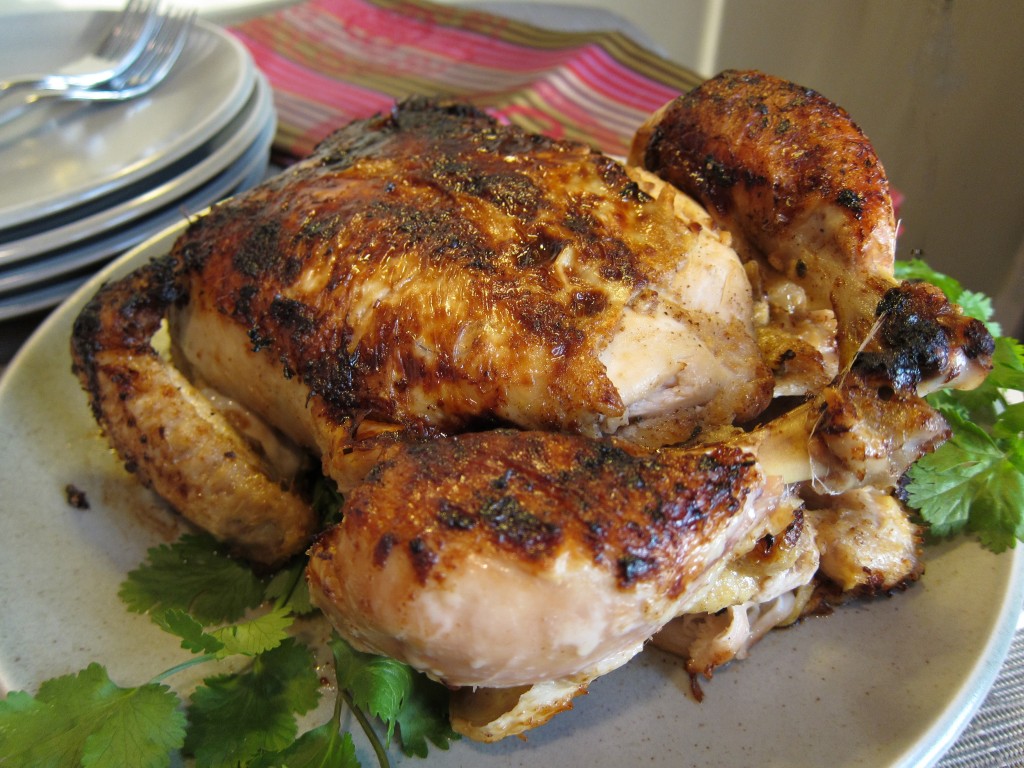
After baking for 30 minutes, flipping the bird, drizzling extra virgin olive oil in between baking times and baking it for an extra 90 minutes, we were finally done.  The chicken smelled great, looked sullen and tasted nice.

But … when I jabbed my knife into the bird’s stomach for a late-night second round, a watery pool of blood formed. It was 3 a.m., my boyfriend was asleep and I decided to give up.  Not even the magical warmth found in a garlic clove could warm this bird up any further. Maybe I should use a meat thermometer next time?


Roasted Chicken with Mustard, Fresh Basil, and Garlic

I found this recipe in 50 Shades of Chicken and feel I would’ve been more successful if I had a rack, a roasting pan, a roaster and a meat thermometer. My boyfriend joked that this is why he refuses to cook a whole bird. Parts of a bird are easier to handle versus one, cumbersome, chicken. And … these directions are abridged due to explicit content from the book.

1 3 1/2 to 4 pound chicken, patted dry with paper towels
1 teaspoon coarse kosher salt, plus more to taste
1/2 teaspoon freshly ground black pepper
2 tablespoons Dijon mustard
2 teaspoons minced fresh basil
2 garlic cloves, minced
3 tablespoons extra-virgin olive oil

Rub the chicken all over with salt and pepper.

Stir together the mustard, fresh basil and garlic into a small bowl. Rub the wet ingredients all over the chicken and refrigerate overnight or at least for an hour.

Preheat the oven to 400 degrees. Place a rack in a roasting pan.

Place the chicken on the rack, breast side up. Spread with 1 tablespoon of olive oil. Roast 30 minutes, then flip it over (the recipe suggests doing this with a wooden spoon you put in the bird’s cavity). Drizzle it with the rest of the oil and roast about 30 to 40 more minutes — it should be nicely browned. Cook’s Illustrated suggests the thickest part of the breast reach 160 to 165 degrees, and the thickest part of the thigh, 175 degrees.

Tagged with: , , , , , ,
Posted in Dear Diary

Oysters As Aphrodisiacs: The Raw Truth

It’s February and love is in the air. It’s well-established at this point that I have a favorite foodie I’m continually out to impress with my newfound culinary skills. So, as days fly by and we hurtle towards Valentine’s Day, I’m faced not only with preparing a meal to woo the lady, I’ve also taken on oysters as my We The Eaters aphrodisiac-themed post.

Yikes! Have I ever mentioned I’d never tried seafood before I met my sweetheart?

And, while oysters are probably the most infamous aphrodisiac, trying them for the first time seemed a bit daunting. OK … Completely terrifying. I mean, have you really looked at a raw oyster?

I gave serious deliberation to preparing and cooking a meal. It was my intention to try out a recipe from allrecipes.com that sounded delicious: grilled oysters in fennel butter.

But then, that’s not quite right, is it? Really, it’s raw oysters that presumably have the lust-inducing properties, not cooked ones. So raw is what I tried.

Now I have to admit, dear Eaters, I cheated a little. I went to Hank’s Oyster Bar in D.C. I guess I could have shucked them myself and spent some time explaining how that worked, but frankly, I was worried. I mean, it is raw seafood. The last thing I want to do is poison my Valentine. So, instead, I took her to some experts where I felt certain we could test the mollusks safely and, as it turns out, enjoy some extremely well-prepared libations.

A bartender at Hank’s, John, took excellent care of us that night. He started by explaining a bit about the oyster’s aphrodisiac nature. They are high in zinc, a vitamin that controls progesterone levels (closely related to testosterone), which have a positive effect on the libido. This extra dose of zinc was a needed boost back when diets weren’t as healthy and vitamin-focused as they are today.

Also, oysters have tyrosine, an important amino acid. These acids heighten the amount of dopamine in the brain which, it turns out, is vital to stimulate sexual desire. Finally, I won’t even discuss its associated appearance and how it adds to the mix.

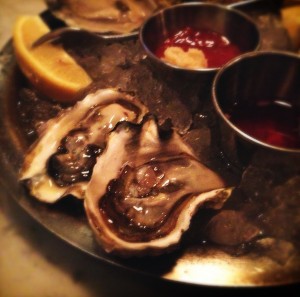
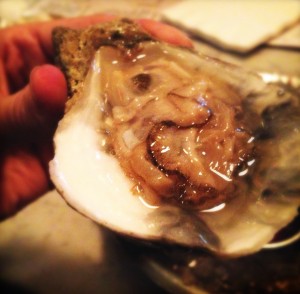
But enough with the science lesson! Hank’s was serving up raw oysters on the half shell: two native to Virginia, called Hayden’s Reef and Tom’s Cove, and a third, from Washington State, called Pebble Beach.

Again, John brought his encyclopedic knowledge to the table, explaining that the Pebble Beach oysters were actually imported from Japan. Apparently, our West Coast versions are slow growers and were eaten to virtual extinction. The Japanese imports are hardier and grow faster.

He also passed on another tidbit about the oyster shells: Hank’s recycles them! They’re turned over to be used to build artificial reefs for oysters to spawn.

Our informative oyster tour concluded, it was on to the tasting. We asked John the best method for eating the slippery beasts. Were we supposed to just swallow them whole or chew? I’d always heard to gulp them down whole, but our expert suggested a “courtesy chew” to get the flavor of the oyster. He also mentioned that they’re best with some sort of acid: lemon, Tabasco or cocktail sauce.

With some excellent cocktails at the ready, we were prepared for oyster number one: the Hayden’s Reef. This being my first oyster ever, I was pretty freaked out — but undeterred. I doused it with lemon, brought the shell to my lips and SLURP! I even braved the courtesy chew (chews, really). And it was good. I can’t describe it as excellent, because it mostly tasted like lemon. And it was certainly not as briny as I expected; our oyster guide noted that these were “medium large, light brine, and with a clean mineral finish.”

Next up was the other local, Tom’s Cove. This time, I went far lighter on the lemon. Shell to lips and down the hatch, after the now-obligatory courtesy chew. Again, it was light in taste. Described as “medium briny with an ocean finish,” I didn’t get an overpowering ocean taste. It was a little grittier than the first, but overall positive.

The final oyster, the (Japanese) Washington State Pebble Beach, was similarly dispatched from its shell. This last one was the most briny and was very gritty. I’d wished I tried the minuet sauce (made from red wine vinegar, cracked pepper and shallots) with this one. It was okay, though not amazing. The grit kept me from enjoying this oyster as much.

With the three oysters gone, our dining guide assured us that we had just tried a great sampling. As we departed, John mentioned a delicious cooked option: A Hank’s dish of boiled oysters, then panko-breaded and served in BBQ sauce.

Well, dear Eater, while there is some real science in the notion that oysters are aphrodisiacs, I’m not 100 percent convinced. Or, maybe I already have plenty of zinc in my diet. But the dining experience was fun. Despite my trepidations, I enjoyed the food and was able to check raw oysters off my list of things I’ve always wanted to try.

And as for an aphrodisiac, I think presenting a ring with a pearl from one of those oysters might do a better job of setting the mood than eating them.

Tagged with: , , , , , , , , ,
Posted in Dear Diary
photo credit to Aaron Otis Photography 2014


July
Watermelon is the perfect summer food. It hydrates, it cools, it's sweet and juicy. We have some great ideas for your table, including a salad, ceviche cups, popsicles and cocktails. Get ready to beat the heat with us!