Whip Up Your Pantry And Restock Smart

I love food shopping. Most people who enjoy cooking do, of course, but I come from a household where grocery shopping and coupon clipping were family pastimes. Long after I moved out of my parents’ house, I could still call up my Dad any time to find out where yogurt or cereal were on sale.

Combine a love of cooking and grocery shopping, however, and it doesn’t take long to accumulate random odds and ends in your fridge and pantry. And even as those get pushed further back on the shelves, you’re constantly buying new things to make new dishes. Say, a bulk bin bags with just a handful of bulgur, perhaps? A bottle of fig vinegar? Or the can of Libby’s you held onto during that pumpkin shortage?

Wait … this is starting to sound an awful lot like our March Chopped challenge.

Well, if WTE’s Ides of March taught us anything, it’s that random items can offer ample fodder for plenty of tasty meals — something most of us don’t realize until a hurricane or blizzard are headed our way. Not to mention that every item cluttering up the cupboard is something you’ve already paid for. Putting all that stuff to work creatively can be a good way to stretch your cooking skills and the food dollars you’ve already shelled out.

Once you use what’s piling up in your pantry, naturally you’ll need to restock. And if you’re trying to stay on budget, the key is to do that economically while still ending up with things you actually want to eat.

So how to go about cooking with what you have, then setting yourself up anew, cheaply?

For the former, I have a few basic things I do regularly, all of which have done wonders for keeping my fridge tidy (random scary things shoved in the back are pretty much a thing of the past at my house).  Making simple stir-fry or pasta sauces with the condiment bottles and jars that clutter up the fridge door is a good start. This week, I made a delicious pasta sauce with just a few spoonfuls of sundried tomatoes packed in oil, five lonely olives, two garlic cloves, a splash of cream and a half-cup or so of the pasta cooking water.

Also, as many of you know, almost any random ingredients can be stitched together by Googling them (unless you’re Sarah, trying to get fava beans, chai tea and ground turkey into one dish). And most grains (like that leftover bulgur, perhaps) are delicious when cooked in broth, rather than water, then tossed with a saute of onions and/or garlic and whatever fresh vegetables are lying around.

As for the latter part of the challenge, restocking your pantry economically, there’s so much good material out there I think I’ll do the most service simply by pointing to some tips I’ve found particularly useful. Again, much of what you’ll see is common sense, but there are some real gems in the links below that can help you cook tasty meals while staying on a budget.

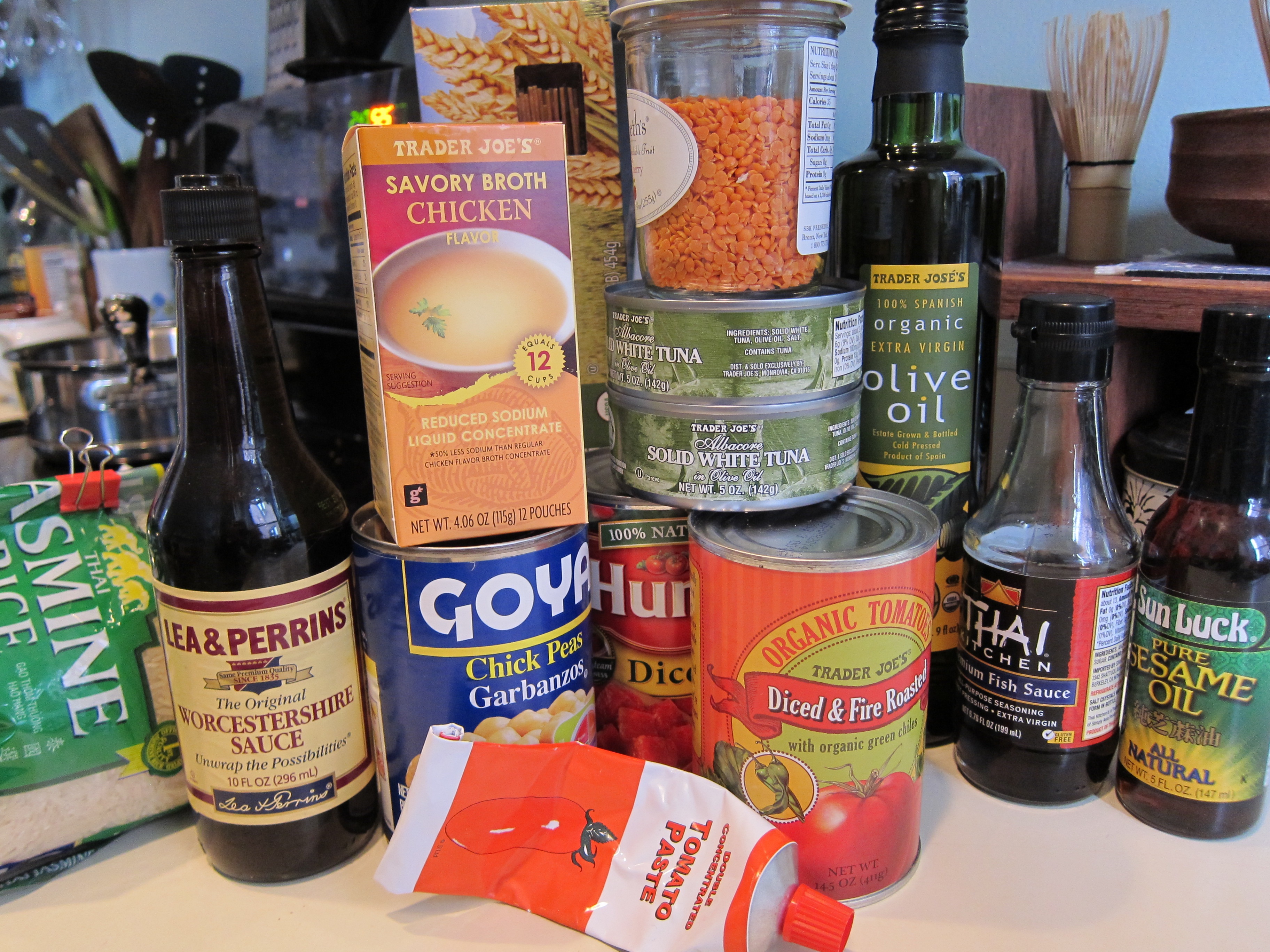
As you read, keep in mind you’ll boost your basics by having a few long-lasting items that offer a flavor punch. Some of my go-tos:

  • A chunk of Parmesan cheese (still wonderful grated, even when it’s verging on brick-hard)
  • Sesame oil
  • Fish sauce (this sounds odd to some, but just a few drops of fish sauce heighten the flavor of most savory dishes)
  • Tomato paste in a tube. This lasts a very long time, and excellent to have when you only need one or two tablespoons at a time
  • Sriracha sauce and/or Tabasco and chipotle Tabasco (heaven!!)
  • Nuts, which last ages when stored in the freezer, and raisins. Both can be great additions to sweet and savory dishes.

As for where yogurt’s on sale this week, you’ll have to do that sleuthing on your own!

  • Here’s an oldie but goodie from my hometown paper. There are several good tips at the end, including a good reminder about substitutions for seasonings that can help you prepare a tasty dish without buying jars of things you don’t need.
  • From another Seattle favorite, a long-time local co-op, some good ideas, particularly in the “change your patterns” section.
  • And one of my all-time favorite from-the-pantry meals: Mark’s Bittman’s tuna-tomato pasta. It’s cheap, easy, and I’ve yet to meet a single person who tried it and didn’t like it.
 

Tagged with: , , , , , , ,
Posted in Dear Diary

Mediterranean Meatballs, Movie-Montage Style

This week I admit to being completely out of my element. The ingredients in my Chopped basket threw me for a loop: ground turkey, fava beans, wheat berries, Greek yogurt and chai tea.
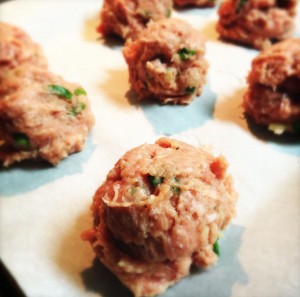
Where to even begin with my challenges? Let’s confront them:

One. I had never cooked fava beans or wheat berries.

Two. I find chai to be too spiced, so I tend to avoid it.

Three. I am not that creative with recipes involving so many different elements. And, predictably, throwing of all of this into a Google search yielded … nothing.

Four. Fava beans are not in season, which meant either using dry or canned. If I went the dry bean route I had to soak them overnight, which also meant being patient (problem!). Going with a canned bean seemed less authentic — even more removed from fresh than dry beans.

Not that I let any of these obstacles stop me (although, truth be told, I wanted to throw in the towel at times). But my imagination began to kick in just in time. I thought of Mediterranean and Lebanese dishes I’ve enjoyed that involved yogurt and beans and spices. As a general idea formed in my head, I was able to imagine how each element might work with the others.

So imagine this as a film montage, with a Rocky-like theme playing in the background: I researched my ingredients. I soaked, peeled, and cooked the beans. I prepared the wheat berries. I tasted the chai tea with the Greek yogurt, then the wheat berries and the fava beans. I pureed the fava beans. And tasted them again.
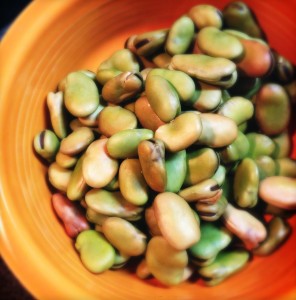
All while wearing a gray hooded sweatshirt.

Music still playing, I threw the turkey, beans and some basic seasoning from my pantry into a meatball with some egg to bind it all together. These I placed atop the wheat berries, finishing it all off with a mixture of the yogurt and chai tea. The tang of the yogurt helped balance out that spiced chai flavor and played quite well with the meatball.

While it may not have been so imaginative, my toiling produced a dish that tasted balanced and interesting. It was even quite healthy!

Now, whether or not I’m victorious … that is up to you, fellow Eater, to judge. But who doesn’t love an underdog?

Fava Bean Turkey Meatballs With Chai Yogurt Sauce

3/4 cup dried fava beans (I used dry extra-large fava beans)
2 cloves garlic
1/4 cup green onion, thinly sliced
Salt
Pepper
1 egg
1 pound ground turkey
2 cups wheat berries (I used hard red spring wheat berries)
1 cup Greek yogurt
1 tablespoon liquid chai concentrate

To make the fava bean puree: Soak the dried fava beans overnight. The outer shells should be tender enough to peel off. Some might start to open or pop out on their own by the morning. For the beans that do not open, use your nail or a paring knife. Boil the beans in salted water, just enough to cover them, for 10 to 15 minutes. When tender, drain and puree in a food processor or blender. You’ll need about 1/2 cup of puree.

To prepare the wheat berries: Cover the berries with water about an inch or so over the top. Bring to a boil, drop to a simmer and cover. Cook for 30 to 45 minutes, depending on how chewy you like them. Add more water if needed. When done, drain off any remaining water.

To make the meatballs: Heat oven to 425 degrees. Combine fava bean puree, garlic, green onion, salt and pepper. Add egg and ground turkey. Using hands, fully combine all ingredients. Use a scoop to form meatballs and place on a parchment-lined rimmed baking sheet. Bake for 30 minutes.

To make the sauce, combine the yogurt and chai tea liquid mix. Taste as you add the chai tea — you may want to add more tea or more yogurt depending on how much spice you prefer.

Place a couple of meatballs on top of a few scoops of wheat berries. Pour the chai tea yogurt mixture over top and sprinkle some green onions onto the dish.

Tagged with: , , , , , , , , ,
Posted in Dear Diary

What’s A Beet Gastrique? So Glad You Asked!

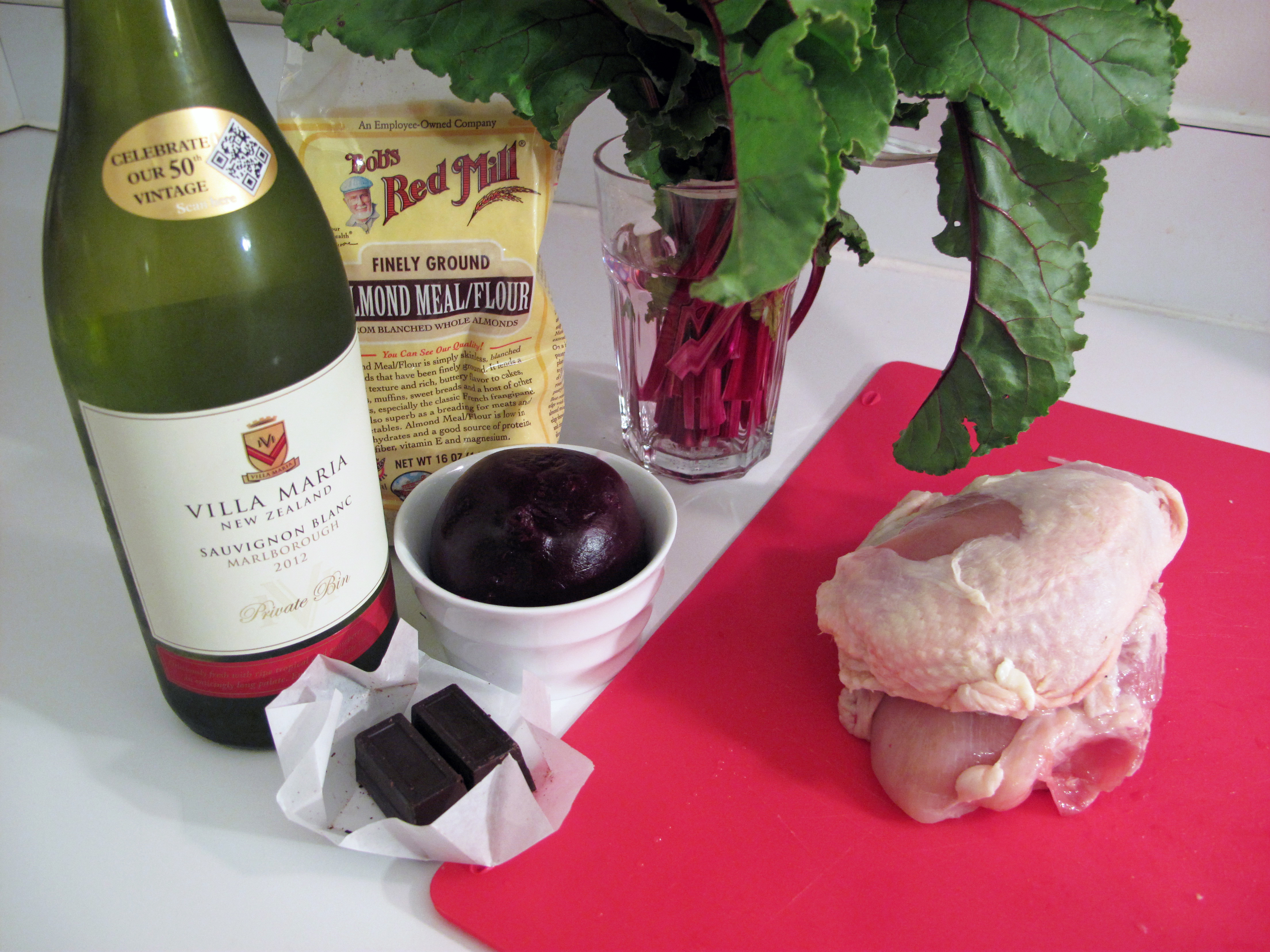
We were pretty excited about our list of ingredients: chicken, beets and grapefruit, topped off with almond flour, sauvignon blanc and chocolate. We toyed with a couple different strategies — I had an idea for baking bread with unsweetened chocolate shavings, then using it to make sandwiches with chicken and grapefruit aioli — but baking bread really falls outside the Chopped parameters. And we didn’t have a go-to bread recipe we were confident about. So we set about turning this Chopped-inspired “basket” of odd ingredients into an edible — at bare minimum — Sunday dinner.

Ben’s been dying to fry some chicken (I always veto it, saying there’s a place for fried food and that place is dining out), so we started there, planning to brine the chicken in sauvignon blanc and maybe some grapefruit juice, then bread the chicken in almond flour. We thought about a grapefruit, beet and arugula salad with a grapefruit vinaigrette and shaved chocolate, but that didn’t seem like enough of a dish, so we weren’t sold.

Friday night we had reservations to sit at Society Fair’s demo kitchen for dinner. Society Fair is a little gourmet market in Old Town Alexandria, Va., from Food and Wine Best New Chef Cathal Armstrong of Restaurant Eve and The Majestic. So when Chef Alissa Jeffery had finished and was chatting with us, we asked her what she’d do. Her eyes lit up: “A beet gastrique!”

We had a passing familiarity with gastriques — something to do with vinegar — but wanted to know more. When Alissa explained what she had in mind — a gastrique is a sort of a warm, sweet and sour vinaigrette sauce — we liked what we heard. Chicken, a beet gastrique, the salad … Things were starting to come together.

Back at home, we consulted some favorite sources, reading in on gastriques and the best way to fry chicken. But then Ben did the shopping Sunday, and brought home the most beautiful bunch of beets with the most luscious bunch of greens you could hope for, and the plan changed a bit more. When we first saw beets on our ingredients list, we of course thought of those gorgeous red (or yellow) roots, but the greens presented an additional opportunity.

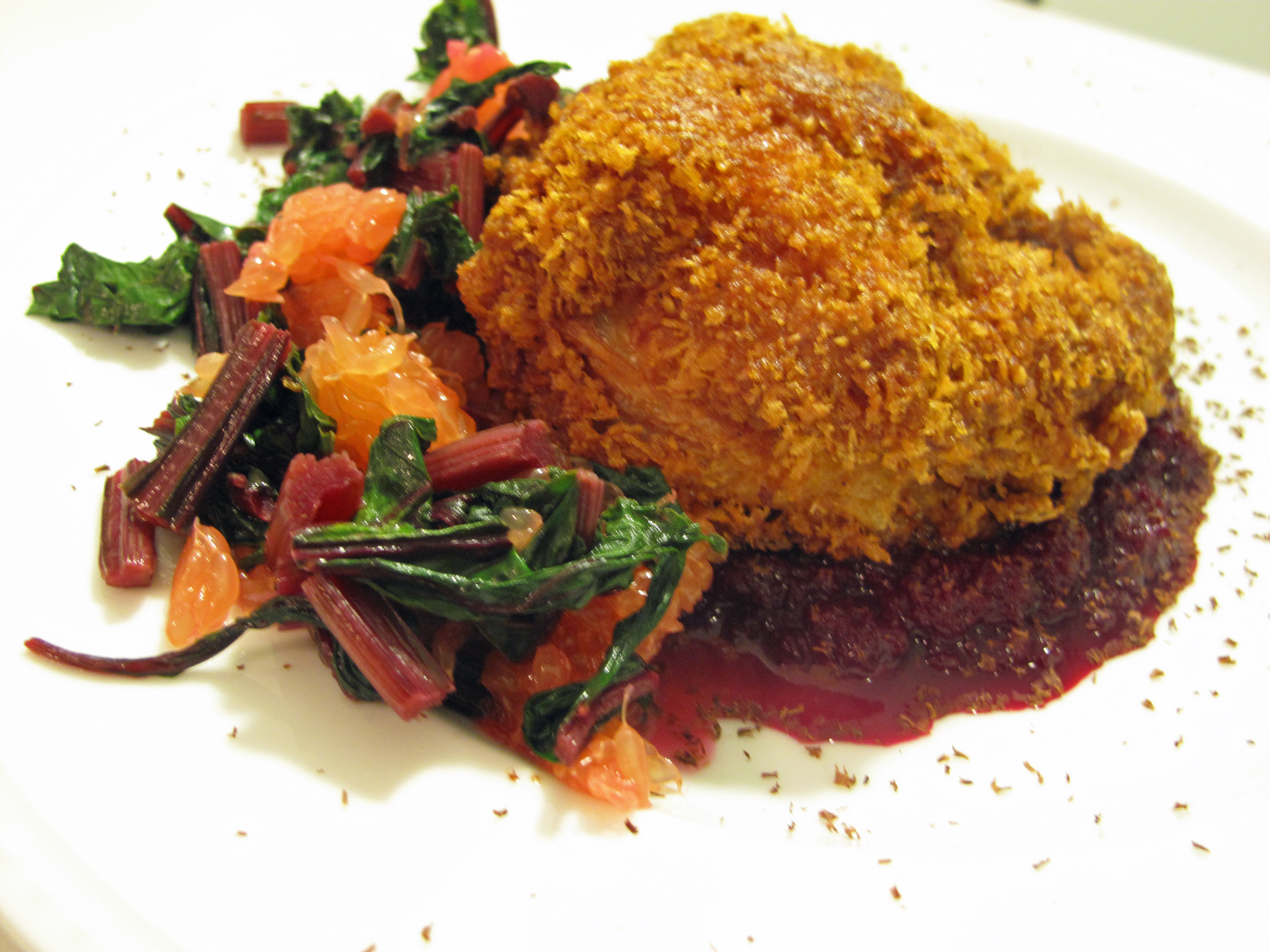
Chicken, fried in almond flour … A gastrique-inspired beet puree, dusted in finely grated, unsweetened chocolate … And sauteed beet greens and stems with chunks of juicy grapefruit. Now that sounded like a meal.

Let’s cut to the chase: it was fantastic. Even still, given the “quickfire” nature of the challenge, it wasn’t perfect. If we had it to do over again, we’d change a few things. We’d remember to brine the chicken (in salt, water, sugar and grapefruit zest — a brine makes the meat more juicy, and more flavorful); we’d caramelize the grapefruit sections, sprinkling them with brown sugar and searing them in a hot pan, probably right after taking the sauteed greens out; we’d use a heavier hand with the grated chocolate and we’d use a little fish sauce on the greens, to add some umami to the mix. But still, the recipe as written below is a keeper.

Fried Chicken, Beet Puree and Beet Greens with Grapefruit

1 large beet, roasted (this method works reliably) plus a bunch of beet greens and stems
Olive oil and butter for sauteeing
Butter
Several grapefruit sections, peeled till they’re naked (no membrane or pith), plus 1/3 to 1/2 cup of the juice
1/3 to 1/2 cup white wine vinegar
1 1/2 teaspoons brown sugar
Sauvignon blanc
2 skin-on, bone-in chicken breasts
2 eggs
1/2 cup almond flour
3/4 cup panko
1/2 tsp smoked paprika
3/4 tsp salt
1/2 tsp pepper
canola or peanut oil

First, pour yourself some wine, and some for your fellow chef. Then…

For the puree:

Roughly chop the roasted beet, then add it to a skillet with 1/2 cup sauvignon blanc, the grapefruit juice and an equal amount of white vinegar. Cook over medium low heat until the mixture is dark with beet juice, then stir in  brown sugar. Simmer to reduce, 5 to 10 minutes. Transfer to a tall cup (trust us — beet juice is highly aerodynamic) and immersion blend till the consistency is fairly even.

For the chicken:

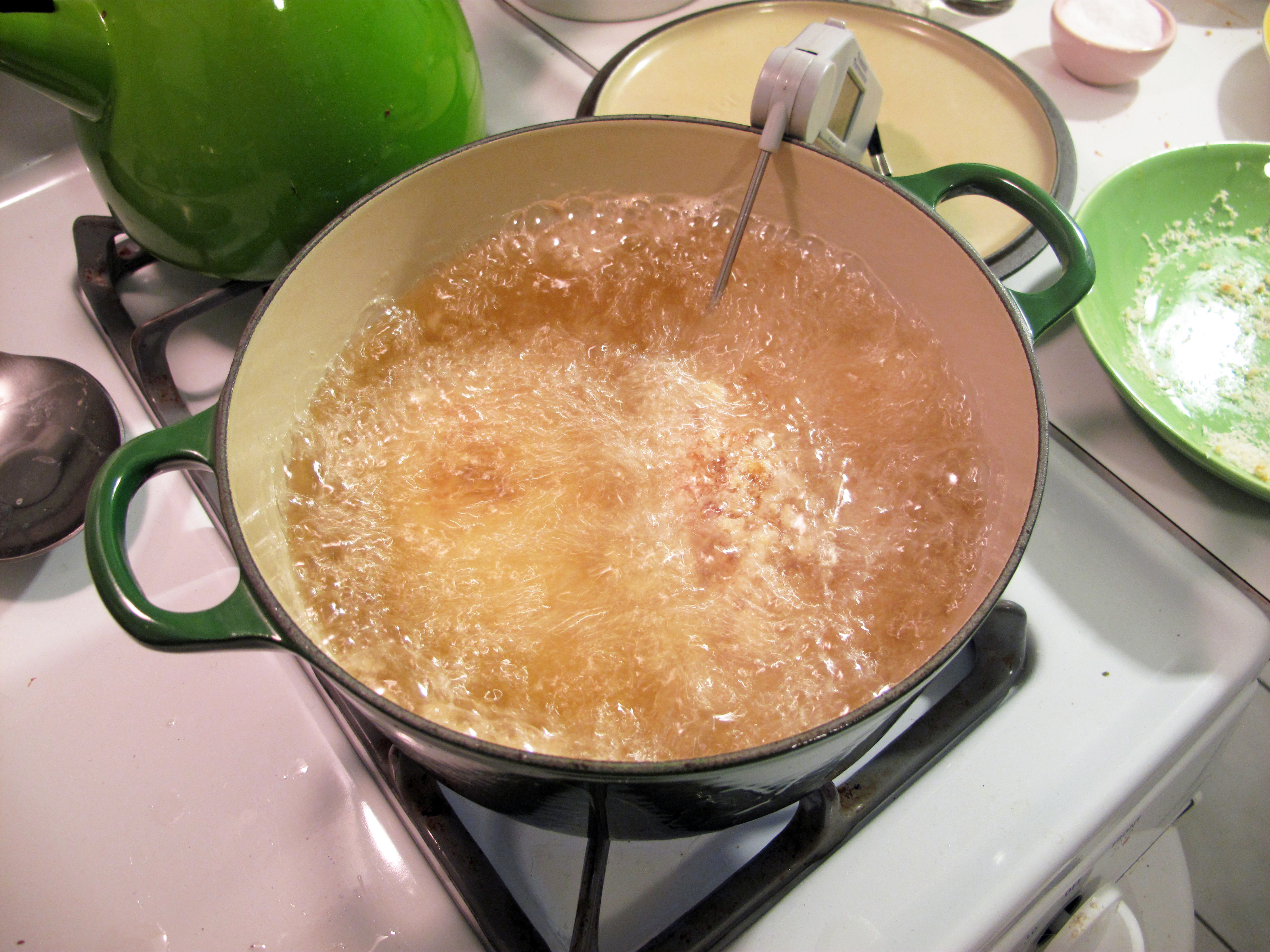
In a dutch oven or deep skillet, heat three inches of canola or peanut oil to 320 degrees.

In separate flat bowls or plates, arrange in order in three separate containers: the almond flour with the salt, pepper and smoked paprika mixed in; 2 beaten eggs; and the panko. One at a time, roll the chicken breasts in the flour, then dip through eggs to coat, then finish with a thick crust of panko.

Carefully lower breasts into oil. Increase heat to bring it back up to 320, and keep an eye on it to maintain that temperature. Fry breasts to a deep golden brown, turning occasionally to keep them browning evenly, until the internal temperature reaches 150 degrees. It took us about 15-20 minutes. Rest on cooling rack for 5 minutes.

For the greens:

Heat a skillet to medium high, then add a good-sized pat of butter and a swirl of olive oil. Add chopped greens, salt and pepper, then cook until they wilt and the stems get slightly translucent. Remove pan from heat and toss greens with the grapefruit sections, broken into chunks.

To plate:

Drop half the puree into a puddle on each plate, then dust with grated chocolate (we used a Microplane). Top with chicken and serve the greens (and more wine!) on the side.


Tagged with: , , , , , , , , , , , ,
Posted in Dear Diary
photo credit to Aaron Otis Photography 2014


July
Watermelon is the perfect summer food. It hydrates, it cools, it's sweet and juicy. We have some great ideas for your table, including a salad, ceviche cups, popsicles and cocktails. Get ready to beat the heat with us!